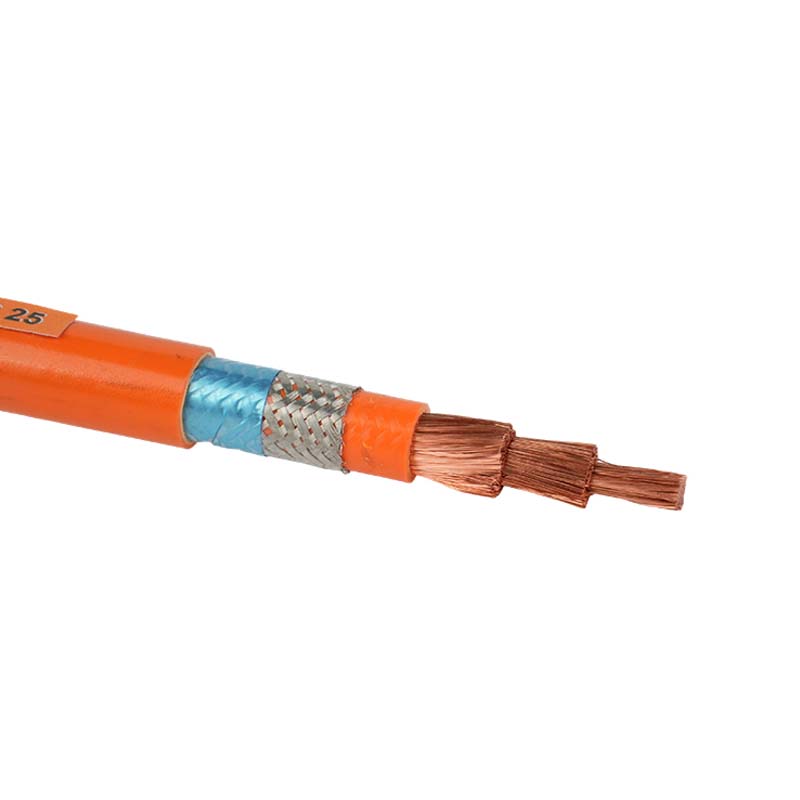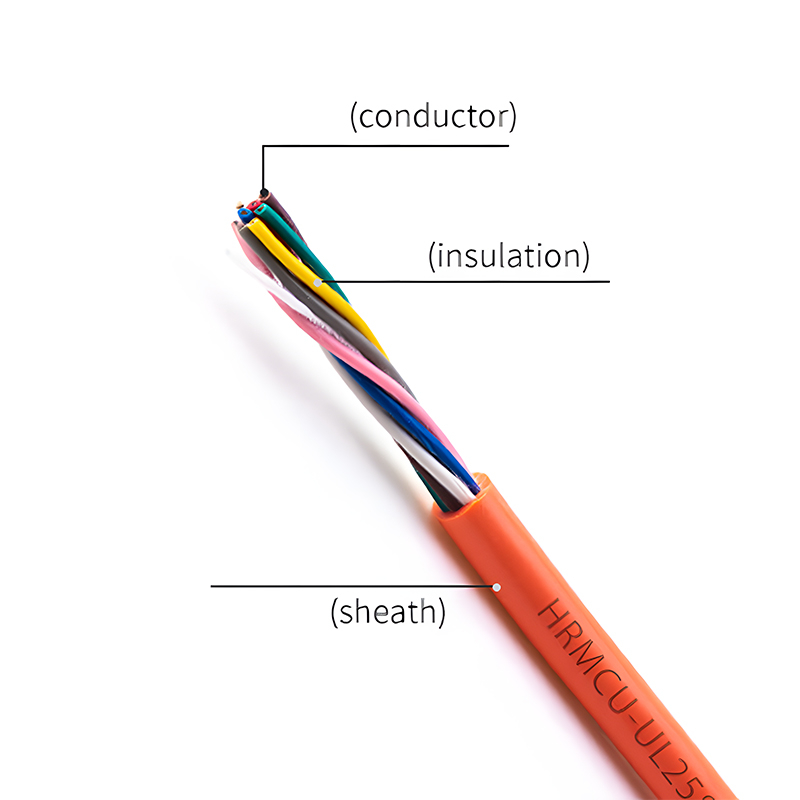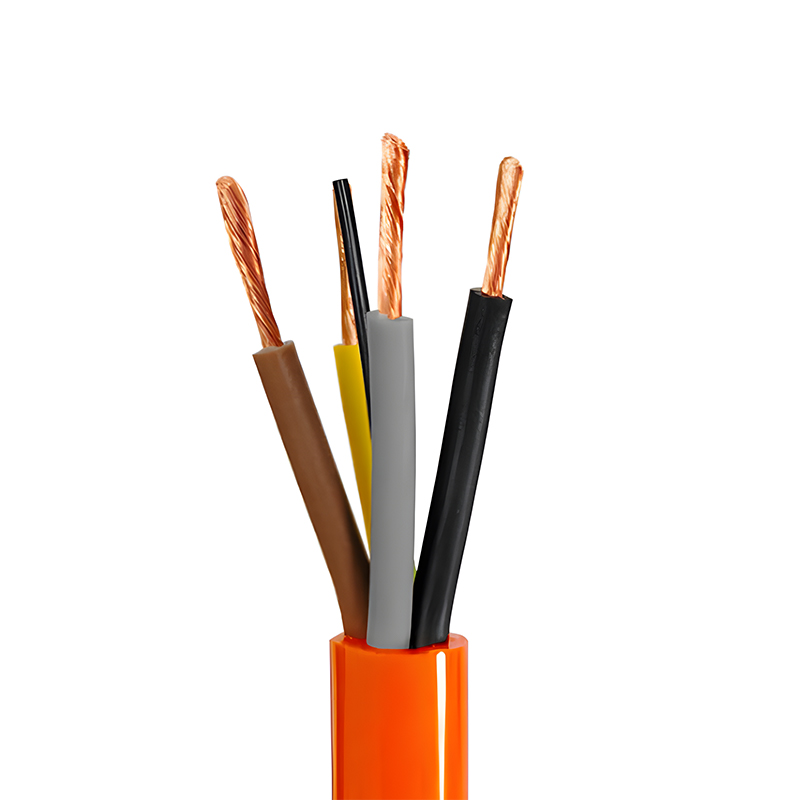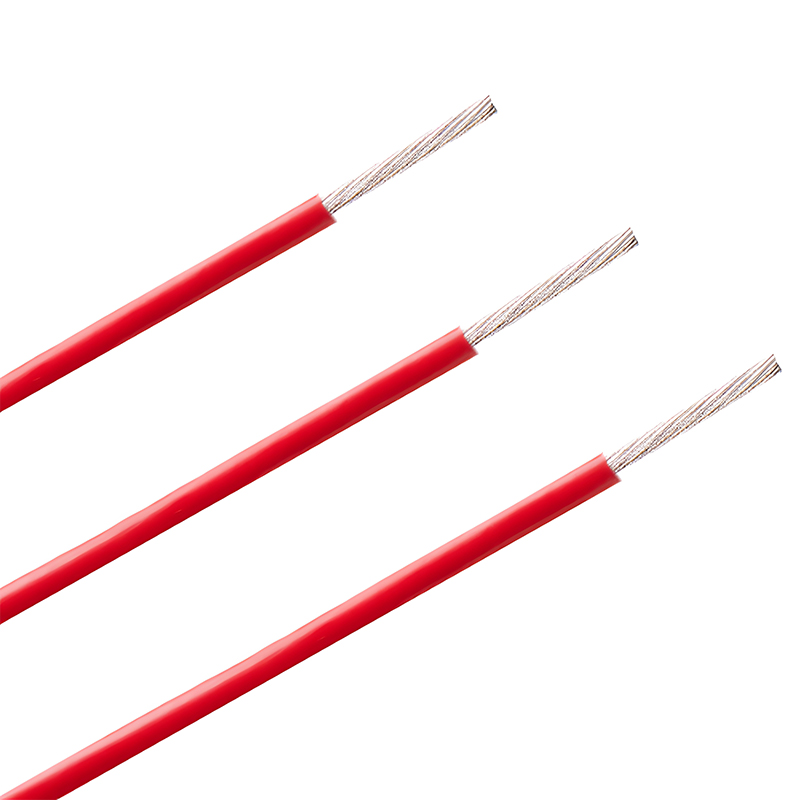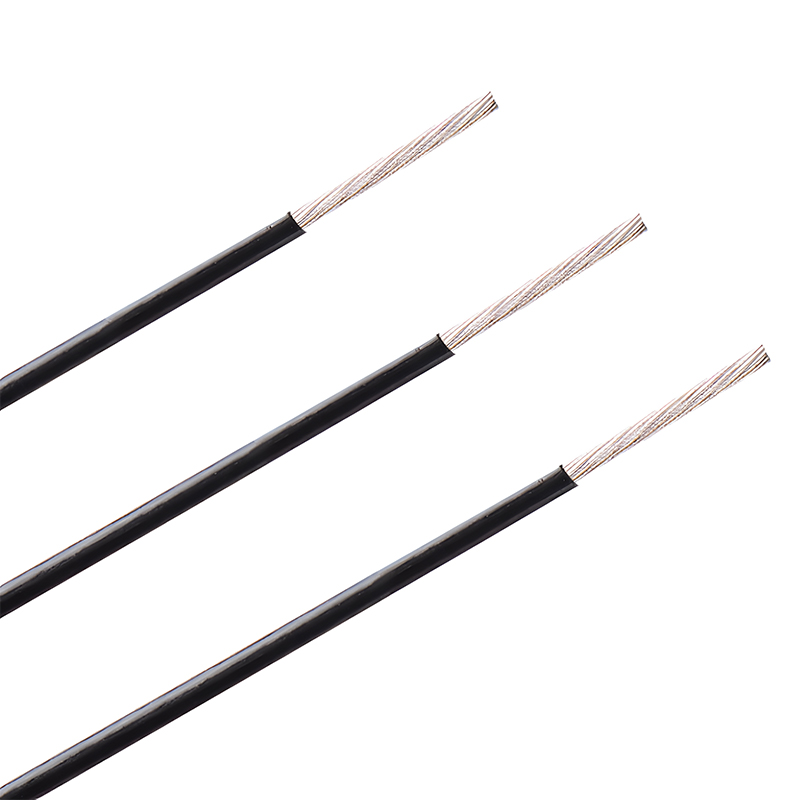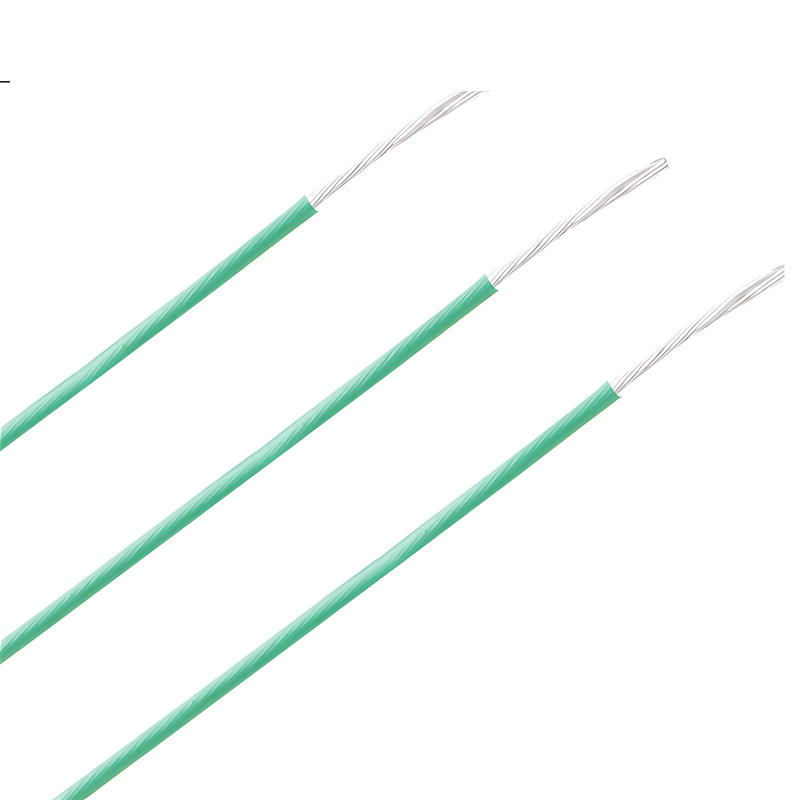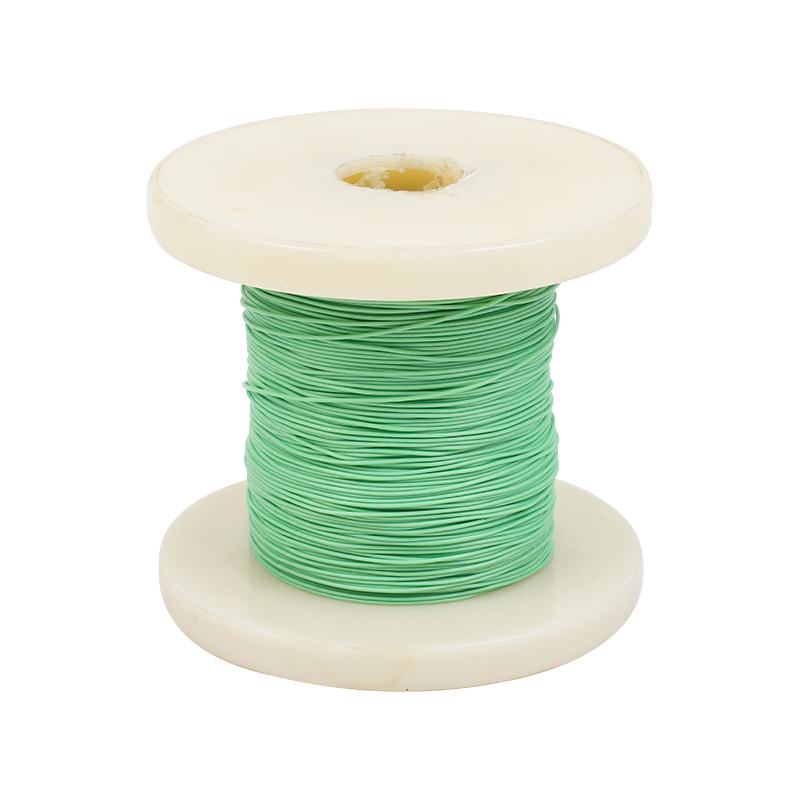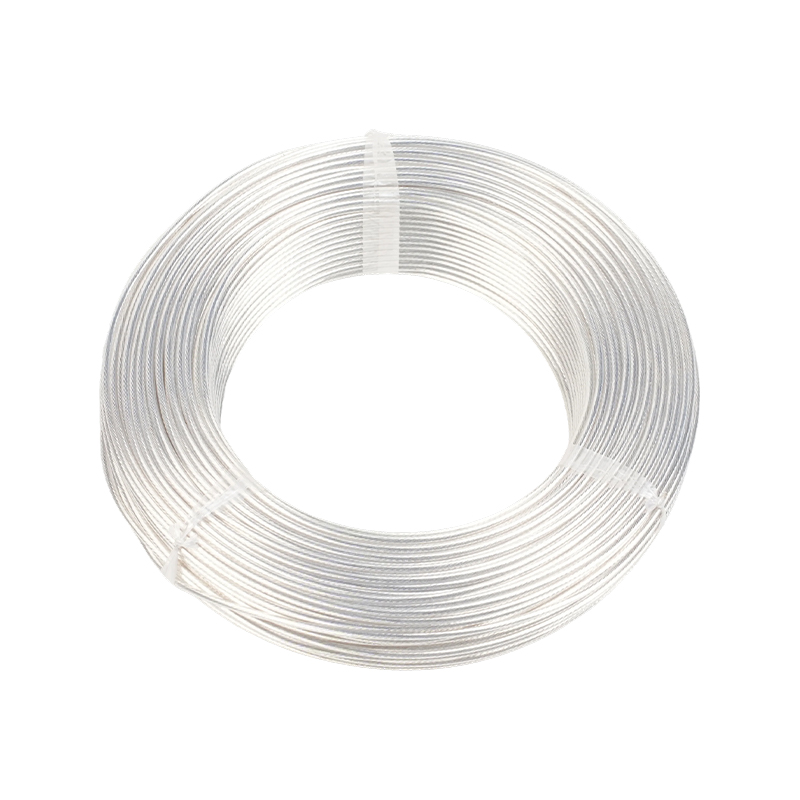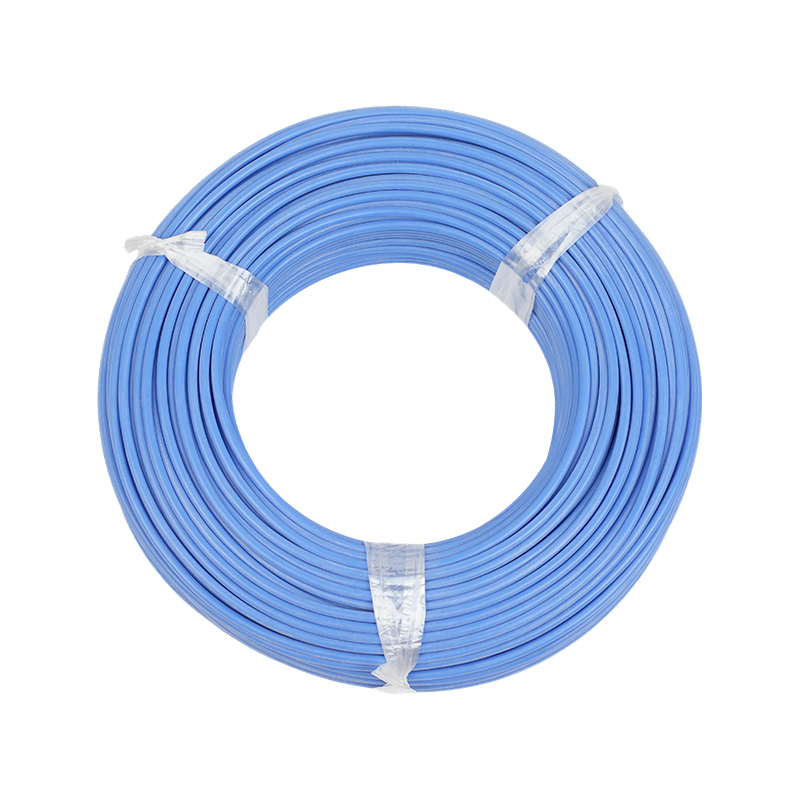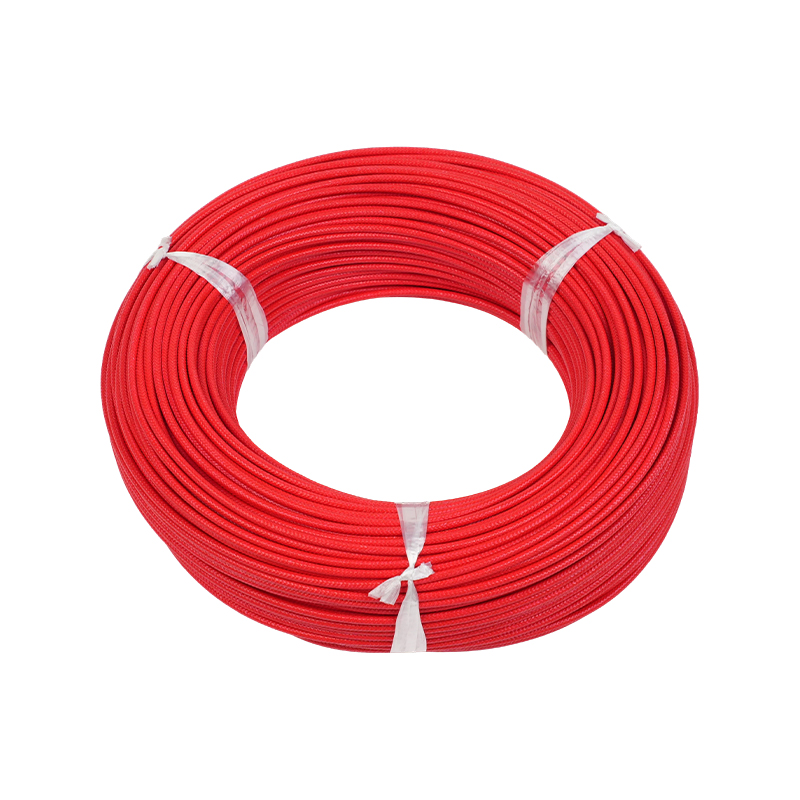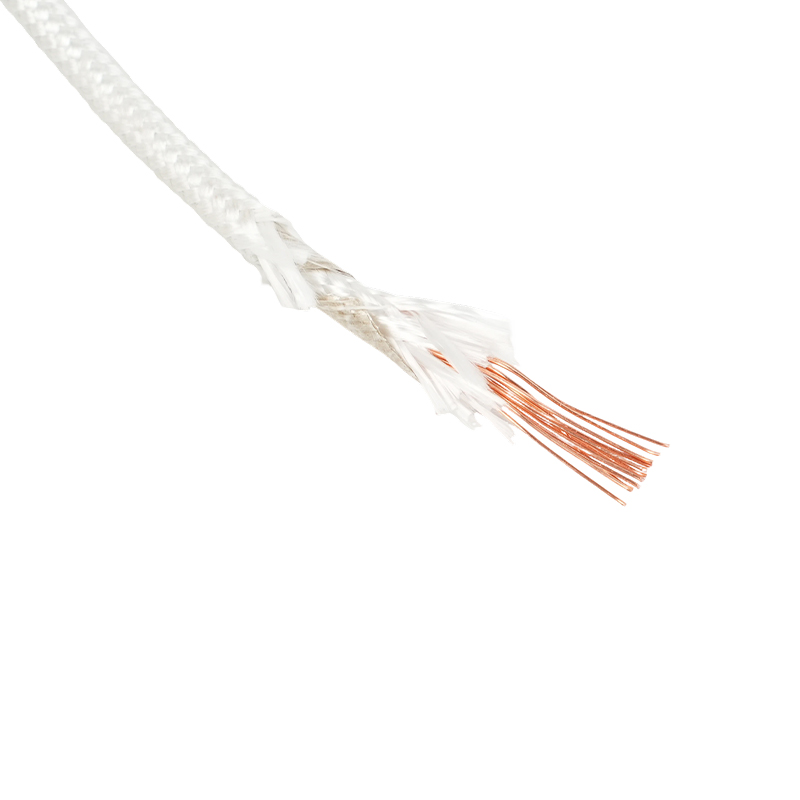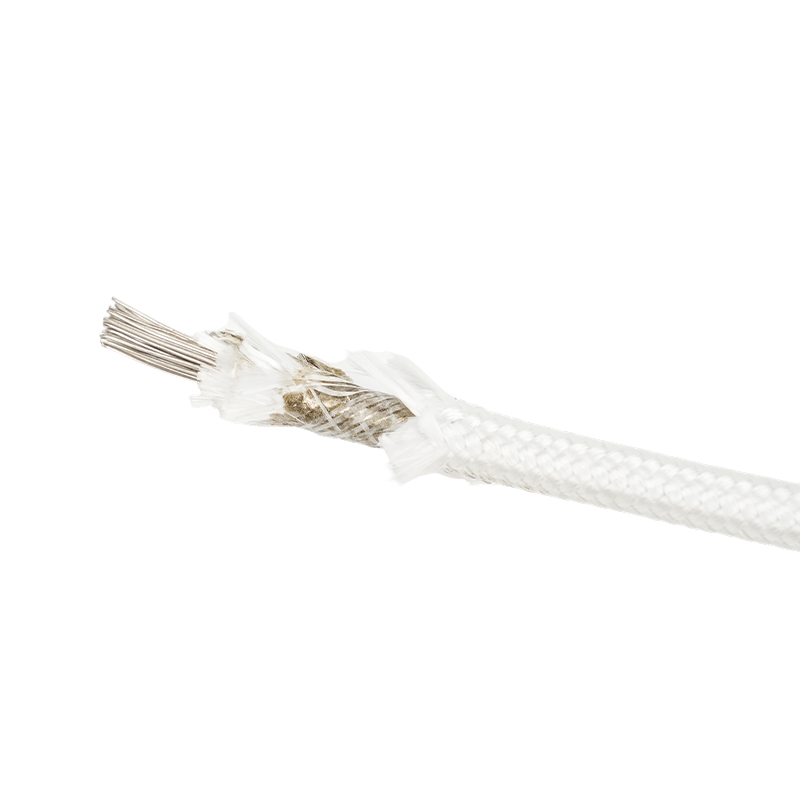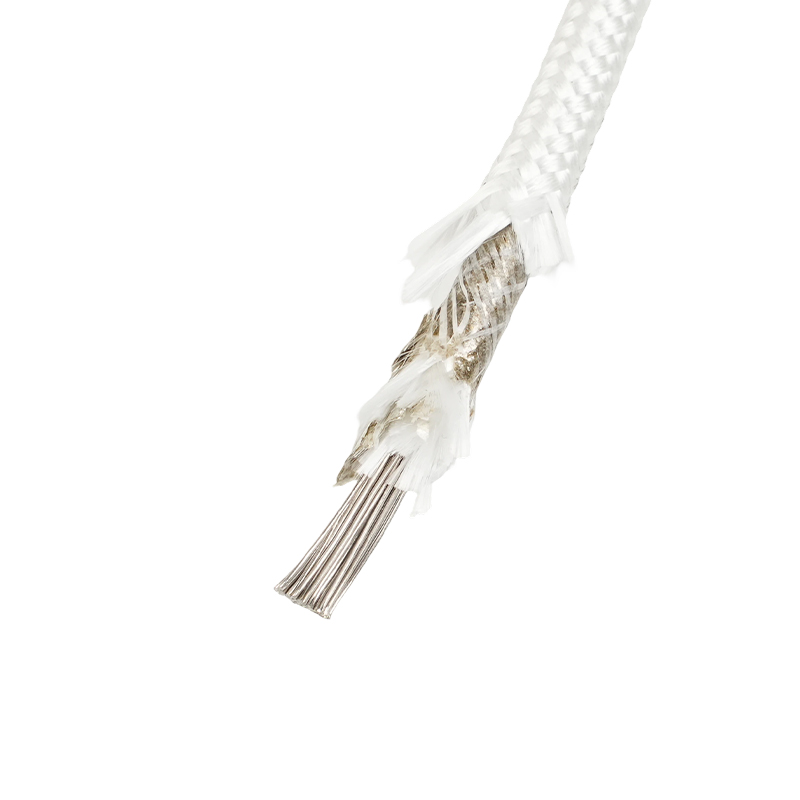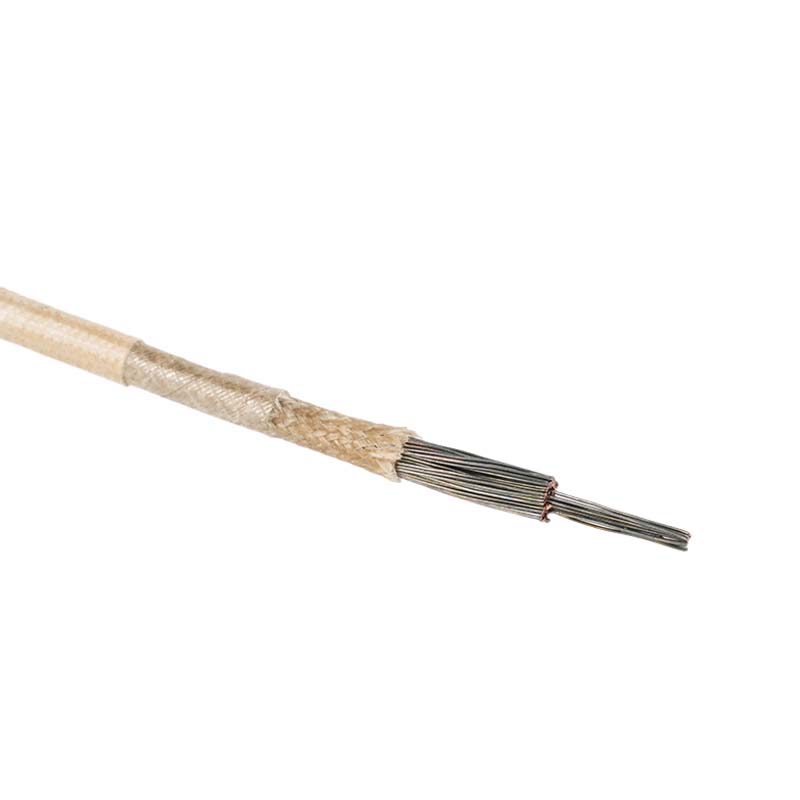
In demanding environments with temperature spans from -65°C to +260°C, Teflon Wire (fluoroplastic i...
READ MOREApplications: Wind power cables are used for internal connections within wind turbines and between turbines; solar photovoltaic cables connect photovoltaic panels and inverters; and battery energy storage cables serve the charging and discharging circuits of energy storage systems. They are widely used in wind farms, photovoltaic power plants, energy storage plants, and other scenarios.
Functional Characteristics: They undertake power collection, transmission, and distribution, ensuring the efficient conversion of clean energy such as wind and solar power into electricity and stable transmission, while also adapting to the charge and discharge cycles required by energy storage systems.
Core Performance: They offer strong environmental adaptability, with resistance to high and low temperatures, UV rays, and ozone degradation. They offer excellent mechanical properties, with wind power cables able to withstand frequent torsion and vibration, photovoltaic cables offering outstanding bending and weather resistance, and energy storage cables offering current stability suitable for high-rate charge and discharge.
Product Highlights: The insulation and sheath materials are chemically resistant (suitable for outdoor acid, alkali, and salt spray environments), while the electrical performance is stable and low-loss transmission improves energy efficiency. Their long service life (typically over 25 years) meets the long-term operation requirements of new energy equipment and reduces maintenance costs.
In demanding environments with temperature spans from -65°C to +260°C, Teflon Wire (fluoroplastic i...
READ MOREHow to Choose Renewable Energy Cables Best Suited for Solar and Wind Projects In solar and wind pro...
READ MOREHow to Choose Industrial Flexible Cables for Better Bending Resistance and Durability In industrial...
READ MOREHow to Choose the Most Suitable High Temperature Cable Model and Temperature Rating Selection shoul...
READ MOREAs the world pivots toward sustainable power, the reliability of the grid depends on the "veins" that transport energy from sun, wind, and batteries. Renewable energy cables from Jiangsu Silver& Tin Thread Hi-temperature Wire and Cables Co., Ltd. are engineered to survive the harshest outdoor environments on Earth. Unlike standard building wires, these cables are the definitive solution for withstanding decades of direct UV exposure, extreme thermal cycling, and corrosive salt mist.
The direct conclusion for green energy infrastructure is that cable failure equals system downtime. Our renewable energy series, featuring high-performance Silicone and Fluoroplastic insulation, provides a stable operating window from -60°C to +200°C. This ensures that whether installed in a scorching desert solar farm or a frigid offshore wind turbine, the electrical integrity remains uncompromised for a 25-year service life.
The technical demands of renewable systems far exceed those of indoor industrial wiring. Below is a breakdown of the specific stressors our cables are designed to neutralize:
| Challenge | Conventional Cable Impact | Yuanzhi Renewable Solution |
|---|---|---|
| UV Radiation | Jacket cracking and brittle failure. | Anti-UV Fluoroplastic/Silicone compounds. |
| Thermal Cycling | Insulation shrinkage and core exposure. | Cross-linked high-temp materials (up to 200°C). |
| Environmental Stress | Water ingress and oxidation. | 99.99% Tinned Copper for corrosion resistance. |
| Ozone Resistance | Surface degradation. | Excellent ozone and weathering stability. |
At Jiangsu Silver& Tin Thread, our R&D team focuses on three core pillars of renewable energy technology.
As PV systems move toward 1500V DC architectures to increase efficiency, insulation quality becomes paramount. Our PV cables utilize electron-beam cross-linked technology, ensuring they do not melt under short-circuit conditions and remain flexible even in freezing winter conditions.
Battery storage units require cables that can handle high current densities while remaining flexible enough for tight modular wiring. We use ultra-fine tinned copper strands and silicone insulation to provide high-ampacity cables that are easy to install and resistant to battery acid and chemicals.
Wind energy cables must handle simultaneous torsion and vibration. Our torsion-resistant series is specifically tested for loop applications in turbine towers, allowing for continuous twisting as the nacelle tracks the wind.
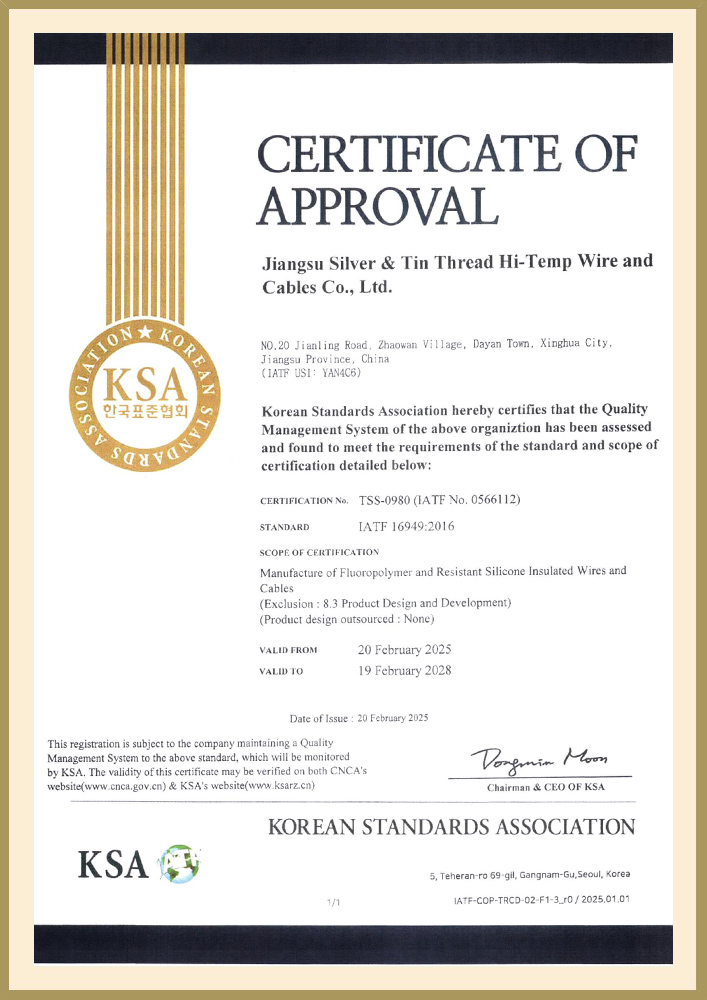
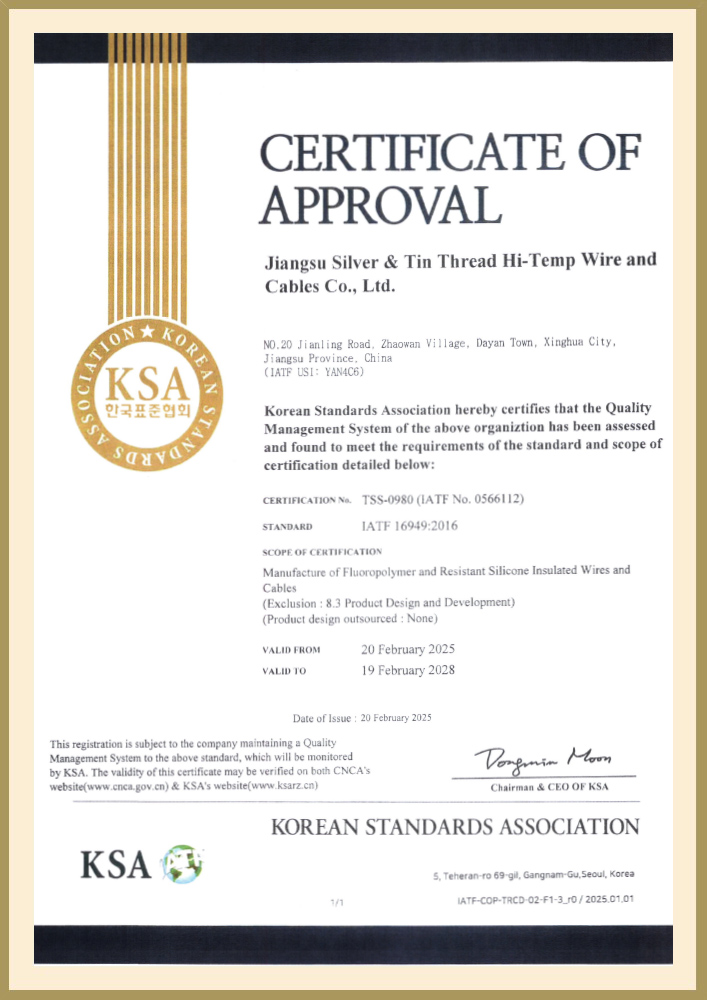
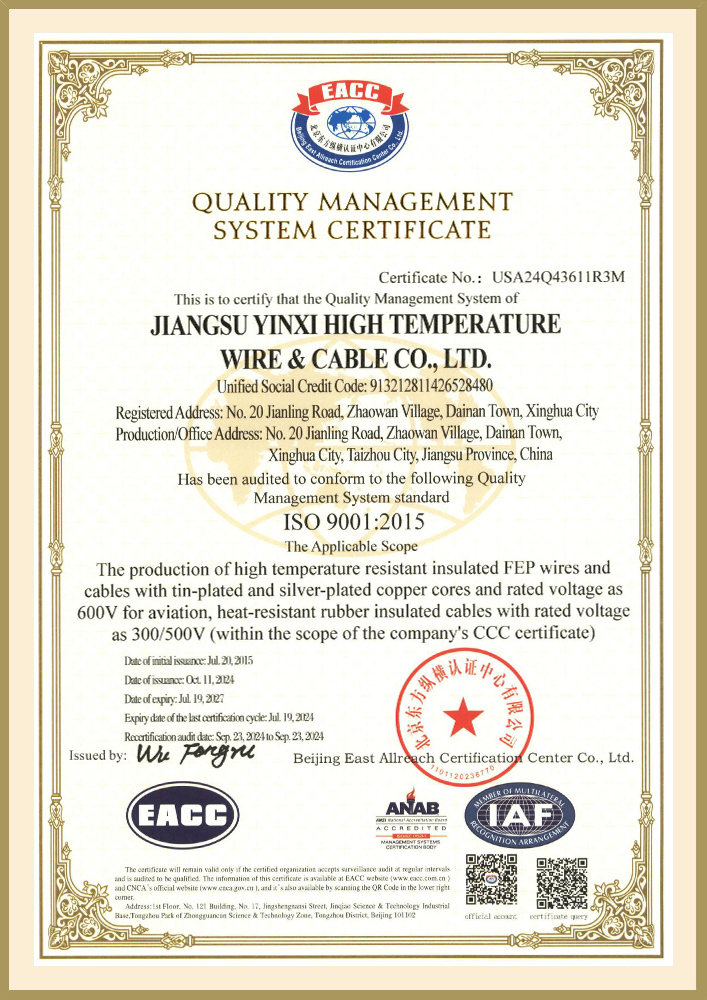
Jiangsu Silver& Tin Thread Hi-temperature Wire and Cables Co., Ltd. (founded in 1994) operates with a "Quality First" philosophy. Our "Yuanzhi" brand renewable cables are manufactured in an ISO9001 and IATF16949 certified facility.
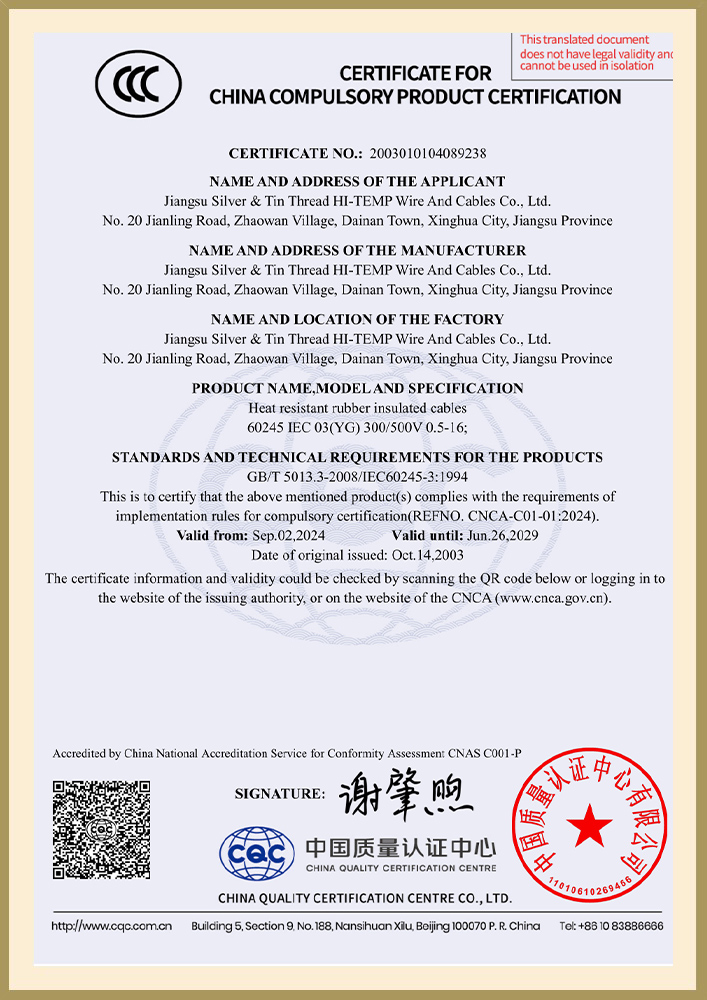
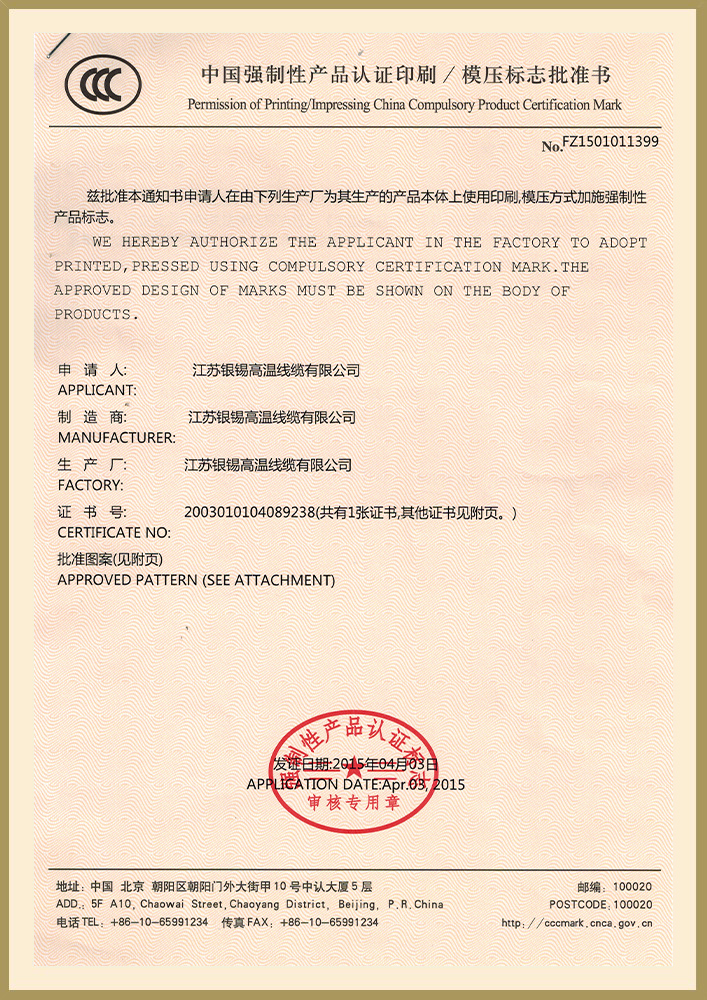
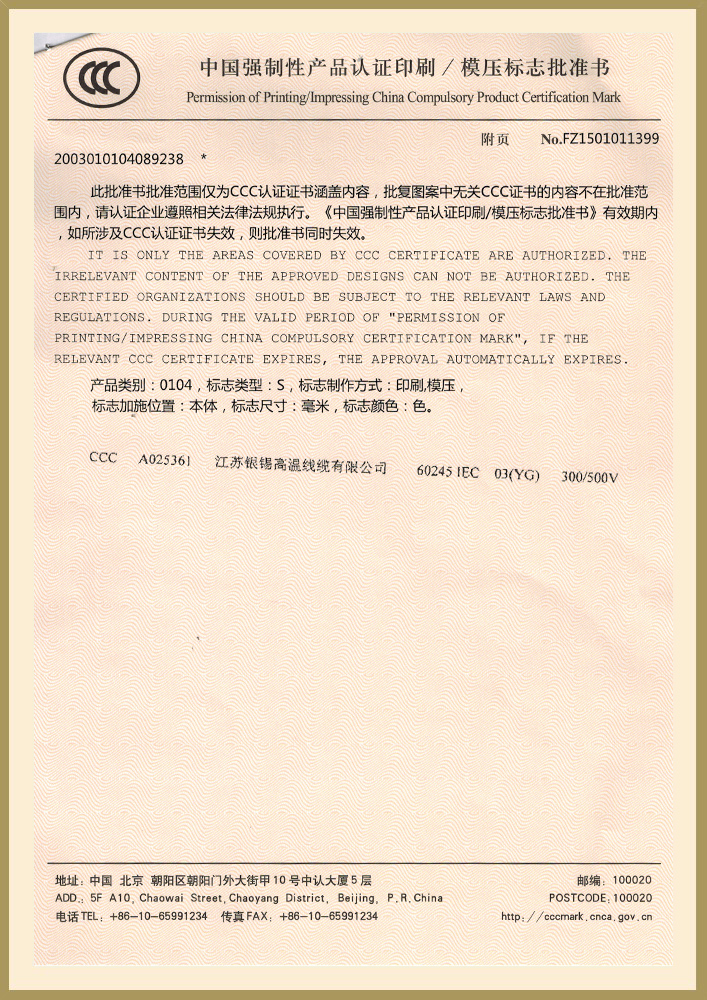
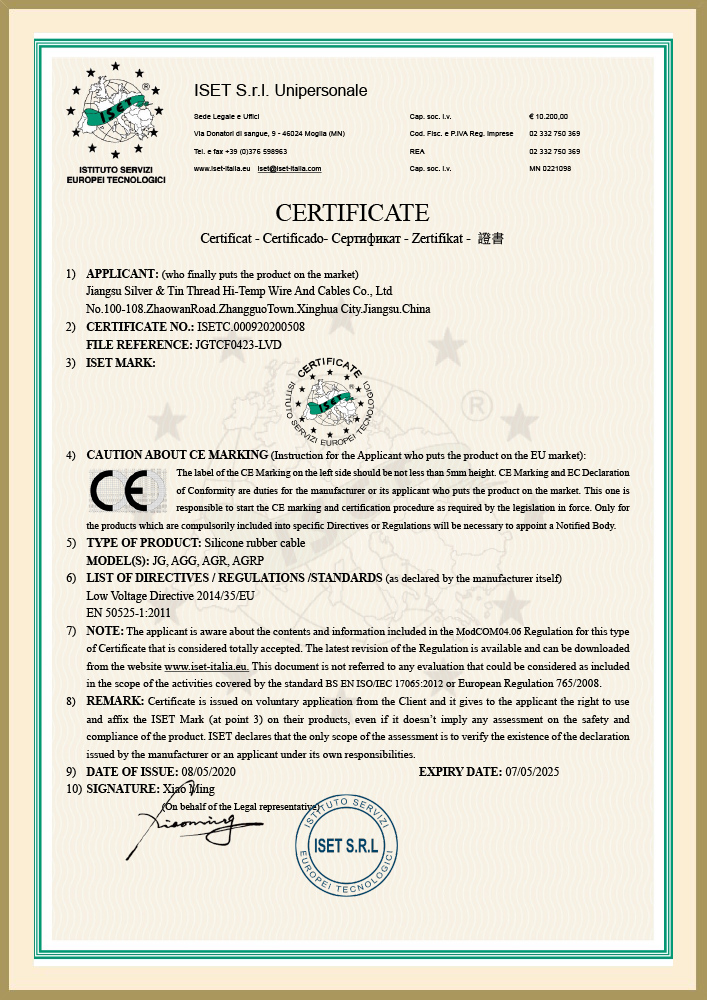
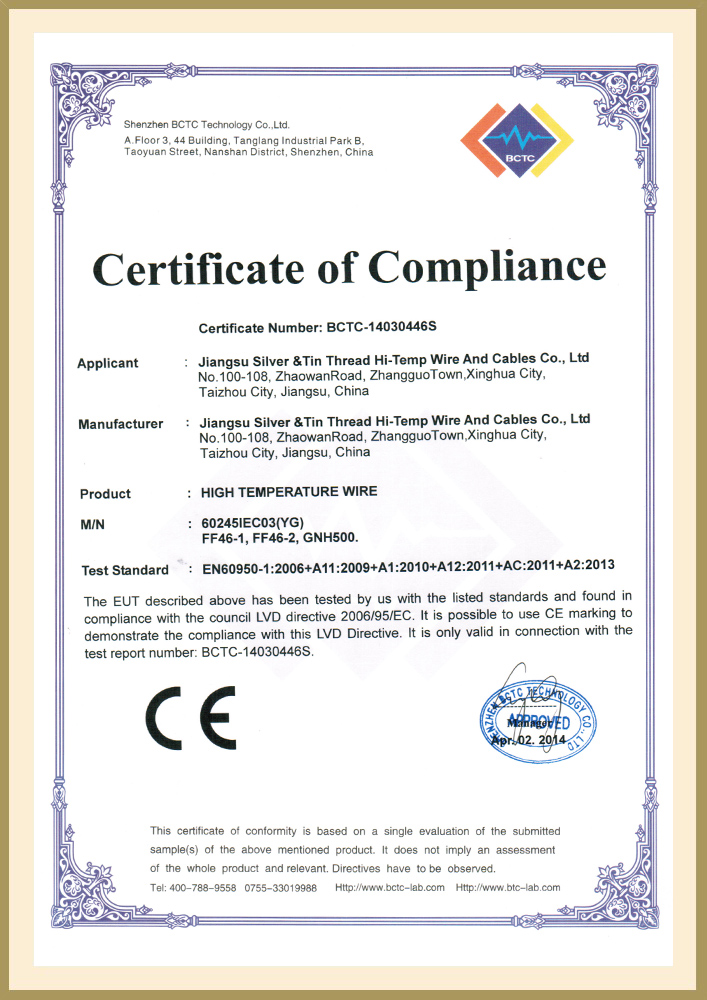
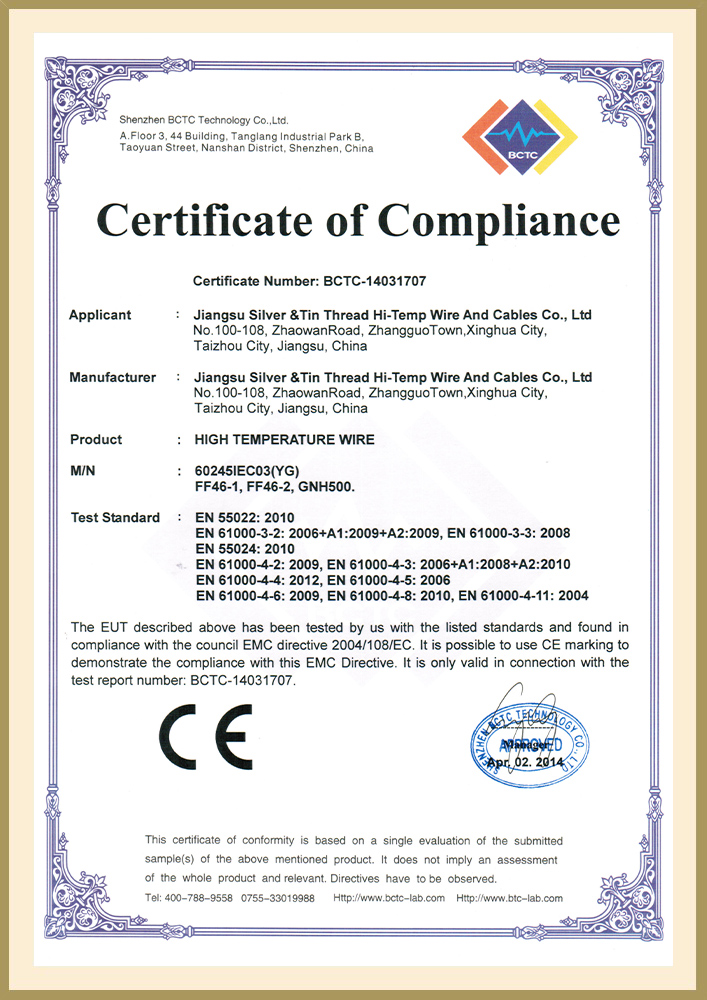
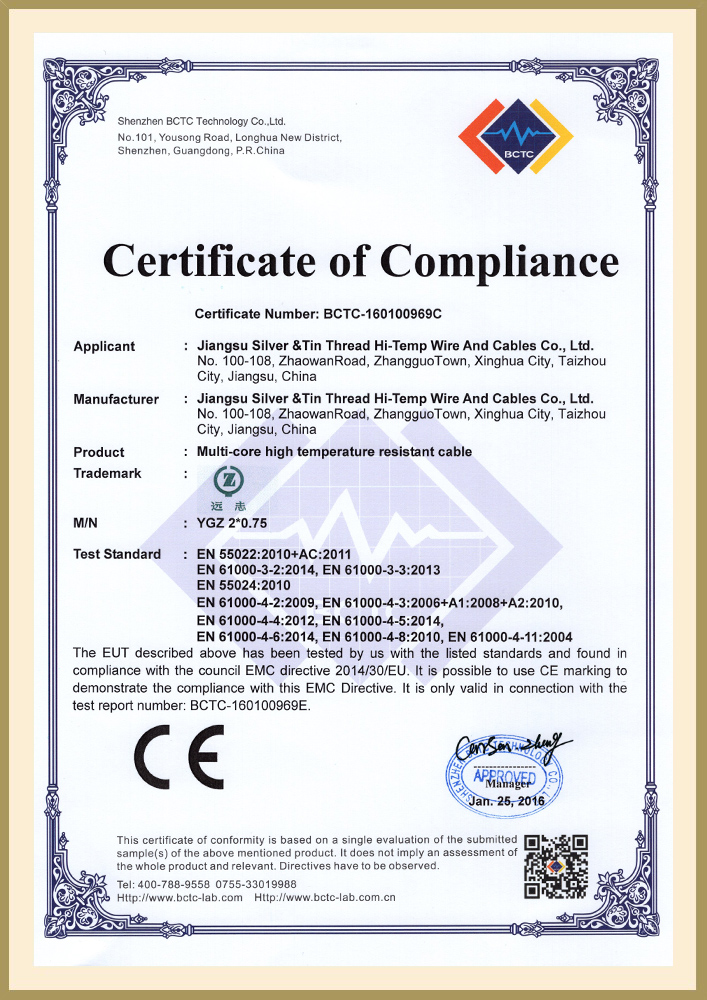
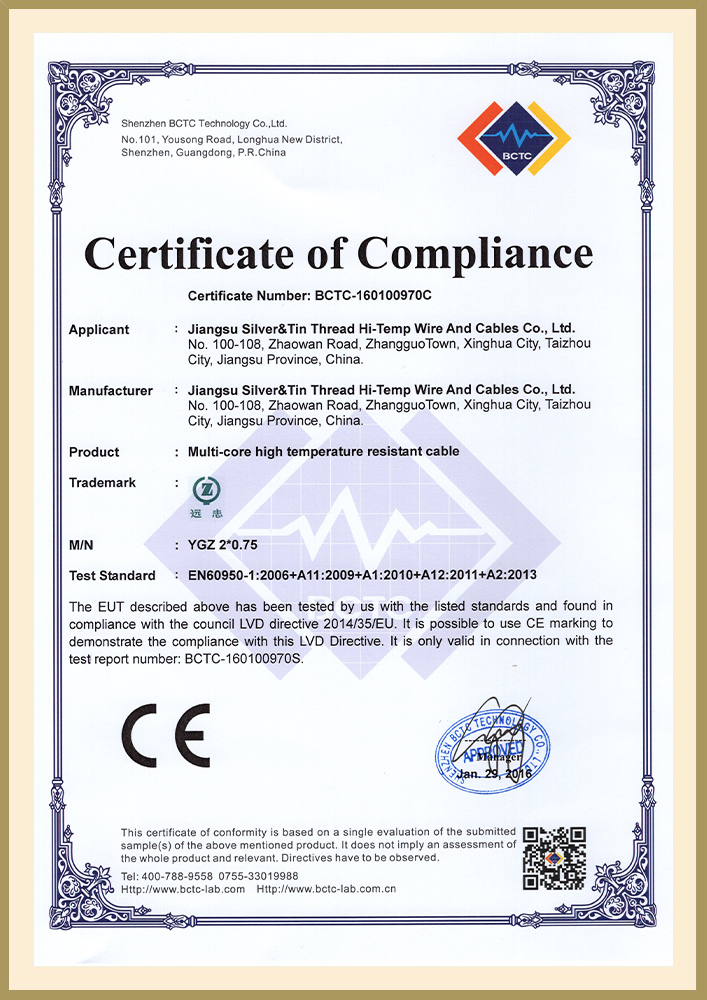
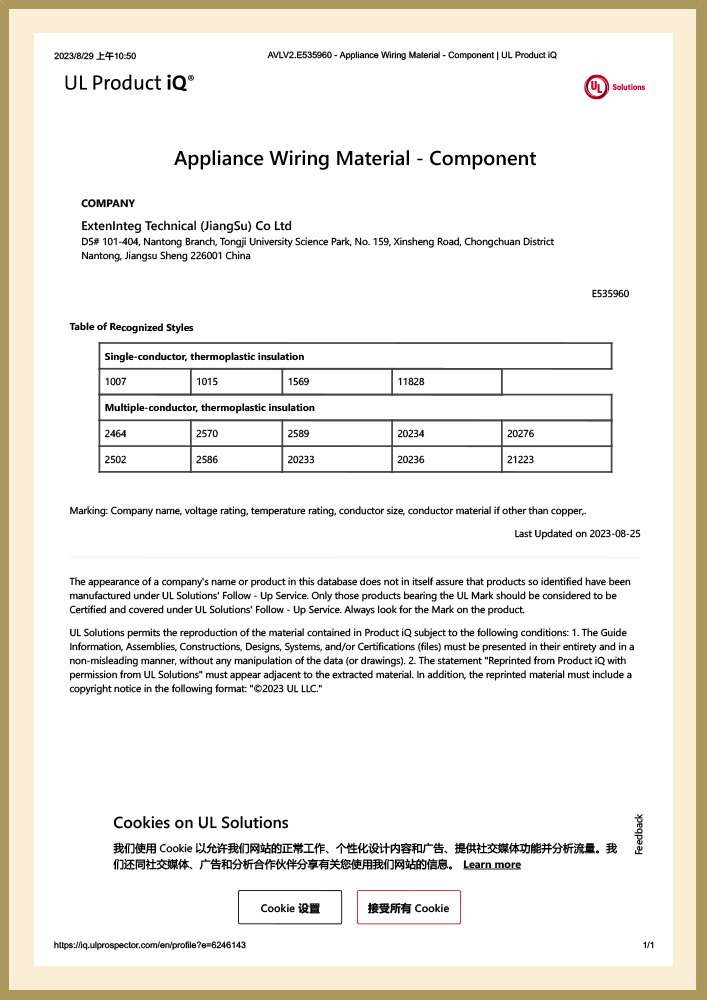
We ensure global bankability for your energy projects by holding UL, CE, CCC, TUV, and RoHS certifications. Every meter of cable is subjected to high-voltage dielectric tests and visual diameter monitoring. For total peace of mind, all our energy cables are insured by the People's Insurance Company of China (PICC), backing the longevity of your green investment.
Bare copper oxidizes rapidly when exposed to moisture and heat, forming a non-conductive layer that increases resistance. Tin plating provides a permanent barrier against corrosion, especially in coastal wind farms or humid solar installations, ensuring electrical efficiency for 25+ years.
Yes. Our Silicone and PFA-insulated cables are chemically inert. They are specifically tested to resist degradation from common battery electrolytes, oils, and industrial solvents used in energy storage facilities.
LSZH stands for Low Smoke Zero Halogen. For indoor energy storage or public infrastructure, we provide LSZH-rated cables that do not release toxic halogen gases or thick black smoke in the event of a fire, protecting both personnel and sensitive electronic equipment.
Our cables are rated for ambient temperatures up to 200°C. Standard cables often fail when the internal conductor heat combines with high desert ambient heat (peak 70°C+). Our high-temperature fluoroplastic series maintains its mechanical strength where others soften or deform.