
 English
 русский
 Español
 عربى

 Home / News / Industry News / China German Standard Multi-Core Cable: ISO 6722 Type Codes & Buying Guide

Industry News
China German Standard Multi-Core Cable: ISO 6722 Type Codes & Buying Guide
2026-09-25
Content
- 1 What "German Standard" Really Means for a Multi-Core Cable
- 2 How to Read the Type Code on a German Standard Multi-Core Cable
- 3 Temperature Class Drives Material, Weight and Price
- 4 Core Count, Cross-Section and Shielding: What Can Be Combined
- 5 Verifying a Chinese Supplier Before the Order Is Placed
- 6 Order Checklist: Items That Cause Rejections
- 7 Frequently Asked Questions
A drawing arrives with one line of cable description: "FLRY-B CY, 12 x 0.5 mm², German standard." Three suppliers quote it, and the three samples that come back differ in outer diameter, shield coverage and insulation wall thickness. None of them is wrong, because the description never fixed those values.
The short answer: a German standard multi-core cable is not defined by one standard. It is an assembly whose individual cores follow ISO 6722 or ISO 19642 and DIN EN 60228, then wrapped, shielded and jacketed to a customer drawing or an OEM specification. If the drawing does not state conductor class, wall thickness, temperature class and shield coverage, the factory will fill the gaps with whatever is cheapest to produce.
What "German Standard" Really Means for a Multi-Core Cable
German standard is a sourcing phrase, not a certificate. There is no single DIN standard for a finished multi-core cable. What exists is a stack of documents, and each one covers only part of what you are buying.
ISO 6722, ISO 19642 and the OEM specifications
ISO 6722 defines the single core inside the assembly: conductor resistance, insulation wall, long-term aging, cold impact, abrasion and pressure at high temperature. Since 2019 the ISO 19642 series has covered the same territory in more parts, and newer OEM specifications increasingly point to it, while a large share of drawings still references ISO 6722 or the withdrawn DIN 72551. The practical consequence for a Chinese supplier is which test table the resistance and aging figures are read from.
DIN EN 60228 conductor classes
DIN EN 60228, published in Germany as VDE 0295, fixes conductor classes: class 2 stranded for fixed installation, class 5 flexible, class 6 extra-flexible for repeated flexing. German standard multi-core cable is almost always built on class 5 or 6 cores. Limits are set per cross-section, so the maximum resistance of a 0.5 mm² copper core at 20 °C sits in the region of 37 to 39 Ω/km depending on whether the supplier quotes ISO 6722 or IEC 60228. A quotation that never names the conductor class cannot be compared with another.
Where these assemblies actually end up, from body harnesses to sensor looms, is mapped on the automotive cable applications page.
How to Read the Type Code on a German Standard Multi-Core Cable
With the standard settled, the type code becomes readable. Take FHLR2XBC2X: a high-temperature vehicle cable, flexible conductor, thin-wall cross-linked insulation, copper braid and a cross-linked outer jacket. Suppliers do not all use every fragment the same way, so read the table below as a guide rather than a dictionary.
| Code fragment | What it usually indicates | What the drawing must still fix |
|---|---|---|
| F | Vehicle cable family (Fahrzeugleitung) | Whether ISO 6722, ISO 19642 or an OEM specification applies |
| L | Flexible stranded copper conductor | Conductor class, and bare versus tinned copper |
| R | Reduced, thin-wall insulation | Minimum wall thickness in millimetres |
| Y | PVC insulation compound | Temperature class, commonly 105 °C |
| 2X | Cross-linked insulation | Actual class, commonly around 125 °C |
| 6Y, 9Y | TPE-type compounds for higher classes | Long-term aging data at the rated temperature |
| H (FHL series) | High-temperature family prefix | Continuous rating and permitted short-time peak |
| C | Overall copper braid shield | Coverage percentage and drain wire cross-section |
Two rules follow. Never let a three-letter code stand in for a specification: attach a drawing with wall thickness, outer diameter and shield coverage to the purchase order. And when two quotations on the same code differ by more than about ten percent, the gap is usually in copper content, shield coverage or wall thickness rather than in labour cost.
Temperature Class Drives Material, Weight and Price
Temperature class is the decision after cross-section that changes material, weight and price most.
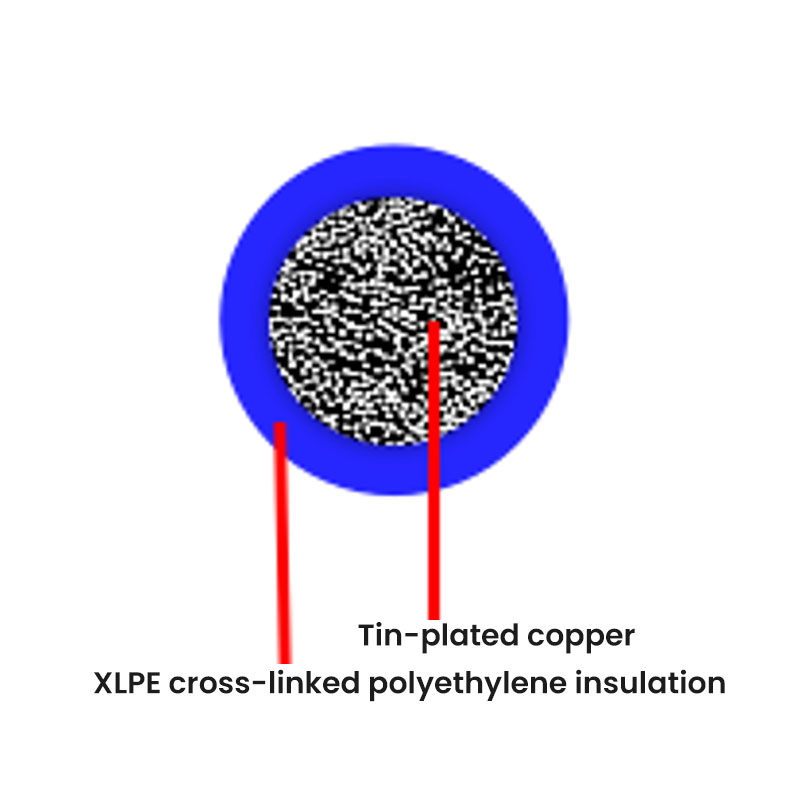
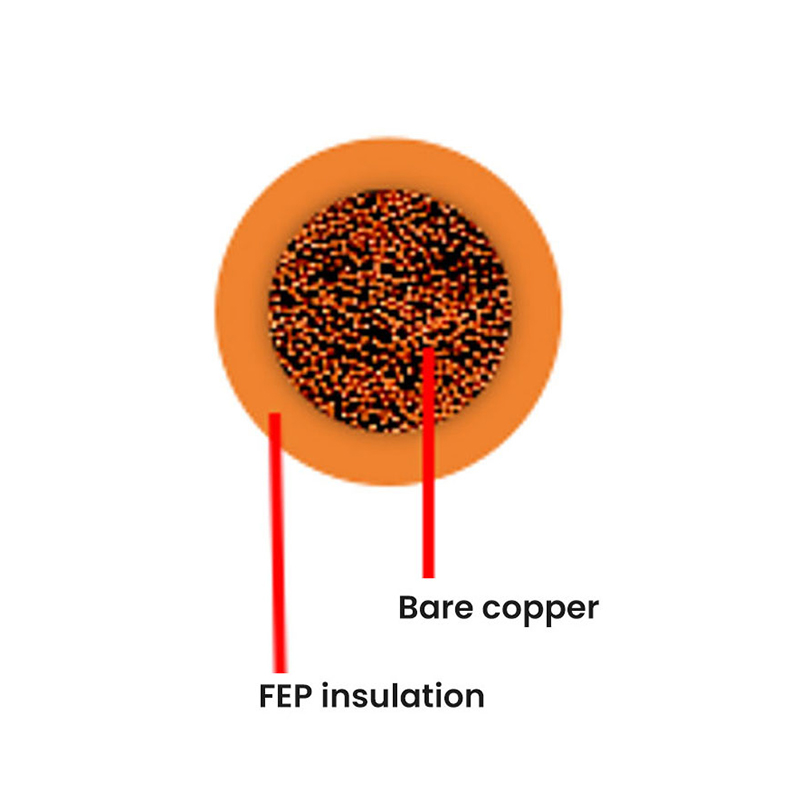
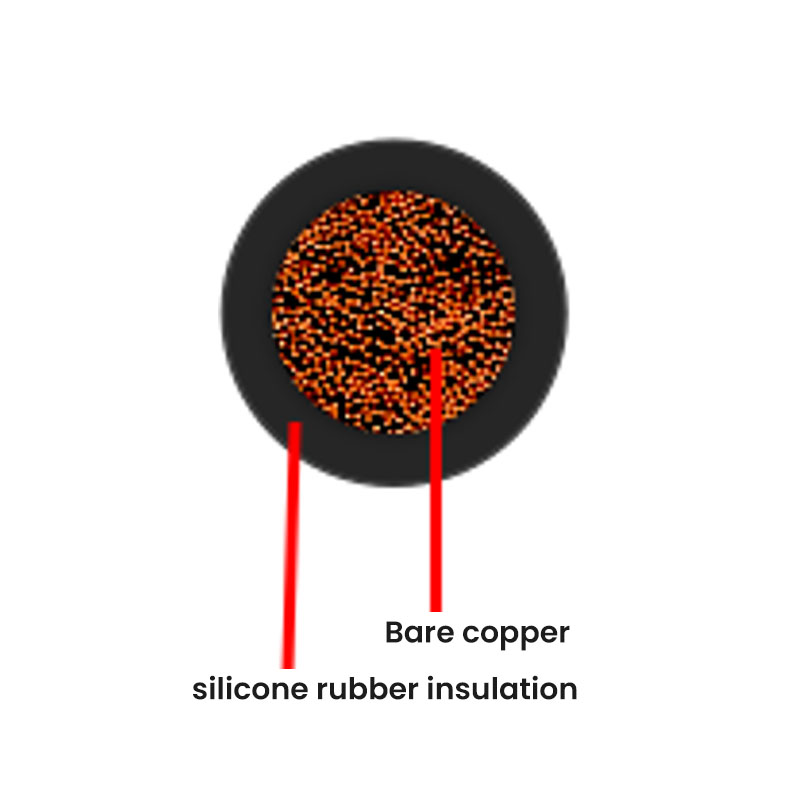
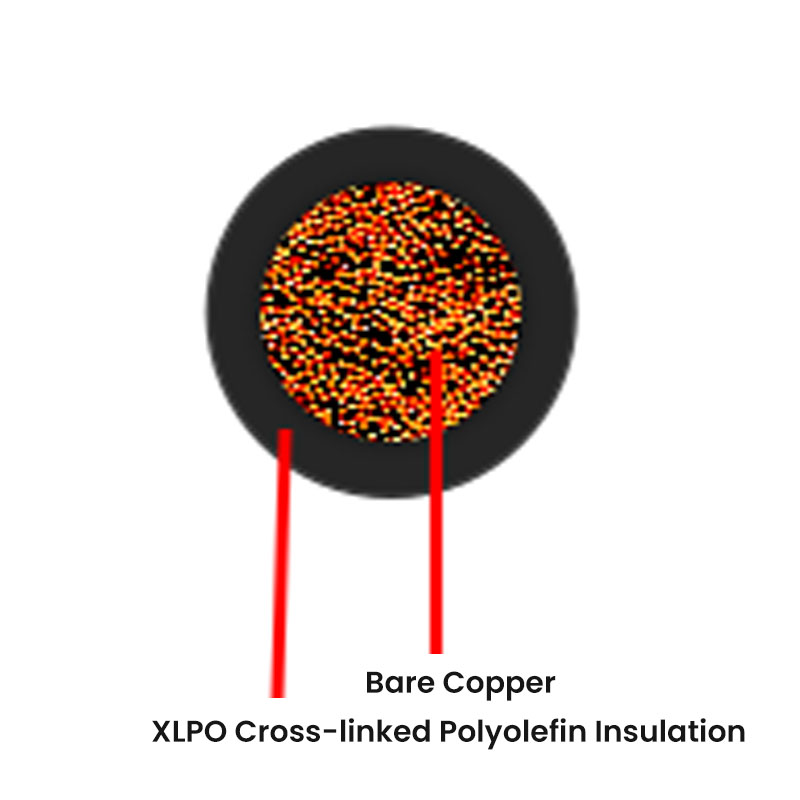
A PVC core is typically rated for 105 °C continuous conductor temperature. Cross-linked PE moves that to about 125 °C, TPE compounds to roughly 150 °C, silicone to 180 °C and PTFE to 250 °C. Each step up narrows the supplier list, raises the price and changes the outer diameter: silicone insulation is thicker for the same dielectric strength, while PTFE is thinner but far more expensive per metre.
Typical continuous conductor temperatures by insulation family. Confirm the exact class on the supplier datasheet.
Inside a cabin harness, PVC or cross-linked PE is normally enough. High-temperature builds such as the FHL series are used where the run passes an engine, an exhaust path or a heating element, and there the short-time peak matters as much as the continuous rating.
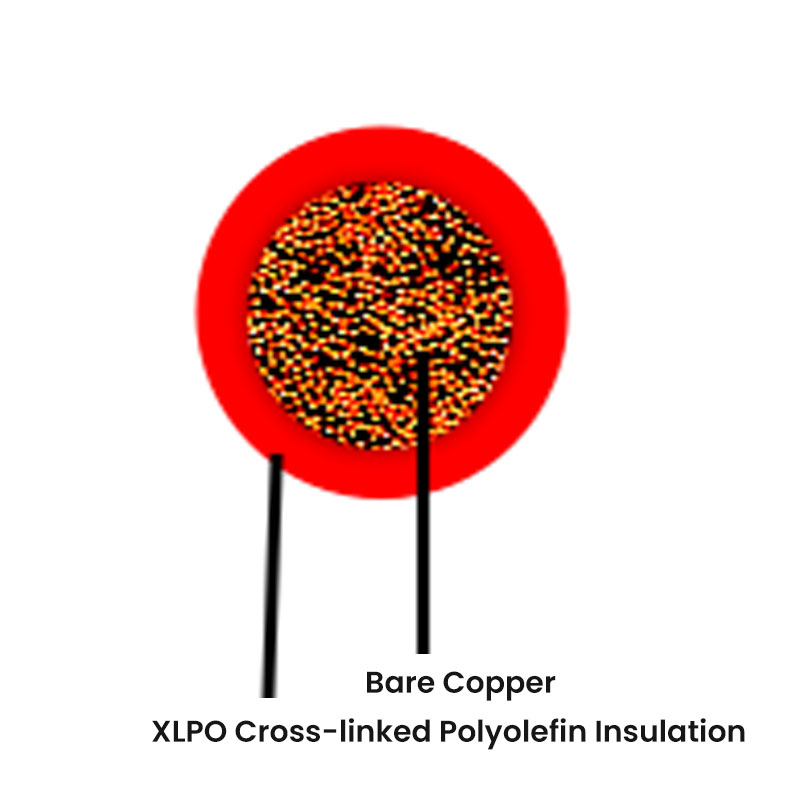
 German Standard Automotive Cable--FHLR2XBC2X (Thin Wall)Manufacturing Process: Conductor: Bare copper wire, tinned copper wire Insulation: Halogen-free Cross-linked Polyolefin Insulation Shield: Tinned copper wire braid Wra...View Product →
Core Count, Cross-Section and Shielding: What Can Be Combined
Core count in German standard multi-core cable usually runs from 2 to 30, with most orders landing between 4 and 16. What matters more than the number is how the cores are arranged:
- Signal cores and power cores in one jacket need separate insulation classes, not just different colours.
- CAN, LIN and other differential signals need twisted pairs; cores laid side by side will not hold impedance.
- An overall copper braid is the usual shield, while individually shielded pairs appear where crosstalk matters more than diameter.
- 4 x 0.35 mm² signal
- 6 x 0.5 mm² power
- 2 x 1.0 mm² supply
Illustrative 12-core shielded construction used for the tolerance example above.
Three values must appear on the drawing for this build to be reproducible: minimum insulation wall rather than nominal, outer diameter with its tolerance, and braid coverage in percent. Without them, two Chinese factories can deliver the same 12-core part a millimetre apart in diameter, which is enough to fail a connector or a grommet.
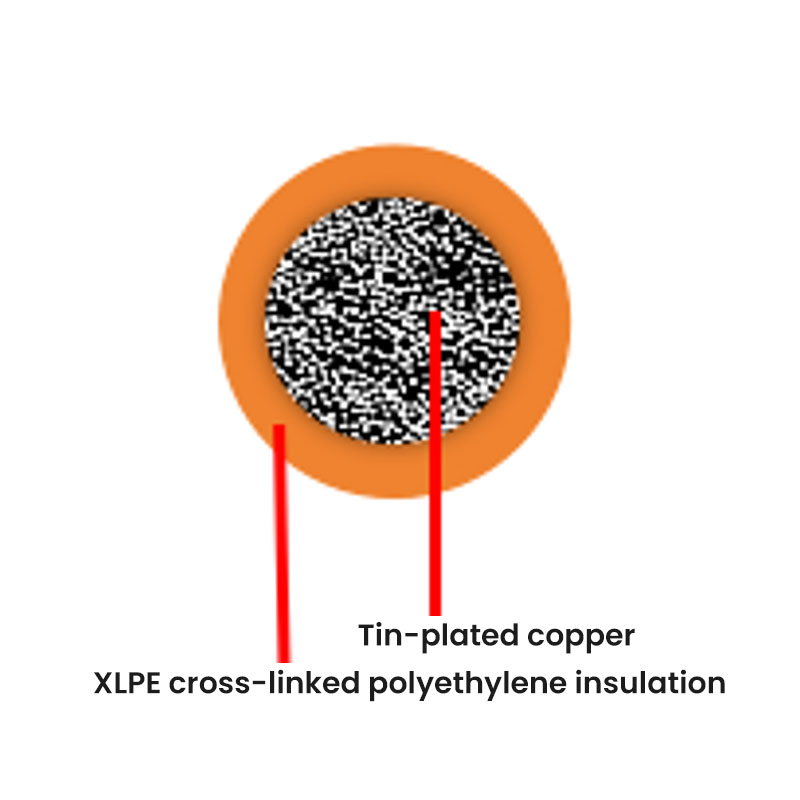
 German Standard Automotive Cable--FLRYBCY (Thin Wall)Manufacturing Process: Conductor: Bare copper wire, tinned copper wire Insulation:PVC Wrapping: Aluminum-plastic tape Shield: Tinned copper wire braid Jacket: PVC Temp...View Product →
Verifying a Chinese Supplier Before the Order Is Placed
Supplier selection in this product family is largely a documentation exercise. Ask for these, in this order:
- IATF 16949 certificate with a scope line covering automotive cable extrusion, plus ISO 9001.
- Conductor resistance measured on the submitted sample and read against the standard named on the drawing.
- Wall thickness measured at the thinnest point, not averaged across the insulation.
- Long-term aging data, typically 3000 hours at the rated temperature.
- RoHS and REACH declarations, plus an IMDS entry for automotive programmes.
- Cold impact or cold bend results at the lowest temperature the harness will see.
One risk deserves its own sentence: copper-clad aluminium. It is lighter and cheaper, it solders poorly, and it fails a resistance check at the declared cross-section. If one quotation sits far below the others and the drawing says copper, ask for the conductor construction in writing.
Finished programmes using these requirements are grouped in the automotive industry case pages.
 German Standard Automotive Cable--FLRYY (Thin Wall)Manufacturing Process: Conductor: Bare copper wire, tinned copper wire Insulation:PVC Jacket: PVC Temperature Range: –40°C ~ +105°C Standard: ISO 19642、DIN 72551 Rated...View Product →
Order Checklist: Items That Cause Rejections
Before the order is released, confirm that the following are written down rather than implied:
- Standard and revision, for example ISO 6722-1 or ISO 19642-5.
- Conductor class, conductor material and whether tinning is required.
- Core count, cross-section, colour code and twisted-pair arrangement.
- Minimum wall thickness and outer diameter tolerance.
- Shield type, braid coverage and drain wire cross-section.
- Continuous and short-time temperature ratings.
- Test reports supplied with the shipment, and reel length tolerance.
Frequently Asked Questions
Is FLRY the same as FLR2X?
No, and they are not interchangeable. FLRY is PVC-insulated and commonly rated around 105 °C, while FLR2X uses cross-linked insulation and reaches a higher class, usually around 125 °C. They can sit in the same harness, but the substitution has to be checked against the temperature at the routing point rather than the harness average.
Can a 20-core 0.35 mm² cable be made with an overall shield?
Yes, and it is a common order. The practical limits are the extrusion line and the braiding machine. Above roughly 30 cores, or with individually shielded pairs, the outer diameter grows quickly and bend radius becomes the real constraint. Expect longer tooling and sample lead time for these builds.
How can I check that the conductor is really copper?
Measure resistance on a one-metre sample against the standard table. Copper-clad aluminium shows a clearly higher figure at the same declared cross-section. Weighing a known length is a useful cross-check on the declared copper area.
Do I need RoHS documentation for a cable that never reaches a consumer?
If the end product falls under RoHS or REACH, yes, because declarations travel with the component. For automotive programmes, an IMDS entry is normally requested instead of, or in addition to, a RoHS statement.
The code on the drawing is a starting point, not a specification. Fix the standard, the conductor class, the wall thickness, the shield coverage and the temperature class before you ask for prices, and the three quotations you receive will finally be comparable.

-
Phone
+86-(0)21-6083 5889
+86 138 1238 0261 -
Email
export03@silvertincable.com
export@silvertincable.com -
Headquarter Address:
No. 20 Jianling Road, Zhangguo Community, Dainan Town, Xinghua City. Jiangsu Province China
-
Shanghai Branch:
Room 18A, West Building, Keji Jingcheng, No. 668 East Beijing Road. Huangpu District, Shanghai, China
Copyright © 2025 Jiangsu Silver& Tin Thread Hi-temperature Wire and Cables Co., Ltd. All Rights Reserved.
China industrial cable manufacturer Custom specialized wire & cable supplier