
 English
 русский
 Español
 عربى
 Home / News / Industry News / China German Standard Automotive Cable: ISO 6722 Types, Selection & Sourcing Guide

Industry News
China German Standard Automotive Cable: ISO 6722 Types, Selection & Sourcing Guide
2026-09-18
Content
- 1 What Is a German Standard Automotive Cable?
- 2 Common Type Codes and What They Mean
- 3 Choosing the Right Insulation Material
- 4 Thin-Wall vs Ultra-Thin-Wall: Weight and Packaging Trade-offs
- 5 Single-Core vs Multicore German Standard Cables
- 6 Quality Assurance and Sourcing From China
- 7 Frequently Asked Questions
When a wiring harness engineer in Stuttgart opened the RFQ for a new commercial vehicle program, the cable list included FLRY, FLR2X and FLU6YA in eleven different cross-sections. The question from the sourcing team was the same one we hear from buyers across Europe: can a Chinese manufacturer supply German standard automotive cable that actually meets ISO 6722 and the OEM drawing requirements?
The short answer is yes, provided you verify the supplier against the right criteria. China's specialty cable makers now produce the full family of German standard automotive cables, from PVC thin-wall to ETFE ultra-thin-wall types, with documented test data and automotive quality systems. This guide walks through what the type codes mean, how insulation choices affect performance, and what to check before placing an order.
What Is a German Standard Automotive Cable?
German standard automotive cables are low-voltage single-core cables designed for 12 V and 24 V electrical systems in passenger cars, commercial vehicles, and off-highway machines. They are governed by the ISO 6722 standard series, which defines conductor construction, insulation thickness categories, temperature classes, and the electrical and mechanical tests each cable must pass.
The type codes used across European OEM specifications, such as FLRY, FLR2X and FLR6YA, come from the German LV112 / VW 60360 specification. A cable code on a drawing is not a generic product name; it is a complete construction and performance requirement. When you order "FLRY 0.5 mm²," you are specifying a PVC-insulated thin-wall cable with defined outer diameter limits, a temperature rating, and specific test requirements for abrasion, flexibility and heat aging.
Key characteristics defined by ISO 6722
- Rated voltage: up to 60 V DC for most single-core automotive cables.
- Temperature classes: typically Class A (105 °C), Class B (125 °C) or Class C (150 °C), with low-temperature limits down to -40 °C.
- Wall thickness categories: standard wall, thin wall, and ultra-thin wall.
- Conductor requirements: finely stranded, annealed bare or tin-plated copper, with defined strand count and resistance limits.
- Flammability and off-gassing: tested per ISO 6722, with optional halogen-free constructions.
Common Type Codes and What They Mean
The naming system is consistent once you know the pattern. The letters after "FL" describe the insulation family and wall profile. In practice, these are the codes you will see most often:
| Type code | Insulation | Temp. class | Wall | Typical application |
|---|---|---|---|---|
| FLY (FLYPVC) | PVC | A (105 °C) | Thick | Abrasion-prone areas, door harnesses |
| FLRY | PVC | A (105 °C) | Thin | Interior and instrument panel wiring |
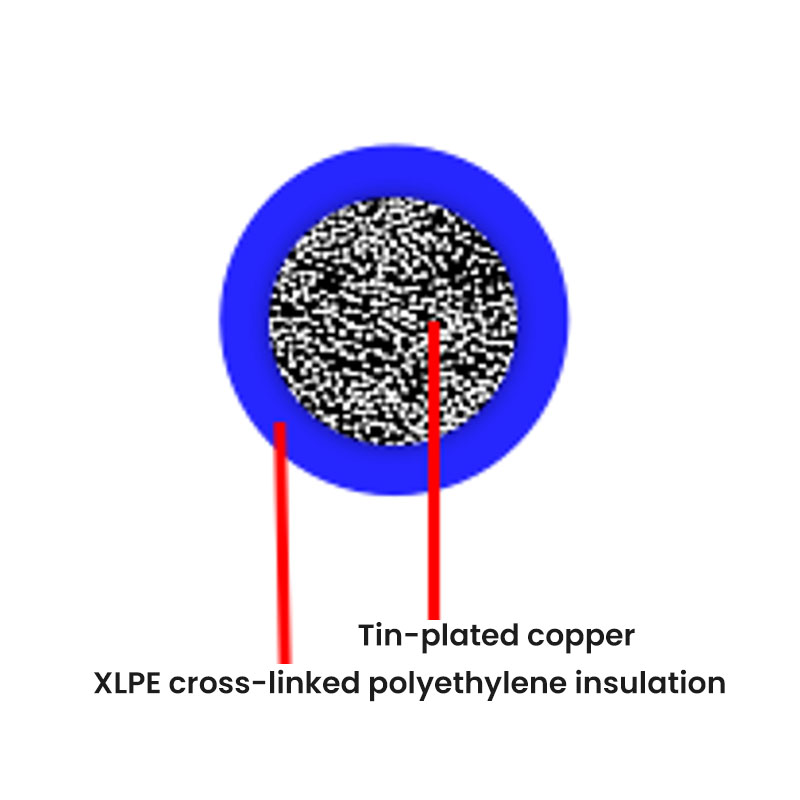
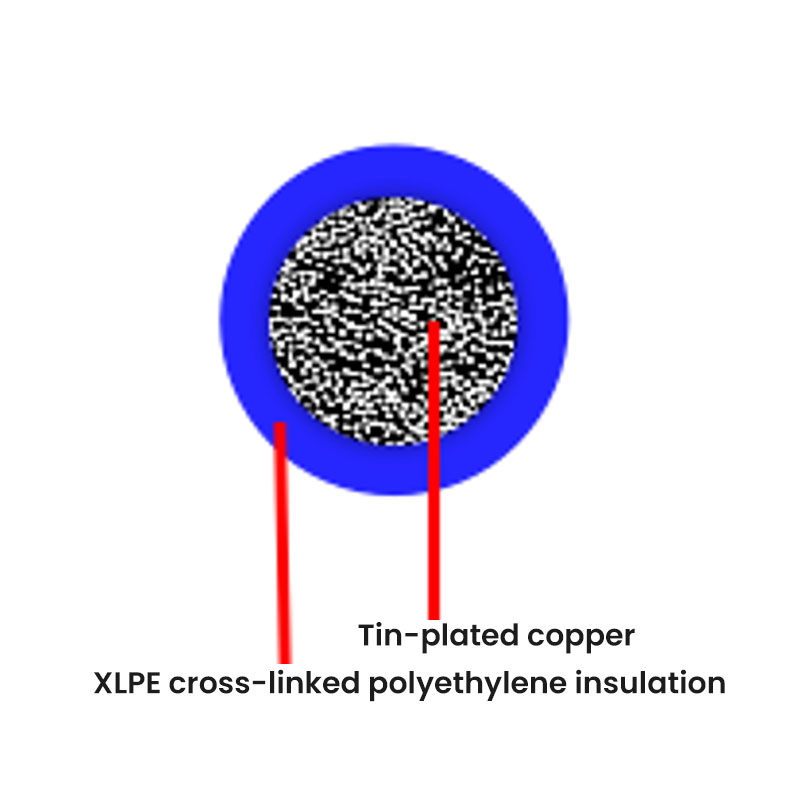
| FLR2X (FHLR2X) | XLPE | B (125 °C) | Thin | Engine compartment, lighting, power feeds |
| FLR6YA / FLR7YA | ETFE | C (150 °C) | Thin | Transmission and engine hot zones |
| FLR9Y | Fluoropolymer | C (150 °C) | Thin | Fuel systems and high-vibration areas |
| FLU6YA / FLU7YA | ETFE | C (150 °C) | Ultra-thin | Weight-optimized and EV harnesses |
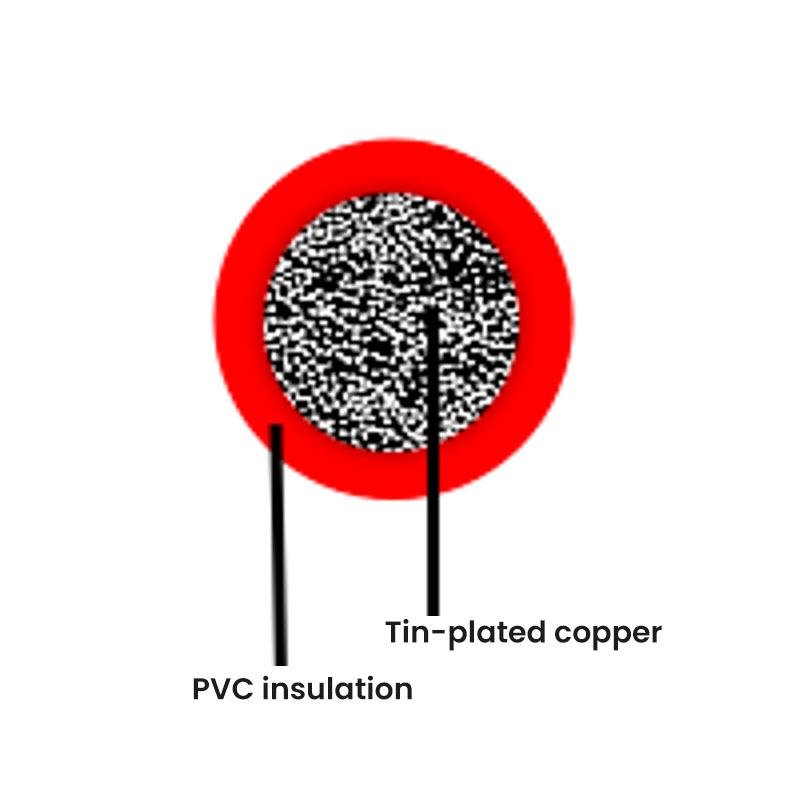 German Standard Single Core Automotive Cable Range by Insulation TypeThis page lists the German standard single-core automotive cables, covering thick-wall, thin-wall, and ultra-thin-wall variants with PVC, XLPE, and ETFE insulation. Check full drawing callouts for correct type selection.View Product →
The "R" in FLRY and FLR2X indicates a thin-wall profile, while the "U" in FLU6YA marks an ultra-thin-wall construction. The final letters identify the insulation material: Y for PVC, X for cross-linked polyethylene, and YA for ETFE. Some OEM drawings add suffix designations such as A-B for asymmetric conductor construction, so always check the full drawing callout rather than relying on the first four characters alone.
Choosing the Right Insulation Material
Insulation material is the most important selection factor for German automotive cable, because it determines the continuous temperature rating and the mechanical behaviour of the wire inside the harness. The chart below compares the maximum continuous conductor temperature for the four insulation families most commonly specified.
PVC (FLRY) is the economical default for interior harnesses where temperatures stay moderate. XLPE (FLR2X) adds 20 °C of headroom at a modest increase in cost and is widely used for engine-adjacent circuits. ETFE (FLR6YA, FLR7YA and the FLU types) provides a 150 °C continuous rating together with excellent mechanical toughness and low weight, which is why it dominates high-temperature and weight-sensitive applications.
One point buyers often miss: the temperature class in the standard is the maximum continuous conductor temperature, but OEM drawing limits may also add short-circuit peak temperature and cold-ageing requirements. Both must be verified with test reports, not just a datasheet.
Thin-Wall vs Ultra-Thin-Wall: Weight and Packaging Trade-offs
For a typical mid-size passenger car, the wiring harness contains roughly 1.5 to 2 km of cable. A 0.1 mm reduction in average insulation wall thickness can save more than a kilogram per vehicle, plus valuable routing space behind the dashboard and along door pillars. That is why ISO 6722 defines separate wall thickness categories.
The chart compares approximate cable mass per kilometre for typical standard-wall, thin-wall and ultra-thin-wall constructions based on the same conductor cross-section. The weight gap grows with conductor size, which is why ultra-thin-wall ETFE cables such as FLU6YA and FLU7YA are specified extensively in EV battery packs and body-in-white harnesses.
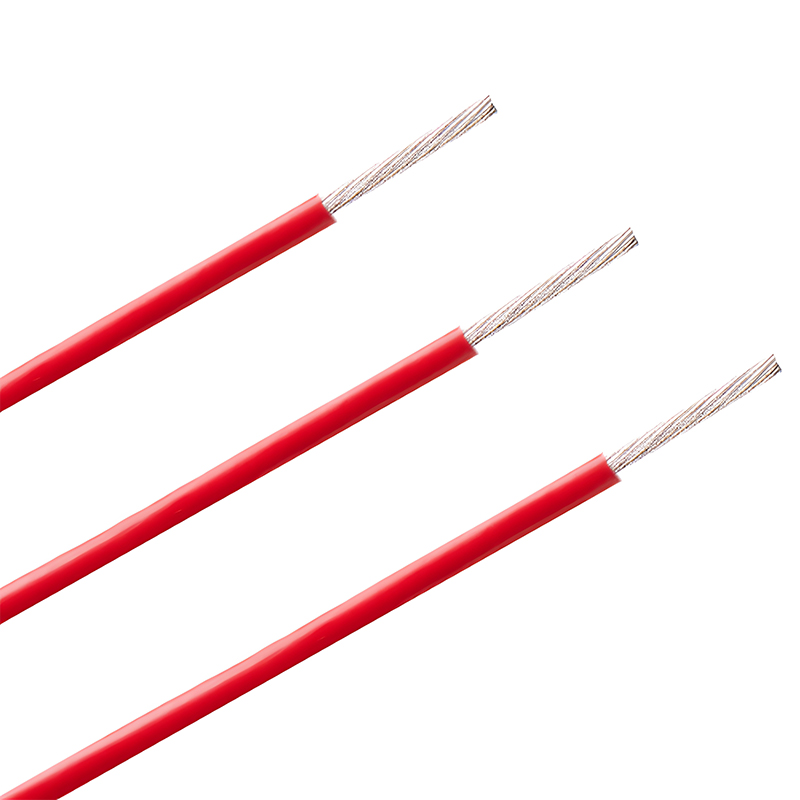 Lightweight Ultra-Thin Wall Automotive Wire for EV HarnessesUltra-thin-wall constructions like FLU6YA reduce weight and bundle diameter, making them suitable for EV battery packs and body harnesses. The page also lists Teflon and silicone wire alternatives for high-temperature applications.View Product →
A practical trade-off: thinner walls reduce weight and bundle diameter, but they also reduce abrasion resistance and increase the risk of insulation damage during assembly. Design engineers compensate with taped or convoluted protection in high-wear zones, so the cable choice cannot be made in isolation from the harness protection strategy.
Single-Core vs Multicore German Standard Cables
ISO 6722 is written for single-core cables, and the type codes above refer to single-core constructions. However, harness production often benefits from multicore German standard automotive cables that bundle several FLR-type cores under one outer sheath.
Choose single-core cables when you need maximum routing flexibility, discrete circuit identification, and simpler terminal crimping. Choose multicore cables when you want faster installation, a common outer jacket for mechanical protection, and better containment of electromagnetic interference between circuits.
Multicore versions are commonly built with 2 to 30 cores using FLRY or FLR2X cores, with an optional braided shield and an outer PVC or TPE sheath. They are used for door modules, seat adjustment systems, sensor groups, and infotainment bundles. If your drawing specifies a shielded multicore construction, check the bend radius and EMC test data rather than assuming the single-core performance carries over.
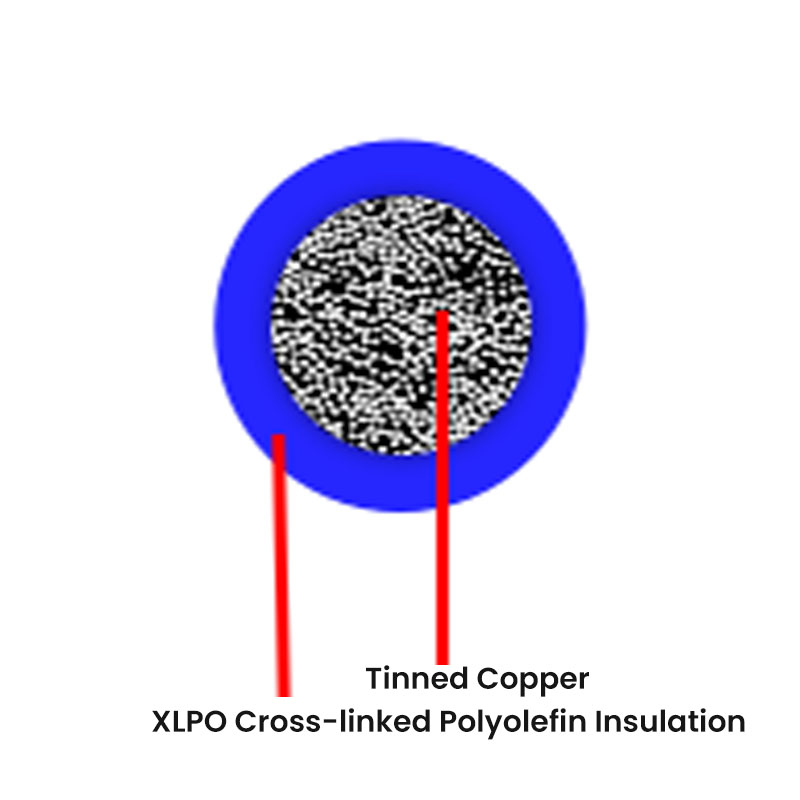 German Standard Multi-Core Automotive Cable with Shielding OptionsMulti-core cables using FLRY or FLR2X cores, with optional braided shield and PVC/TPE sheath, suit door modules and sensor groups. Buyers should verify material authenticity, dimensions, and test documentation when sourcing from China.View Product →
Quality Assurance and Sourcing From China
Buyers sourcing German standard automotive cable from China for the first time usually worry about four things: material authenticity, dimensional consistency, test documentation, and the supplier's quality system. Each one can be verified.
- Engine bay: 35%
- Interior: 30%
- Chassis & body: 20%
- EV/battery: 15%
At a minimum, a qualified Chinese cable manufacturer should hold IATF 16949 certification, not just ISO 9001, because IATF 16949 adds automotive-specific requirements for product safety, traceability, and change management. ISO 6722 compliance should be supported by test data covering conductor resistance, insulation resistance, voltage withstand, thermal ageing, abrasion, and flammability.
Ask your supplier for the following before committing to a production order:
- A material declaration for the insulation compound, including the specific grade and compound supplier.
- Dimensional reports for each conductor size, showing strand count, diameter range, and insulation wall thickness measured at two locations.
- ISO 6722 test reports from an accredited laboratory, third-party or internal.
- A production part approval process (PPAP) submission if your application is safety-related.
- Samples for your own incoming inspection, including a fit-check with the specified connector terminals.
For a deeper look at how cable requirements are applied in production environments, review our automotive cable industry solutions. You can also examine automotive wiring case studies that show how specifications translate into delivered parts.
Frequently Asked Questions
What is the difference between FLRY and FLR2X?
FLRY uses PVC insulation rated for continuous temperatures up to 105 °C, while FLR2X uses cross-linked polyethylene (XLPE) rated up to 125 °C. FLR2X also offers better resistance to abrasion and heat ageing, so it is preferred for engine compartment circuits. The cost difference is small enough that many harness makers standardise on FLR2X for all under-bonnet wiring.
Can a single-core ISO 6722 cable replace a multicore assembly?
Not directly. ISO 6722 covers single-core cables only. Multicore German standard automotive cables are assembled from single-core components under a common sheath, and their overall performance, especially bending radius and EMC behaviour, depends on the cabling lay and sheathing materials. If your drawing specifies a multicore construction, use the multicore product rather than grouping individual wires in the field.
How do I verify that a Chinese supplier's thin-wall cable is genuine?
Check the nominal insulation thickness against the ISO 6722 wall category for the given conductor size, and ask for both average and minimum wall thickness measurements. A true thin-wall FLRY cable for 0.5 mm² typically has an insulation thickness of about 0.3 mm and is significantly lighter than a standard-wall cable. Also confirm the outer diameter range, because thin-wall dimensions are tightly controlled.
Do German standard automotive cables require RoHS compliance?
For vehicles sold in the European market, yes. The RoHS and ELV directives restrict lead, cadmium, phthalates and other substances in cable materials. Request a RoHS and REACH declaration from your supplier, and make sure the insulation compound supplier is identified so the declaration can be traced.
Sourcing German standard automotive cable from China is a mature, well-documented buying process when you treat the cable code as a specification, not a label. Confirm the insulation material, wall category, temperature class and test evidence; verify the supplier's IATF 16949 status; and always qualify samples in your own production line before scaling up. A capable Chinese manufacturer will meet ISO 6722 requirements and often deliver better lead times and pricing than traditional alternatives, while providing the documentation your quality team needs.

-
Phone
+86-(0)21-6083 5889
+86 138 1238 0261 -
Email
export03@silvertincable.com
export@silvertincable.com -
Headquarter Address:
No. 20 Jianling Road, Zhangguo Community, Dainan Town, Xinghua City. Jiangsu Province China
-
Shanghai Branch:
Room 18A, West Building, Keji Jingcheng, No. 668 East Beijing Road. Huangpu District, Shanghai, China
Copyright © 2025 Jiangsu Silver& Tin Thread Hi-temperature Wire and Cables Co., Ltd. All Rights Reserved.
China industrial cable manufacturer Custom specialized wire & cable supplier