
 English
 русский
 Español
 عربى

 Home / News / Industry News / China Multi-core Thermocouple Cable: Selection, Standards & Buying Guide

Industry News
China Multi-core Thermocouple Cable: Selection, Standards & Buying Guide
2026-10-16
Content
- 1 What "Multi-core Thermocouple Cable" Actually Covers
- 2 Why So Much of This Cable Is Made in China
- 3 The Specification Table That Prevents Costly Mistakes
- 4 Alloy Choice and Tolerance: Where the Real Money Sits
- 5 Insulation and Construction for Real Plant Conditions
- 6 Standards, Documentation and Acceptance Testing
- 7 Common Buying Mistakes Worth Avoiding
- 8 Frequently Asked Questions
- 9 Getting the Quote Right the First Time
A procurement team in Southeast Asia sends the same RFQ to five Chinese cable factories: 3,000 metres of Type K multi-core thermocouple cable — four pairs, FEP insulation, overall tinned-copper shield, SS304 braid, 200 °C continuous. Five quotations come back spread across nearly 40 percent, and the cheapest one never states which alloy it drew the conductors from or which tolerance class it tested to. That gap, not the metre price, is what usually creates the problem six months later on site.
The short answer: before you compare prices, lock down four variables — alloy grade and tolerance class, conductor and pair construction, insulation and shielding system, and the standard the finished cable is tested against. Once those are written into the RFQ, the quotes become comparable and the delivered cable becomes verifiable. Everything below explains how those four variables behave in practice, and where the hidden costs actually sit.
What "Multi-core Thermocouple Cable" Actually Covers
Multi-core thermocouple cable carries two or more pairs of thermocouple-grade alloy conductors in one jacket. It routes a group of mV-level signals from a bank of thermocouples back to a transmitter cabinet, marshalling panel or DCS cabinet, so one cable replaces a dozen individual runs.
It is not the same product as single-pair thermocouple extension wire, and it is not the same as a multi-core instrument cable with plain copper conductors. Three families get mixed up at the quotation stage:
- Thermocouple grade — conductor alloys matched to the thermocouple type (K, J, T, E, N) and tested to the full accuracy class of the relevant standard.
- Extension grade — the same nominal alloy family with a wider tolerance band, used for the run from the head to the cold junction. Cheaper, and perfectly acceptable if the total error budget allows it.
- Compensation cable — different alloys, sometimes copper, designed to imitate the thermocouple EMF curve over a narrow temperature band. Common in older plants; rarely the right choice in a new project.
If a datasheet does not state which of the three you are buying, the price comparison is meaningless. This is the single most common reason two Chinese suppliers can quote figures that differ by a third.
 Multi-Core Thermocouple Cable for Multi-Channel Temperature MeasurementMulti-core thermocouple cable for multi-channel temperature measurement, with individually insulated cores, extension and compensation types, and simplified wiring for industrial data acquisition.View Product →
For new installations the practical baseline is a true multi-core thermocouple cable with twisted pairs, individual shielding on each pair where signal density is high, and an overall shield or armor over the bundle.
Why So Much of This Cable Is Made in China
China's high-temperature cable cluster sits mainly in Jiangsu, Zhejiang and Anhui. The supply chain advantage is real and specific rather than generic: fluoropolymer resin capacity for PTFE, PFA and FEP, mica tape and glass yarn availability, and a dense base of small drawing mills that specialise in nickel-chromium and nickel-aluminium alloys.
The difficult step is not extrusion. It is drawing chromel and alumel to 0.5 mm and below while holding diameter tolerance and composition tightly enough that the EMF curve stays inside Class 1. Only a handful of mills do this well, and cable factories buy from them. That is why two cable makers with identical machinery can deliver very different accuracy performance.
Certification is the second filter. A supplier serving critical industries will typically hold ISO 9001 and, where automotive or rail work is involved, IATF 16949, plus product approvals such as CE, UL, CCC, SGS and RoHS. Jiangsu Silver & Tin Thread Hi-temperature Wire and Cables Co., Ltd. is an example of the profile to look for: roughly three decades in high-temperature wire and cable, a quality system that also covers military equipment manufacturing, and a product range that spans fluoroplastic, silicone, mica, instrumentation and heating cables rather than one narrow line. A supplier that already extrudes FEP and PFA in-house generally has better process control over the insulation layer than one buying finished cores on the open market.
The Specification Table That Prevents Costly Mistakes
| Parameter | Common options | What to state in the RFQ |
|---|---|---|
| Thermocouple type | K, J, T, E, N | Type plus reference standard, e.g. IEC 60584-1 or ASTM E230 |
| Tolerance class | Class 1 / Class 2 (IEC); Special / Standard (ASTM) | Class plus the test temperature points you want reported |
| Conductor | Solid or stranded, 0.5–3.2 mm² (20–12 AWG) | Cross-section, strand count, alloy designation |
| Pairs and lay-up | 2, 4, 6, 8 or 12 pairs; twisted pairs or triads | Pair count, twist lay, individually shielded or not |
| Insulation | FEP, PFA, PTFE, silicone, fiberglass, mica tape | Material and continuous rated temperature |
| Shield | Aluminium/polyester tape with drain, tinned copper braid | Braid coverage percentage, drain wire size, grounding scheme |
| Armor / jacket | SS304 or SS316 braid, PVC, FEP, fiberglass | Site environment: washdown, chloride exposure, abrasion, rodents |
| Temperature rating | 200 °C, 260 °C, 400 °C, 800 °C short-term | Continuous rating and short-term excursion separately |
| Standard | IEC 60584, ANSI MC96.1, ASTM E230, GB/T 16839 | Standard and edition, plus acceptance test list |
| Delivery format | 100 m, 500 m or 1,000 m drums | Drum length, length tolerance, reel type and packing |
Alloy Choice and Tolerance: Where the Real Money Sits
Type K is the workhorse, and in China it is also the most widely produced. It performs well in oxidising atmospheres up to roughly 1,100 °C, but it drifts measurably after prolonged exposure between 250 °C and 550 °C because of short-range ordering in the chromel leg. If your process sits in that band and the loop is used for control rather than indication, expect recalibration.
Type N was developed specifically to reduce that drift and holds up better in high-temperature and nuclear-adjacent duty, at a higher price. Type J is cheaper and suited to reducing atmospheres, but its iron leg rusts if moisture reaches the conductor. Type T is the accurate choice for cryogenic and low-temperature work. Type E gives the highest EMF output per degree, useful where signal resolution is marginal.
The tolerance class is where buyers lose the most money without noticing. Under IEC 60584-2, Class 1 Type K is ±1.5 °C from −40 °C to 375 °C and ±0.4 percent of reading above that; Class 2 is ±2.5 °C or ±0.75 percent. ASTM E230 Special Limits are tighter still. Ask for a lot-level EMF test report with the reference junction temperature stated, not a generic certificate that simply says "conforming". A cable that is Class 2 in practice but sold as Class 1 will not fail on day one; it will drift the control loop out of specification over a maintenance cycle.
Insulation and Construction for Real Plant Conditions
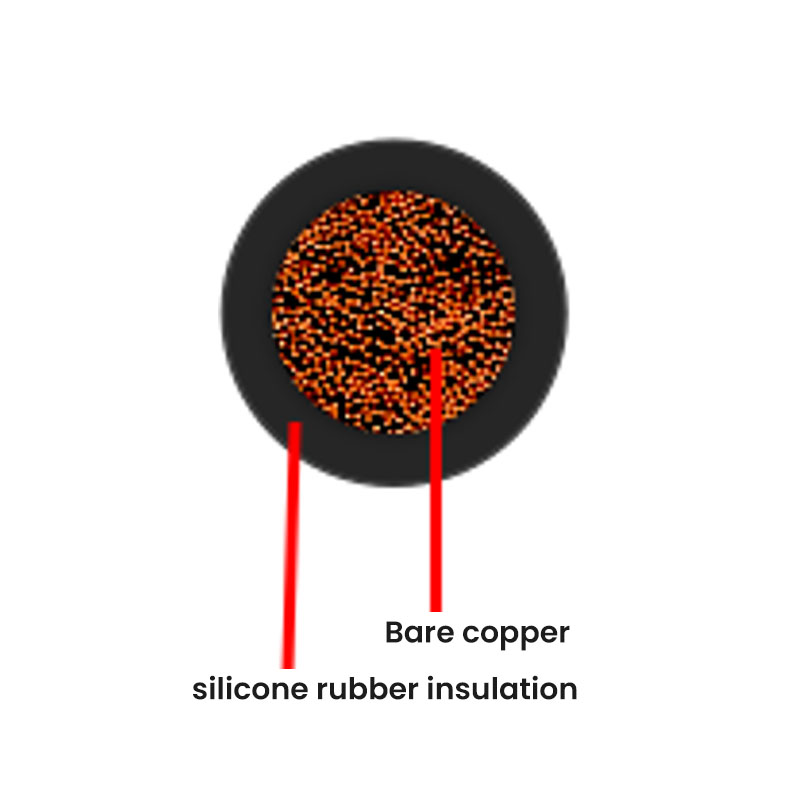
Insulation selection follows the environment, not the temperature on the process tag. FEP and PFA are non-hygroscopic and flexible from −200 °C upward, with PFA holding up to about 260 °C. PTFE offers similar thermal performance with better chemical resistance. Silicone rubber is flexible and cheap up to roughly 180–200 °C, but it is mechanically soft and degrades faster in oil mist. Fiberglass and mica tape reach much higher temperatures and survive fire exposure, yet both absorb moisture, so they must be jacketed or effectively sealed in a humid plant.
Shielding matters as much as insulation. In a four-pair cable running beside variable-frequency drives, individually shielded pairs with an overall shield are the difference between a clean mV signal and a permanently noisy channel. Ground the shield at one end only — normally at the cabinet — to avoid ground loops that inject far more noise than they remove.
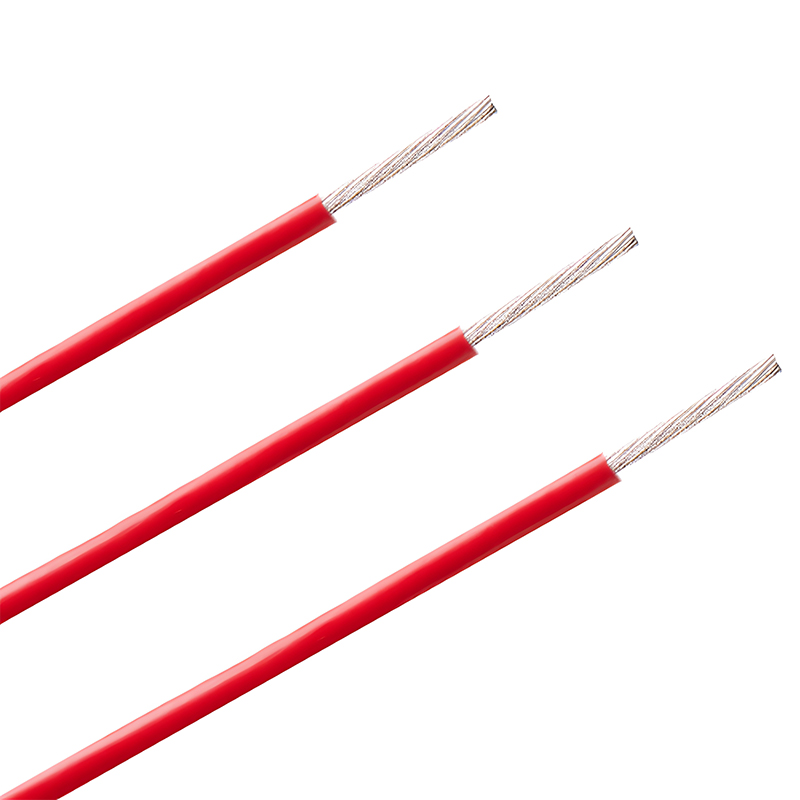 Multi-Core Instrument Cable for Temperature Measurement and Weak Signal TransmissionMulti-core instrument cable with individual and overall screening, fluoroplastic insulation, and optional armoring for reliable weak-signal transmission in industrial temperature monitoring.View Product →
Armoring is specified by site reality rather than by habit. SS304 braid handles most mechanical and rodent risk; SS316 is the sensible upgrade in coastal or chloride-bearing environments, which is typical of petrochemical plants and offshore installations. Where the cable is tray-run indoors in a clean room, a PVC or FEP jacket is lighter and cheaper.
Standards, Documentation and Acceptance Testing
A serious Chinese manufacturer will send a documentation pack before shipment, not after. At minimum, expect a mill certificate for the alloy conductor, an EMF conformity test report against IEC 60584 or ASTM E230, a dimensional report on conductor diameter and insulation wall, a spark test record, and insulation resistance results. Where the cable is destined for the EU, RoHS documentation is not optional; where it goes to North America, ask for the UL file number covering the specific insulation style rather than a photograph of a label.
It also helps to compare construction philosophies before you commit. A useful reference is this comparison of high-temperature cable selection methods, which sets out how fluoroplastic, silicone and mica constructions diverge in practice and why the same nominal temperature rating can hide very different service life.
Common Buying Mistakes Worth Avoiding
- Buying on price per metre without naming a tolerance class — the two are not comparable products.
- Accepting "Type K" as a complete specification with no alloy certificate behind it.
- Mixing extension grade wire into a control loop that was designed around thermocouple grade accuracy.
- Forgetting to specify the grounding scheme, then discovering noise after commissioning.
- Choosing fiberglass or mica insulation for a wet or washdown area without a sealed jacket.
- Ordering odd drum lengths without agreeing a length tolerance, which makes site pulling unpredictable.
- Treating lead time as a formality — specialised pair counts and armoring are made to order, and rush orders tend to sacrifice test documentation first.
Frequently Asked Questions
Is multi-core thermocouple cable the same as multi-core instrument cable?
No. Thermocouple cable uses matched alloy conductors so the cable itself generates a predictable EMF curve. Instrument cable uses copper conductors and is only suitable for signals that are already conditioned or for non-thermocouple transmitters.
Can I run different thermocouple types in one cable?
It is technically possible, but each pair must be individually shielded and the cross-talk risk grows with pair count. For mixed types in one bundle, order individually shielded pairs and confirm the lay-up drawing before production.
What tolerance class should I specify?
Class 1 for anything feeding a control loop, a safety interlock or a custody-transfer measurement. Class 2 is acceptable for indication and trend logging where a couple of degrees of additional uncertainty does not change a decision.
How long does production normally take?
Chinese factories commonly quote two to four weeks for standard pair counts and insulation systems, with longer times for high pair counts, specialist armor or Type N alloys. Always ask for the test schedule alongside the delivery date, so documentation does not become the bottleneck.
Getting the Quote Right the First Time
Write the four variables into the RFQ, ask for the EMF test report as a deliverable rather than a favour, and specify the grounding arrangement in the drawing. Do that and the price spread across Chinese suppliers stops looking random — it starts mapping onto real differences in alloy, insulation grade and testing depth.
If the application involves multiple thermocouples in a dense tray, high ambient temperature or a corrosive atmosphere, it is worth sending the loop schedule and site conditions with the enquiry and letting the manufacturer propose a construction. That conversation is much cheaper at the quotation stage than a re-termination after commissioning.

-
Phone
+86-(0)21-6083 5889
+86 138 1238 0261 -
Email
export03@silvertincable.com
export@silvertincable.com -
Headquarter Address:
No. 20 Jianling Road, Zhangguo Community, Dainan Town, Xinghua City. Jiangsu Province China
-
Shanghai Branch:
Room 18A, West Building, Keji Jingcheng, No. 668 East Beijing Road. Huangpu District, Shanghai, China
Copyright © 2025 Jiangsu Silver& Tin Thread Hi-temperature Wire and Cables Co., Ltd. All Rights Reserved.
China industrial cable manufacturer Custom specialized wire & cable supplier