
 English
 русский
 Español
 عربى

 Home / News / Industry News / China Multi-core Instrument Cable: Specs, Shielding, QC, and Sourcing Guide

Industry News
China Multi-core Instrument Cable: Specs, Shielding, QC, and Sourcing Guide
2026-10-09
Content
- 1 What a Multi-core Instrument Cable Contains, Layer by Layer
- 2 Temperature Rating Decides the Insulation Compound
- 3 Shielding, Capacitance and the Noise That Reaches the DCS
- 4 Multicore Thermocouple Cable: Matching the Alloy to the Loop
- 5 What to Write into the Purchase Order
- 6 Chinese and International Standards: Choosing the Line to Buy Against
- 7 Where the Money Goes, and Why a 27% Discount Is a Red Flag
- 8 Questions Buyers Ask Before Ordering
A 12-pair shielded instrument cable can look identical in three quotations from China. All three drawings say "12×2×1.0 mm², FEP insulated, tinned copper braid, 200 °C". Then the pre-shipment inspection report arrives and the details separate: foil overlap of 0.05 mm instead of 0.15 mm, braid coverage of 78% instead of 92%, a 0.3 mm² drain wire where the loop drawing assumed 0.5 mm², and a pair lay length of 90 mm instead of 50 mm. Every drum passes the electrical test, and none of it is the cable the loop was designed around.
Here is the short answer: multi-core instrument cable from China is not one product with one price. Two honest factories can quote 25–30% apart, because conductor class, insulation compound, shield coverage, lay length and the test package are all variables. Buy well by freezing those variables in writing before the first drum is wound.
What a Multi-core Instrument Cable Contains, Layer by Layer
A multi-core instrument cable carries low-energy signals — 4–20 mA loops, RTD resistance, thermocouple millivolts, HART and fieldbus traffic — through electrically noisy plants. Chinese factories usually build it in this order: stranded tinned copper conductor, insulation, twisted pairs or triads, an optional individual shield per pair, an overall shield, an inner sheath, and a jacket in PVC, LSZH or fluoropolymer.
| Layer | Common options in China | What to freeze on the drawing |
|---|---|---|
| Conductor | Tinned copper, IEC 60228 Class 2 or Class 5, 0.5–1.5 mm² | Strand count, single-wire diameter, tinning |
| Insulation | FEP, PFA, PTFE, XLPE, PVC, silicone | Compound grade, wall thickness, concentricity |
| Pairing | Twisted pair or triad, individually shielded or not | Lay length, direction, capacitance unbalance |
| Pair shield | Aluminium/PET foil, 100% coverage, with drain wire | Foil overlap, drain cross-section, contact method |
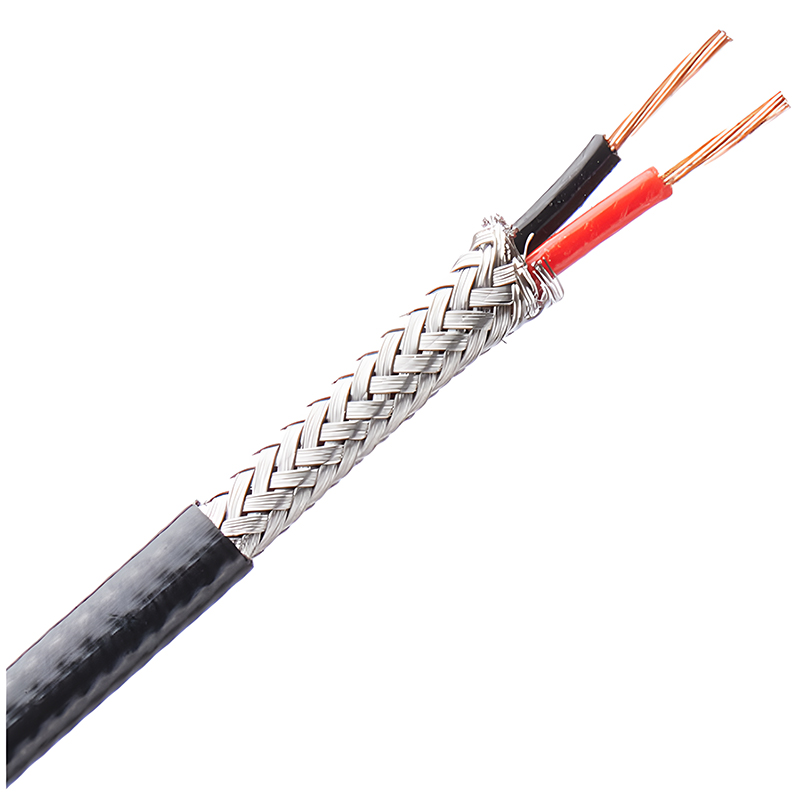
| Overall shield | Tinned copper braid, 70–95% coverage | Coverage percentage, verification method |
| Inner sheath and armour | PVC, LSZH, galvanized steel wire braid | Thickness, flame rating |
| Outer jacket | PVC, LSZH, FEP | Print legend, UV and abrasion resistance |
The two layers buyers underestimate most are the drain wire and the pair lay length. A drain has to stay in continuous contact with the foil; loose or undersized drains create intermittent grounding that appears months later as signal drift rather than a clean failure. Lay length governs magnetic rejection, so 40 to 60 mm for a 1.0 mm² pair is a sensible target.
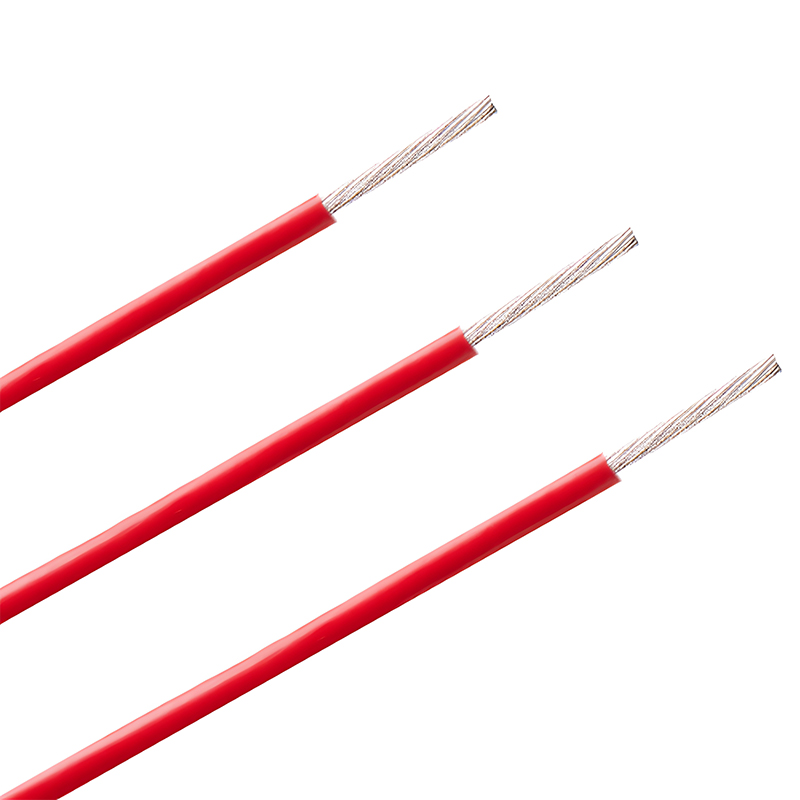 Multi-Core Instrument Cable for High-Temperature Temperature MeasurementWorth checking for drain-wire and pair-lay details in weak-signal runs, with fluoroplastic insulation and screening options for high-temperature instrumentation.View Product →
Temperature Rating Decides the Insulation Compound
Continuous service temperature eliminates materials before price is discussed. The limits quoted in most Chinese data sheets sit in a fairly narrow band per material family.
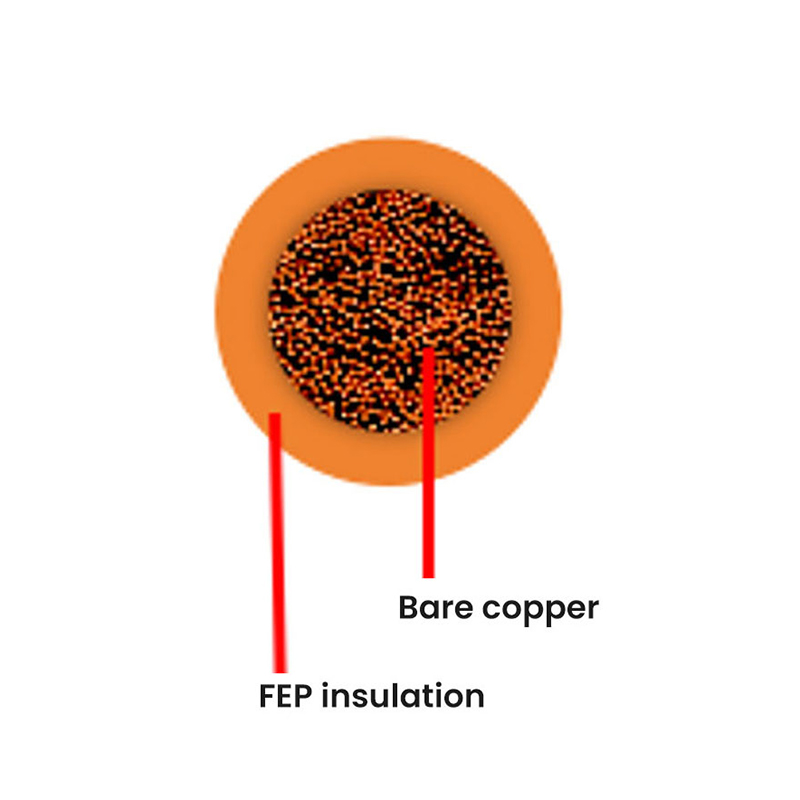
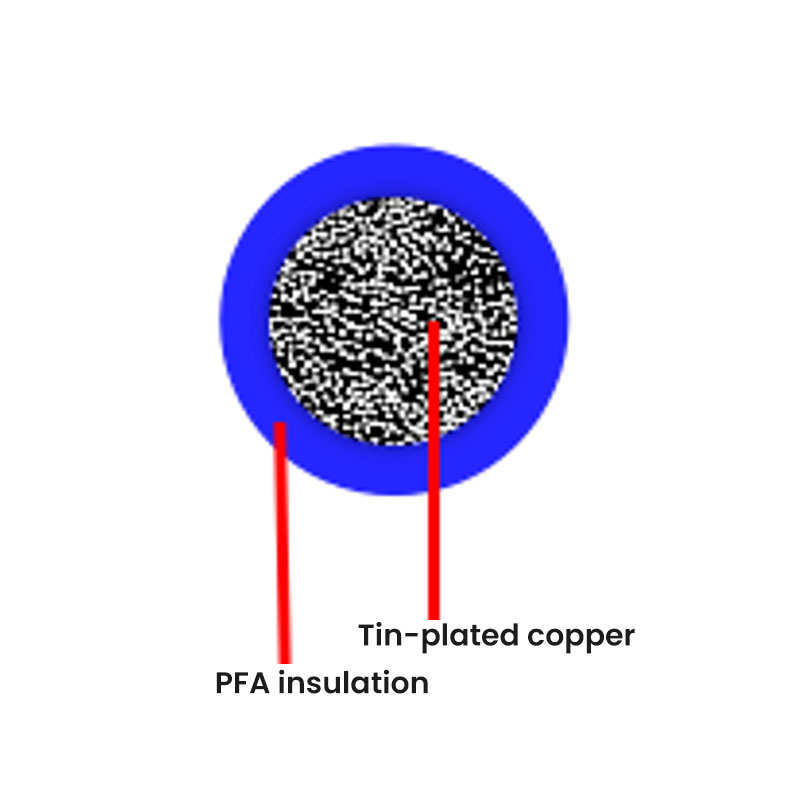
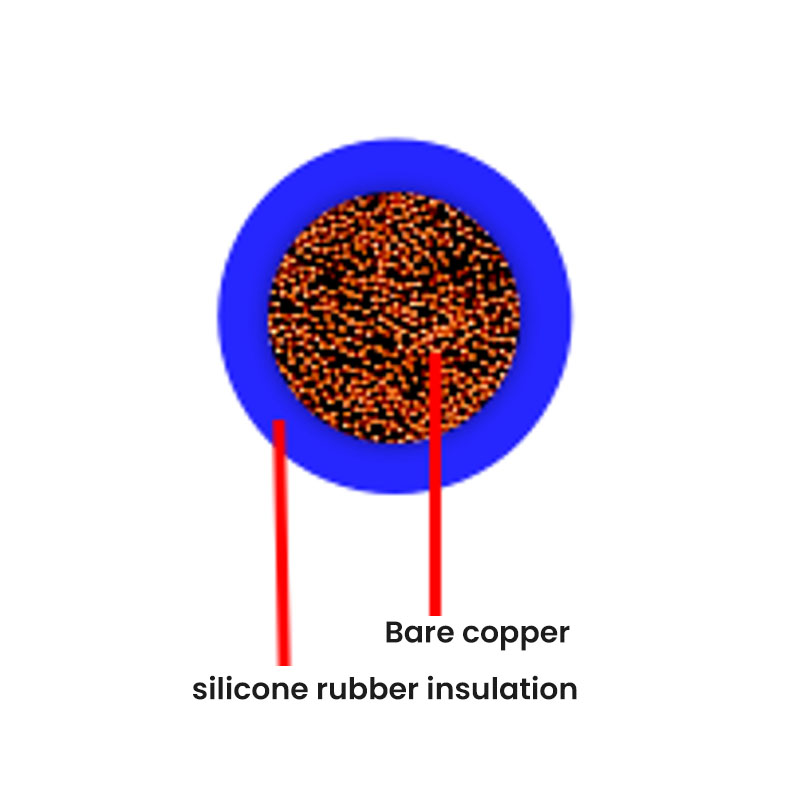
Two clarifications belong in writing. First, the figure is normally a continuous rating with a defined short-term allowance: a silicone cable rated 180 °C continuous may accept 200 °C for a limited number of hours, and fluoropolymers are usually specified with both continuous and intermittent values. Second, heat changes electrical behaviour, because insulation resistance falls and capacitance drifts on long analogue runs. For 200 °C service, FEP-insulated conductors such as the AF200 series are a common building block, while PFA and PTFE raise the ceiling at higher material cost. The trade-offs are compared in this high-temperature cable selection guide.
FEP Teflon Wire for High-Temperature Cable ConstructionFEP Teflon wire variants AF200-X and AF200, useful when comparing fluoropolymer insulation for high-temperature cables and continuous versus intermittent service limits.View Product →Shielding, Capacitance and the Noise That Reaches the DCS
A shield addresses two coupling mechanisms. Electric-field coupling is handled by foil, braid or both. Magnetic-field coupling is handled mainly by twisting and only partly by armour. Aluminium/PET foil gives 100% coverage with a drain wire, which is why it dominates static installations; braid alone is chosen where the cable must flex or where lower shield resistance is wanted, with coverage typically between 70% and 95%.
Capacitance decides whether a long run still reads cleanly. Conductor-to-conductor capacitance of roughly 100–120 pF/m is typical for instrumentation cable, and conductor-to-shield capacitance affects how quickly a step change settles. Grounding belongs in the same discussion: low-frequency loops are usually grounded at one end to avoid circulating currents, while high-frequency noise needs both ends bonded to a proper reference. Where instrument cables share a tray with 400 V motor feeders — common in petrochemical and refining instrument loops — keep at least 300 mm separation, cross at 90 degrees and prefer metal conduit.
Multicore Thermocouple Cable: Matching the Alloy to the Loop
Thermocouple cable is where small specification errors become large temperature errors. Extension cable uses the same alloys as the thermocouple (KX for type K, JX for type J) and stays accurate across its whole range. Compensating cable uses cheaper alloys that match the thermocouple curve only near ambient — acceptable when the transmitter sits close to the sensor, and wrong when the junction box is 40 m away.
Tolerance classes follow IEC 60584-3, where Class 1 for type K is roughly ±1.5 °C and Class 2 roughly ±2.5 °C, with type T tighter still. Colour codes are a separate trap: ANSI, IEC, DIN and JIS use different combinations, so the same blue-and-brown sheath can indicate different thermocouple types depending on the standard. Write the standard, the class and the alloy on the purchase order, not only the type letter.
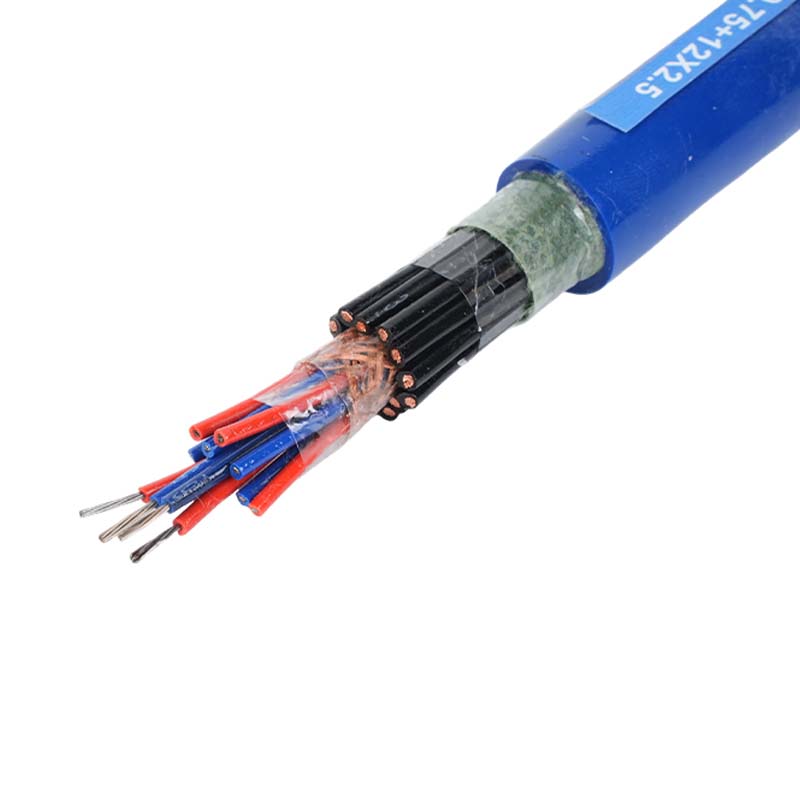 Multi-Core Thermocouple Cable for High-Density Temperature Signal ArraysFor routing multiple thermocouple signals, this cable offers alloy pairs, twisted-pair construction, and individual or overall screening; verify tolerance class and colour standard before ordering.View Product →
What to Write into the Purchase Order
Put these items on the order and require the routine test report to reference them:
- Conductor class and material, for example Class 2 tinned copper at 1.0 mm² with a maximum of 18.2 Ω/km at 20 °C.
- Insulation compound, wall thickness and concentricity limits.
- Pair count, individual and overall shield type, drain wire cross-section.
- Jacket material plus flame, halogen and smoke performance: IEC 60332-1-2, IEC 60332-3-24, IEC 60754-1 and -2, IEC 61034-2.
- Electrical acceptance values: insulation resistance at 500 V DC, voltage test level, capacitance unbalance between pairs.
- Marking and traceability: metre marking along the sheath, batch number on the drum label, drum length tolerance of ±0.5%.
- Documentation: RoHS and REACH declarations, dimensional report, routine test report, third-party reports where the project requires them.
Certifications reduce audit work later. Jiangsu Silver & Tin Thread Hi-temperature Wire and Cables Co., Ltd., for example, has produced special cables for roughly three decades and holds ISO 9001, IATF 16949 and a weapons-equipment quality management certificate, with CE, UL, CCC, SGS and RoHS approvals on its main products.
Chinese and International Standards: Choosing the Line to Buy Against
Experienced Chinese factories can build to GB, IEC, EN, BS or UL. What matters is which line is written into the order and whether type-test evidence comes with it.
| Standard line | Covers | Typical project |
|---|---|---|
| EN 50288-7 | Multi-element metallic cables for analogue and digital instrumentation and control | European process plants |
| BS 5308 Part 1 and 2 | Instrumentation cables, PE and PVC, armoured and unarmoured | UK and offshore platforms |
| IEC 60584-3 | Thermocouple extension and compensating cables | Temperature loops worldwide |
| GB/T 9330 | Chinese control cables | Domestic projects and retrofits |
| UL 83 and UL 758 | Thermoplastic insulated wire and appliance wiring material | Equipment exported to North America |
| IEC 60332, 60754, 61034 | Flame propagation, halogen acid gas, smoke density | LSZH specification anywhere |
A practical approach for overseas buyers is to name the international line as the contractual standard, then ask the factory which Chinese standard it builds against internally. Any genuine gap between the two shows up in the test report before the drums ship.
Where the Money Goes, and Why a 27% Discount Is a Red Flag
Price differences between Chinese suppliers rarely come from labour. They come from copper, compounds, shielding and testing.
- Copper conductor 38%
- Insulation and jacket 22%
- Shielding 18%
- Processing and testing 14%
- Packing and logistics 8%
Copper is priced off the LME plus a processing charge and moves weekly, so a quote held for 60 days carries a copper assumption inside it — ask whether the price is fixed or linked. Insulation compound is the second variable: FEP and PFA cost several times more than PVC or XLPE, and substituting a lower grade within the same polymer family is hard to detect after delivery, which is why material certificates matter.
Tooling and minimum order quantity decide whether a special construction is economical. Standard pair counts ship in three to four weeks; a custom 16-pair individually shielded LSZH design with a specific print legend may need tooling, a sample approval loop and six to eight weeks. A quote 25–30% below the field is cheaper in one of five places: thinner insulation walls, lower braid coverage, a smaller drain wire, copper-clad aluminium strands, or a reduced test package.
Questions Buyers Ask Before Ordering
Is multi-core instrument cable the same as control cable?
No. Control cable switches contactors and carries higher currents, so capacitance and crosstalk are secondary. Instrument cable is built for low-level signals, with controlled capacitance, tighter twisting and shielding. The two are not interchangeable even when the conductor size matches.
How do I verify braid coverage before shipment?
Ask for optical coverage measurement on a short polished sample and a photograph of the braid over 100 mm. As a cross-check, weigh a measured length and compare it with the calculated copper content of the quoted coverage.
What lead time should I expect from a Chinese factory?
Three to four weeks for standard pair counts and jacket colours, six to eight weeks when tooling or a new print legend is involved. Add two weeks for third-party inspection if the project requires it.
Can one cable carry both analogue and digital signals?
Often yes, if capacitance and shield construction suit the protocol. Fieldbus and HART traffic tolerate moderate capacitance but are sensitive to shield continuity, so specify a continuous drain and test shield resistance on the finished drum.
Multi-core instrument cable sourced from China performs as well as anything else on the market when the specification is complete. The variables are known, measurable and fit on a single page: conductor class, insulation compound, shield coverage, lay length, drain size and the test package. Start from the loop conditions — temperature, run length, noise environment, thermocouple type — then fix the construction and the acceptance values, and ask for the routine test report and material certificates before the drums leave the factory.

-
Phone
+86-(0)21-6083 5889
+86 138 1238 0261 -
Email
export03@silvertincable.com
export@silvertincable.com -
Headquarter Address:
No. 20 Jianling Road, Zhangguo Community, Dainan Town, Xinghua City. Jiangsu Province China
-
Shanghai Branch:
Room 18A, West Building, Keji Jingcheng, No. 668 East Beijing Road. Huangpu District, Shanghai, China
Copyright © 2025 Jiangsu Silver& Tin Thread Hi-temperature Wire and Cables Co., Ltd. All Rights Reserved.
China industrial cable manufacturer Custom specialized wire & cable supplier