
 English
 русский
 Español
 عربى
عربى


Industry News
What is a robot control cable?
2026-07-10
Content
- 1 Why Standard Industrial Cables Fail Inside Robot Arms
- 2 Robot Cable vs Standard Industrial Cable: Performance Data
- 3 Inside the Structure: How Multi-Axis Flexibility Is Achieved
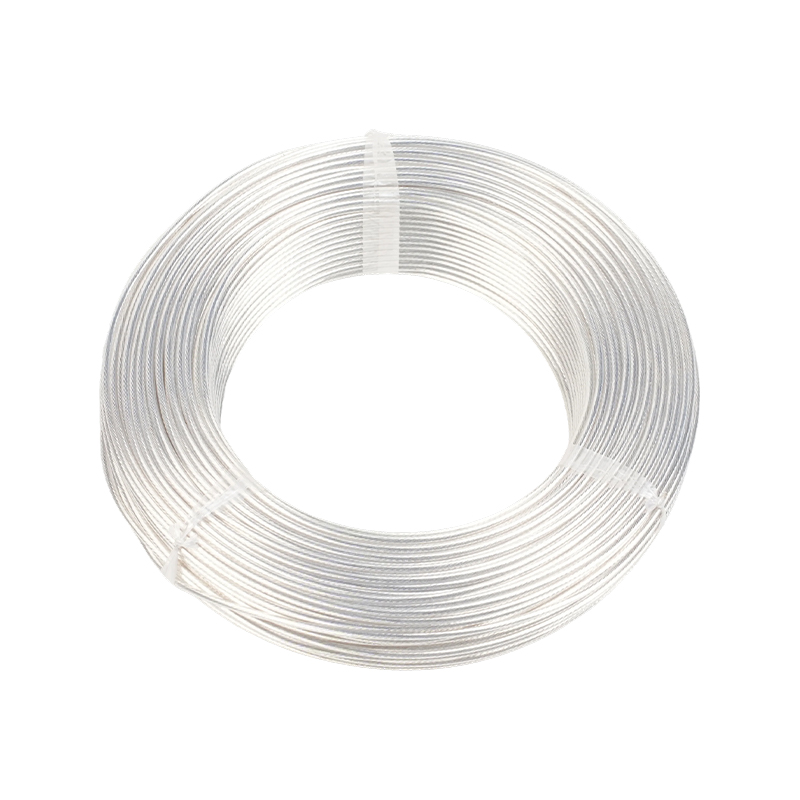
- 4 Core Conductor and Insulation Options
- 5 Where Robot Control Cables Are Used
- 6 Manufacturing Standards Behind a Reliable Robot Cable
- 7 Frequently Asked Questions
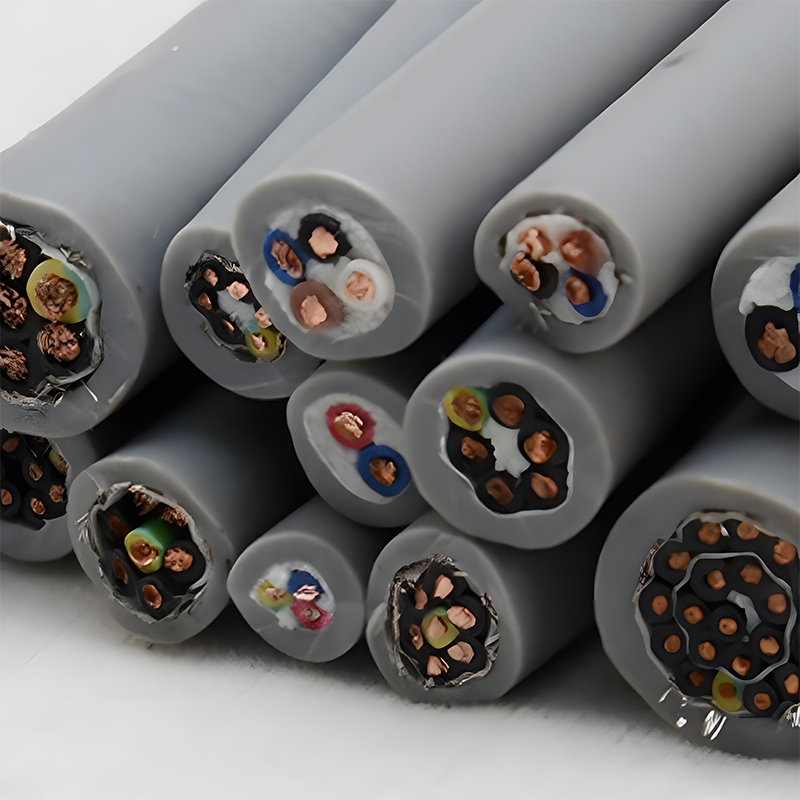
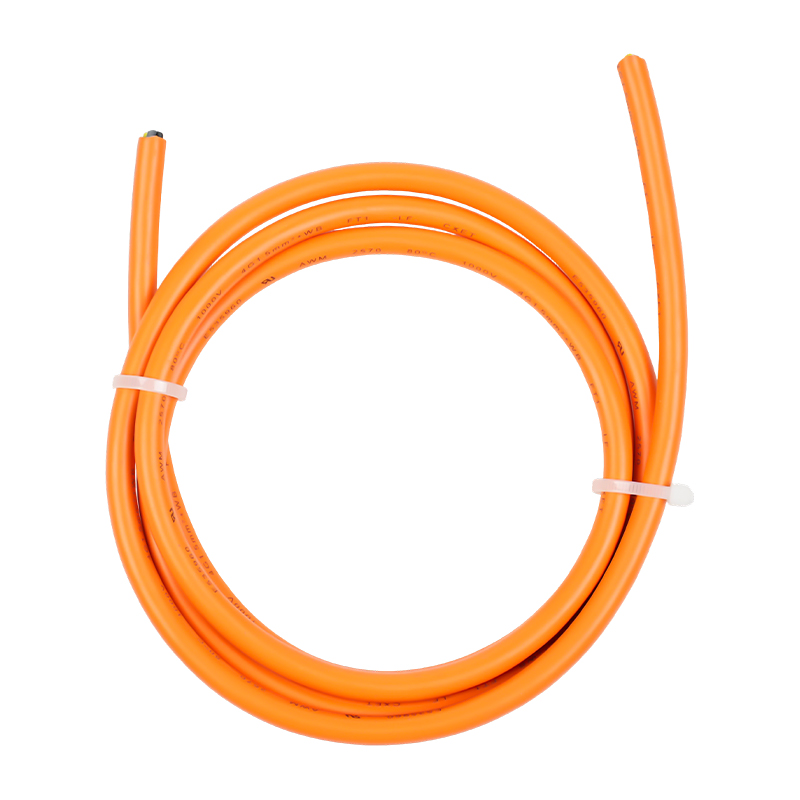
A robot control cable is a specialized multi-core cable engineered to carry power, control signals, and data through the constant bending, twisting, and rotation of a robotic arm without conductor fatigue or signal loss. Unlike standard industrial wiring, it uses short-lay stranding, internal lubricated slip layers, and flexible fluoroplastic insulation to survive millions of simultaneous torsion and flex cycles inside automated production lines.
Why Standard Industrial Cables Fail Inside Robot Arms
A robotic arm rarely moves in a single direction. Each joint introduces bending, rotation, and sudden acceleration at the same time, and a cable running along that arm must absorb all three forces simultaneously. This is very different from a drag-chain application, where movement is mostly linear and repetitive.
When a generic control cable is installed on a robot axis, the copper strands are gradually crushed at the twist points, the jacket work-hardens, and shielding coverage opens up gaps. The result is intermittent signal jitter, encoder errors, and eventually a broken conductor that stops the production line. A true robot control cable solves this with an internal structure specifically designed for combined bending and torsion, not just repeated flexing.
Robot Cable vs Standard Industrial Cable: Performance Data
The gap between a generic cable and a robotics-grade cable becomes obvious once tested under identical torsion and bending conditions. The table below summarizes typical laboratory benchmark data.
| Performance Criteria | Robot Control Cable | Standard Industrial Cable |
| Torsion Resistance | Up to plus/minus 180 degrees per meter | Around plus/minus 30 degrees per meter |
| Dynamic Bending Life | 10,000,000+ cycles | Around 1,000,000 cycles |
| Operating Temperature | -65 degrees C to +260 degrees C | -20 degrees C to +80 degrees C |
| Chemical Resistance | High resistance to oils and acids | Limited resistance |
| Shielding Coverage | Greater than 85 percent tinned copper braid | Typically 60 to 70 percent |
Inside the Structure: How Multi-Axis Flexibility Is Achieved
Getting a cable to survive rotation and bending at the same joint requires rethinking how the internal layers interact with each other. Two design elements make the biggest difference in real-world service life.
Short-Pitch Stranding and Internal Slip Layers
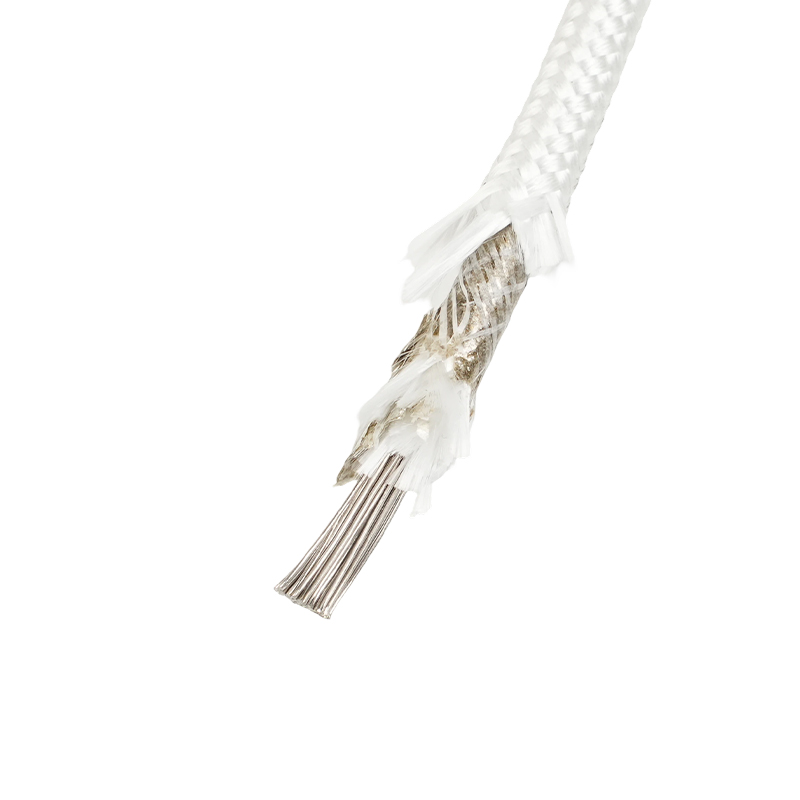
Conductors are stranded with a noticeably shorter lay length than in standard wiring. This shorter twist distributes stress more evenly across each strand during rotation instead of concentrating it at one point. Between the conductor bundle and the outer jacket, a lubricated separator layer, often a PTFE tape or an aramid fiber wrap, allows the internal components to shift slightly against one another. This sliding action prevents friction heat build-up and stops the strands from being pinched during torsion.
Precision EMI Shielding for Clean Signal Transmission
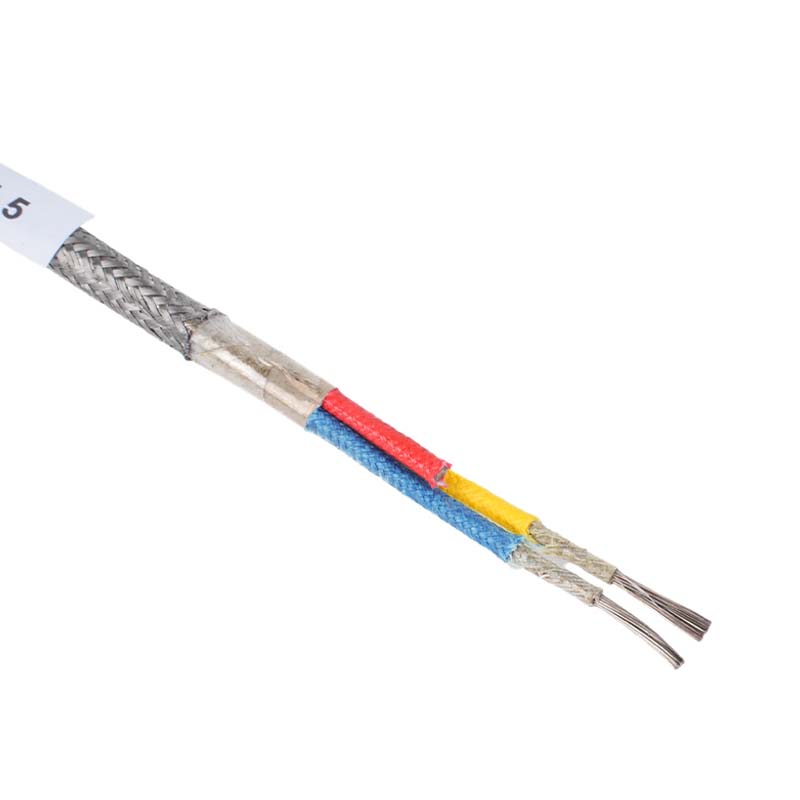
Robot arms operate close to servo motors, drives, and welding transformers, all of which generate strong electromagnetic interference. A tinned copper braid applied at a carefully calculated angle keeps its shielding effectiveness even when the cable is fully twisted, which matters most for RS485, EtherCAT, and encoder feedback lines where a few millivolts of noise can trigger a fault code.
Core Conductor and Insulation Options
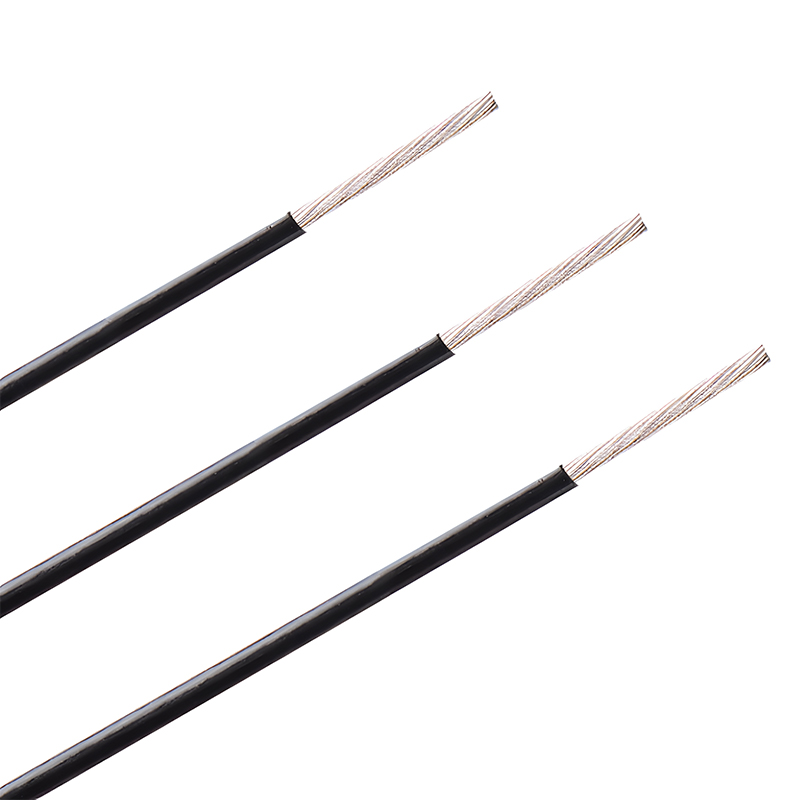
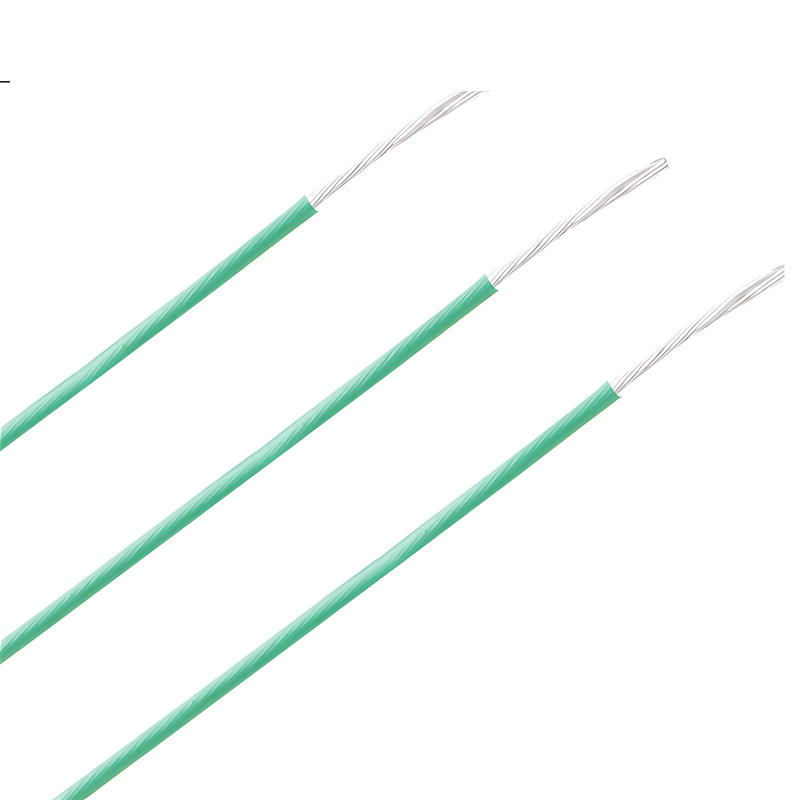
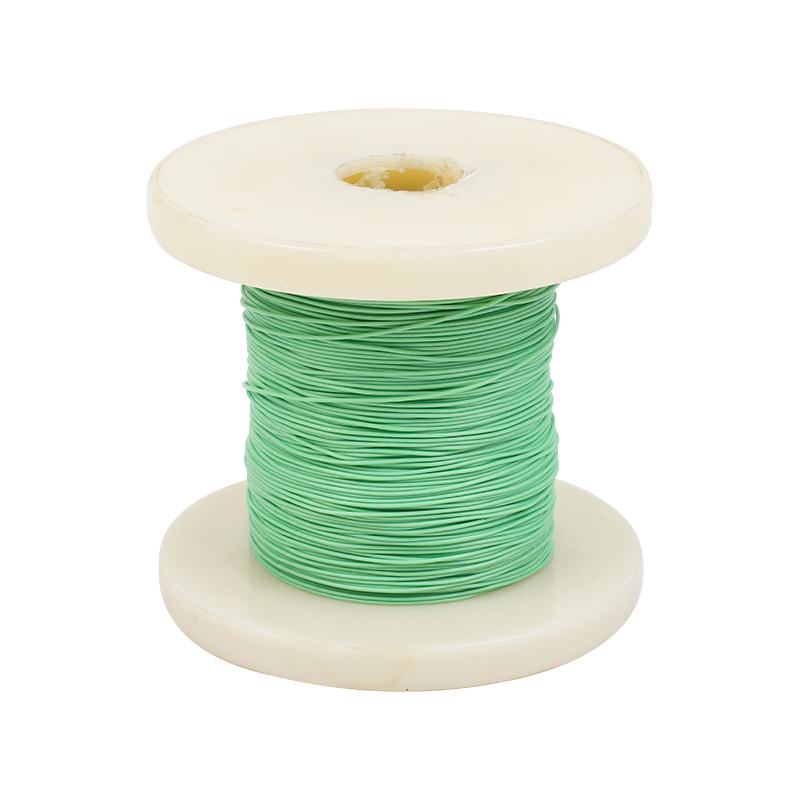
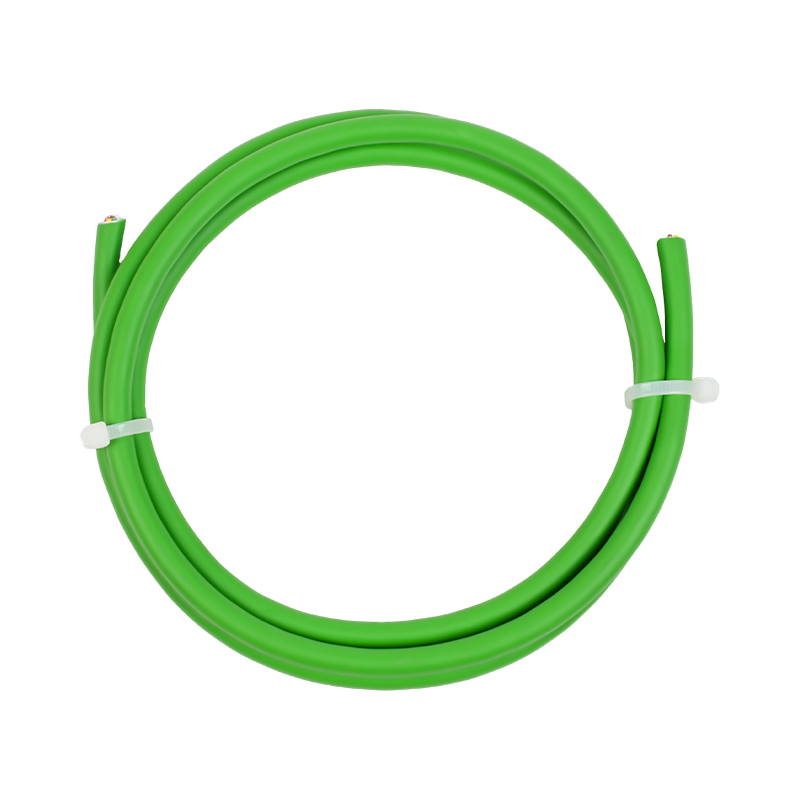
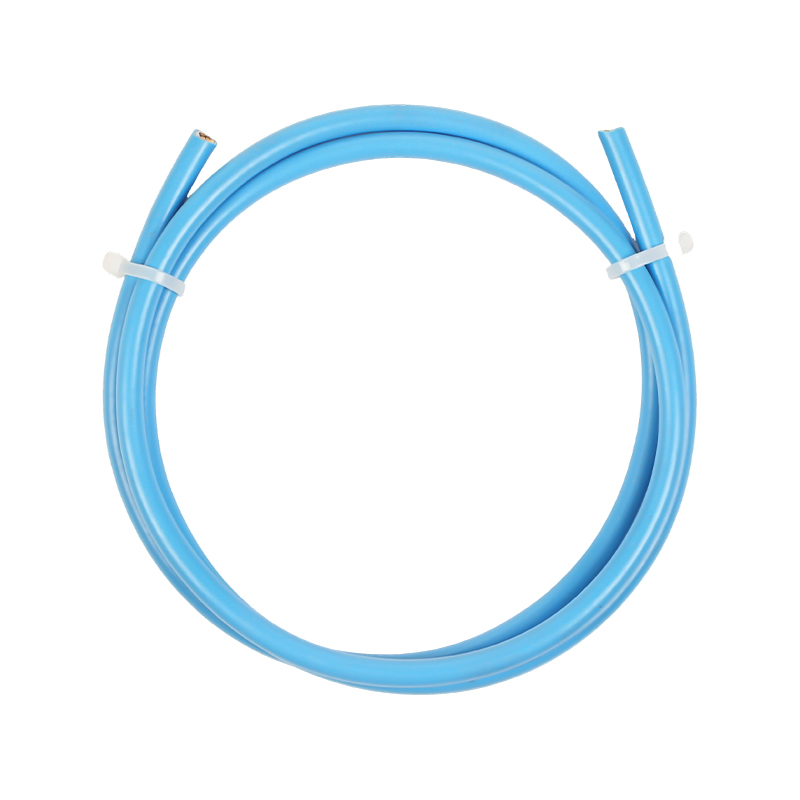
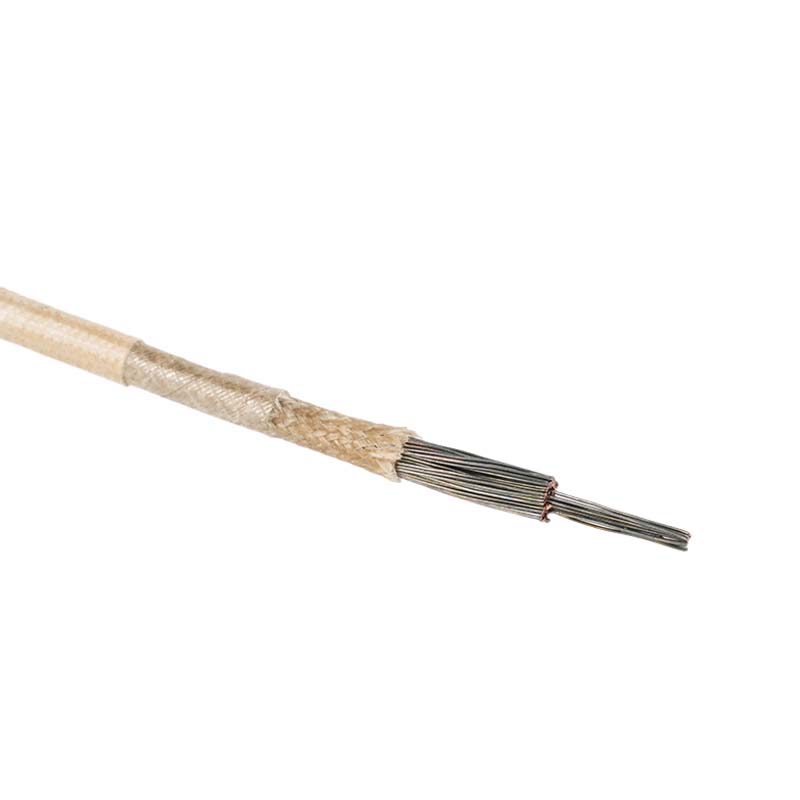
Robot control cable assemblies are built around a choice of high-temperature, low-friction insulation materials for the internal conductors. These are the base wire types most commonly specified inside our robot control cable constructions.
Where Robot Control Cables Are Used
These cables are specified wherever a machine axis needs to combine motion, power, and data reliably over years of continuous operation.
- Automotive Welding Robots: resistant to weld spatter and high ambient heat while performing millions of complex three-dimensional movements.
- Pick-and-Place Electronics Assembly: built for high-speed acceleration and tight bending radii inside compact robotic work cells.
- Cleanroom Robotics: Teflon-jacketed constructions stay particulate-free and non-outgassing, which suits semiconductor wafer-handling robots.
- Subsea and Inspection Drones: built with pressure resistance and high flexibility for underwater exploration equipment.
Manufacturing Standards Behind a Reliable Robot Cable
Consistency matters as much as raw performance figures. Cables produced under ISO9001 and IATF16949 quality systems are manufactured to meet the strict process controls expected across the automotive and robotics supply chain. Every production batch should pass dedicated torsion and bending tests in a laboratory setting before shipment, and carry recognized safety listings such as UL, CE, CCC, and RoHS so the cable can be deployed across different regional markets without re-certification.
Frequently Asked Questions
Why does lay direction matter in a robot control cable?
The lay direction of the conductor strands and the outer braid needs to be balanced against each other. If they are not synchronized, the cable develops internal torque, leading to a corkscrew effect where the construction permanently deforms and the insulation eventually splits.
Can robot control cables handle industrial coolants and hydraulic oils?
Yes, when the jacket is made from FEP or a silicone-polyurethane blend. These materials are chemically inert against the cutting oils, coolants, and lubricants commonly found around heavy-duty machining and welding cells.
What is the difference between static and dynamic bending radius?
A static bending radius, usually about four times the cable outer diameter, applies to a fixed installation that will not move again. The dynamic bending radius, usually seven and a half to ten times the outer diameter, is the figure that matters for robotics, since it defines the smallest radius the cable can handle while in constant motion without degrading the copper strands over time.

-
Phone
+86-(0)21-6083 5889
+86 138 1238 0261 -
Email
export03@silvertincable.com
export@silvertincable.com -
Headquarter Address:
No. 20 Jianling Road, Zhangguo Community, Dainan Town, Xinghua City. Jiangsu Province China
-
Shanghai Branch:
Room 18A, West Building, Keji Jingcheng, No. 668 East Beijing Road. Huangpu District, Shanghai, China
Copyright © 2025 Jiangsu Silver& Tin Thread Hi-temperature Wire and Cables Co., Ltd. All Rights Reserved.
China industrial cable manufacturer Custom specialized wire & cable supplier