
 English
 русский
 Español
 عربى
عربى


Industry News
What Is a Coaxial Cable?
2026-07-17
Content
- 1 The Four-Layer Structure Behind Every Coaxial Cable
- 2 Why Coaxial Cables Transmit Signals So Cleanly
- 3 Coaxial Cable Types Compared by Dielectric Material
- 4 50 Ohm or 75 Ohm: Choosing the Right Impedance
- 5 Coaxial Cable Product Series
- 6 Sourcing From a China Coaxial Cable Supplier
- 7 Custom Coaxial Cable vs. Wholesale Coaxial Cable
- 8 Where Coaxial Cable Is Used Today
- 9 Frequently Asked Questions
- 10 Key Takeaway
Quick Answer
A coaxial cable is a shielded electrical cable built from four concentric layers — a center conductor, a dielectric insulator, a metallic shield, and an outer jacket — designed to carry high-frequency signals with minimal loss and strong resistance to electromagnetic interference. Because the shield surrounds the signal conductor along its entire length, a coaxial cable keeps radio frequency (RF), video, and data signals stable over long distances, which is why it remains the standard choice for broadcast, telecom, radar, medical imaging, and industrial sensor wiring.
The Four-Layer Structure Behind Every Coaxial Cable
Every coaxial cable, whether it comes from a small workshop or a certified China coaxial cable factory, follows the same basic geometry. This layered design is exactly what separates a coaxial cable from an ordinary twisted-pair or single-core wire, and it is the reason engineers trust it for frequency-sensitive circuits.
- Center conductor: A single solid wire or a stranded bundle, usually bare copper, silver-plated copper, or nickel-plated copper, that physically carries the electrical signal.
- Dielectric insulator: A layer of PE, PTFE, or FEP surrounding the conductor. Its material and thickness set the cable's characteristic impedance, typically 50 ohms or 75 ohms.
- Shielding layer: A braided copper mesh, aluminum foil, or a combination of both, wrapped around the dielectric to block outside noise and stop the signal from leaking outward.
- Outer jacket: A protective sleeve, often PVC, FEP, or silicone, that resists abrasion, moisture, UV exposure, and in industrial-grade cables, extreme heat.
Why Coaxial Cables Transmit Signals So Cleanly
Because the shielding layer surrounds the center conductor on every side, electromagnetic fields stay trapped inside the cable instead of radiating outward or leaking in from nearby motors, transformers, or radio sources. This geometry keeps the characteristic impedance constant along the full cable length, which matters because any mismatch in impedance causes signal reflection, echo, or data errors.
A well-built industrial coaxial cable with 90 to 95 percent braid coverage plus a foil layer can achieve shielding effectiveness above 90dB, meaning less than a fraction of a percent of outside noise reaches the signal path. This is why coaxial cable stays the preferred medium for cable television, base station feeders, GPS antennas, and vibration sensors on factory floors where dozens of motors run simultaneously.
Coaxial Cable Types Compared by Dielectric Material
Not all coaxial cable performs the same under heat or chemical exposure. The table below compares the three dielectric families most commonly requested from a coaxial cable supplier.
| Feature | Teflon (PTFE) Coaxial | FEP Coaxial | Standard PE Coaxial |
| Operating Temperature | -65C to +260C | -65C to +200C | -40C to +80C |
| Dielectric Loss | Ultra-low | Very low | Moderate |
| Chemical Resistance | Inert, superior | High | Poor |
| Voltage Rating | High | High | Low |
| Typical Use | Aerospace, radar, high-heat sensors | Outdoor RF links, chemical plants | Consumer video, general indoor use |
Teflon-based coaxial cable costs more upfront, but its stable dielectric constant across a wide temperature range is what keeps impedance from drifting, which is critical for any custom coaxial cable built for aerospace or medical equipment.
50 Ohm or 75 Ohm: Choosing the Right Impedance
Impedance selection is one of the most common questions buyers bring to a coaxial cable manufacturer, and getting it wrong causes measurable signal loss even if every other spec looks correct.
50Ω
Power-Optimized
Balances power handling and signal loss. Standard for RF transmitters, two-way radios, Wi-Fi antennas, and radar systems where transmit power matters as much as clarity.
75Ω
Loss-Optimized
Minimizes attenuation over distance. Industry standard for CATV, video transmission, digital audio, and broadcast feeder lines where signal purity outweighs power capacity.
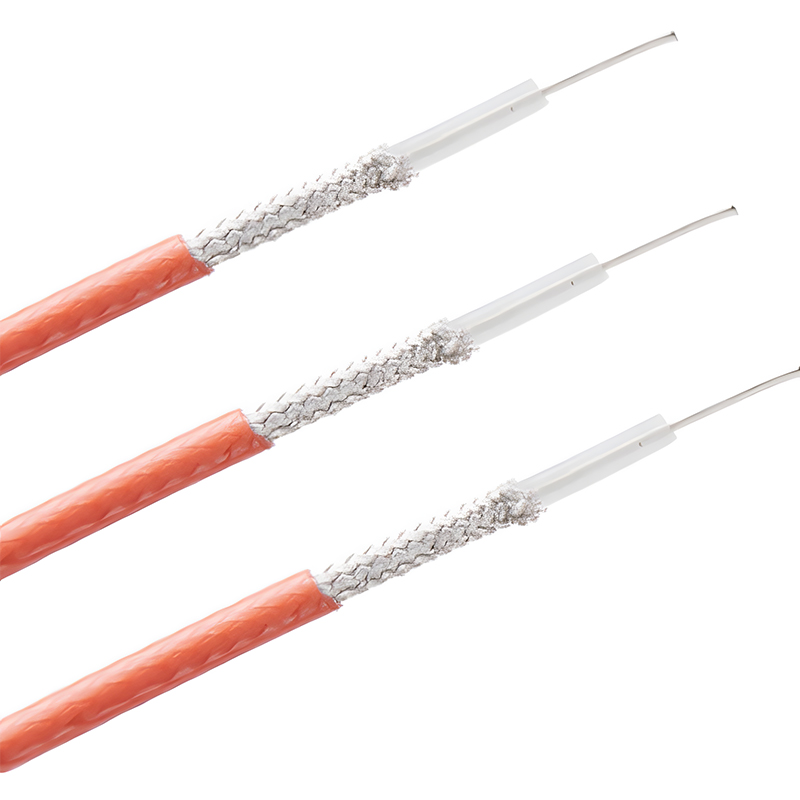
Coaxial Cable Product Series
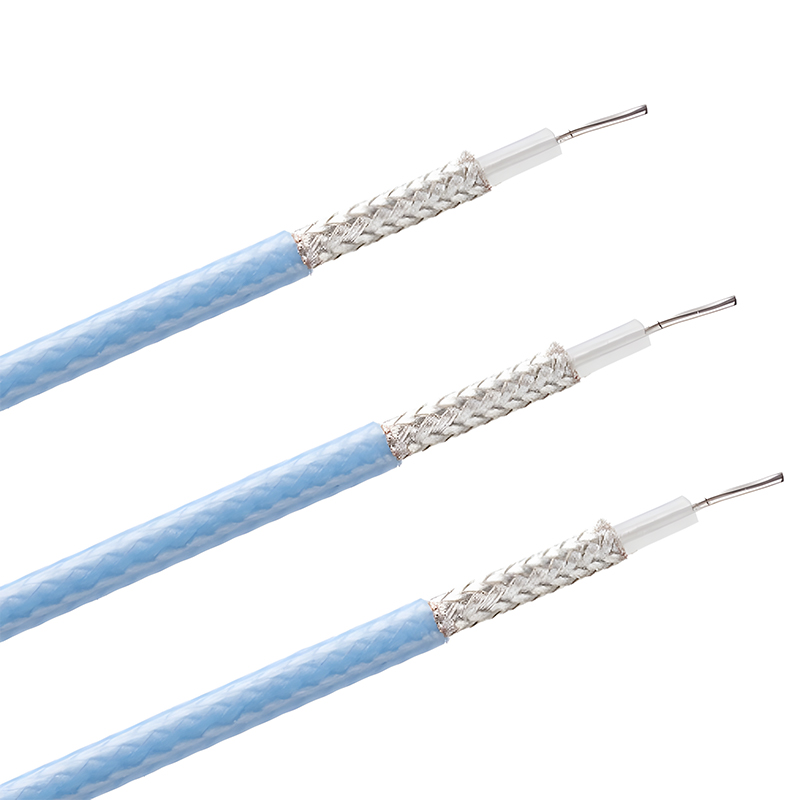
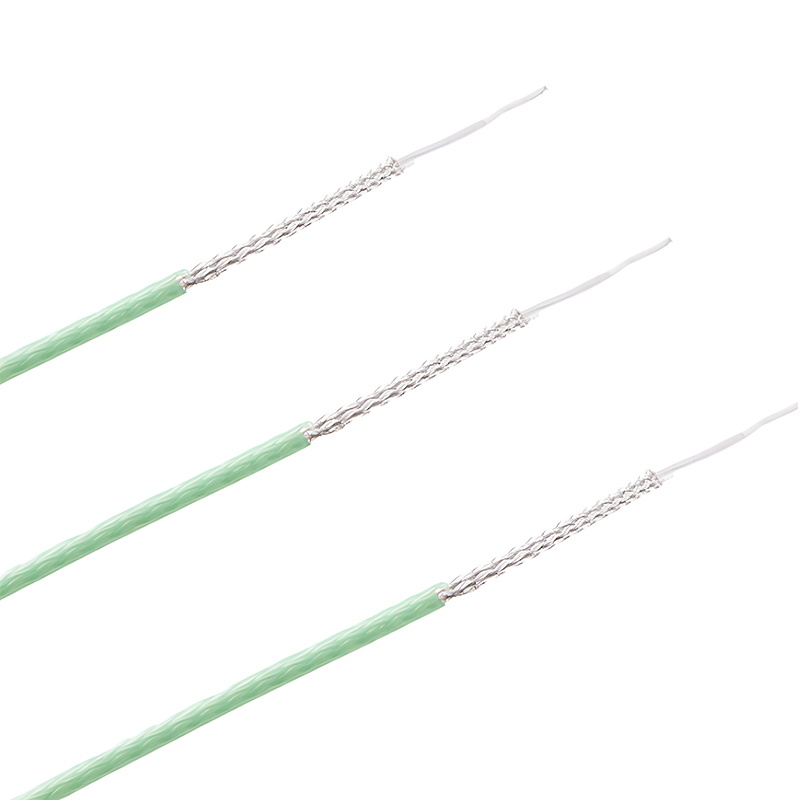
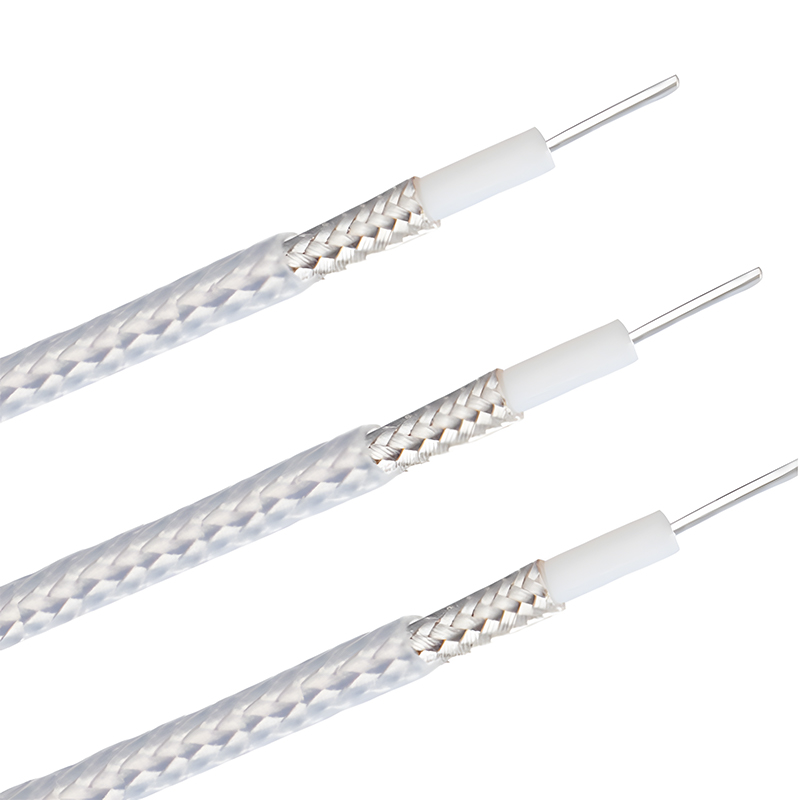
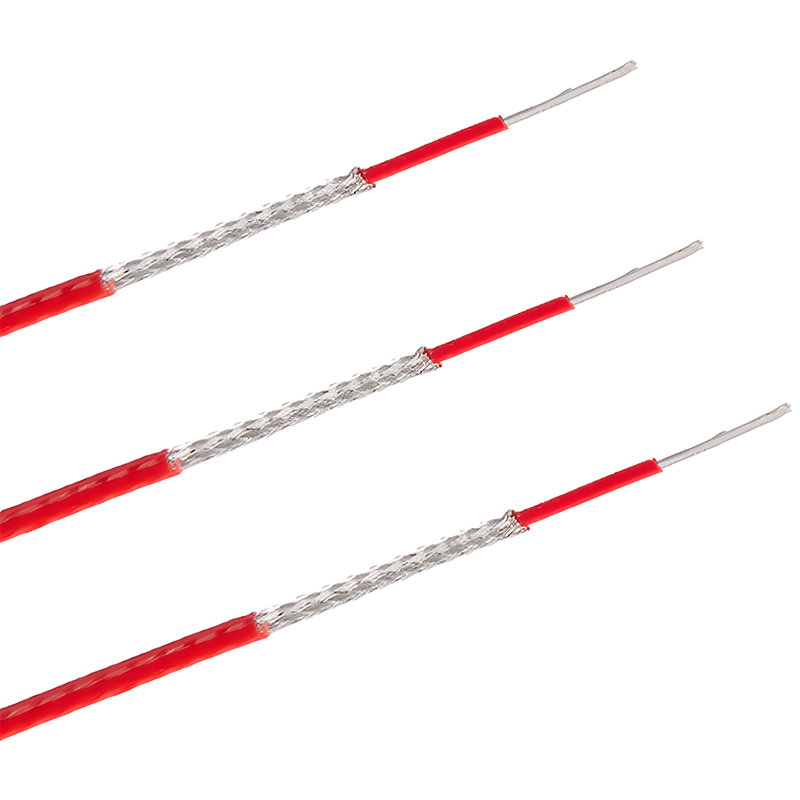
A closer look at the RG and SFF series coaxial cable built for RF, radar, and instrumentation circuits, each engineered for stable impedance and high-temperature reliability.
Sourcing From a China Coaxial Cable Supplier
Most industrial buyers no longer shop for a single spec sheet; they look for a China coaxial cable supplier able to support R&D, custom construction, and repeat wholesale volume from one production line. A dependable China coaxial cable manufacturer typically brings together three things: material sourcing, in-house testing, and documented certification.
As a China coaxial cable factory operating since 1994, our production covers eight major cable series and close to a thousand specifications, with conductor cross-sections up to 400mm², voltage ratings up to 100kV, and temperature ratings spanning -65C to +1200C. Every meter of coaxial cable produced goes through 100 percent time-domain reflectometry testing to confirm there are no impedance mismatches along the run, and the facility holds ISO9001, UL, CE, and CCC certification.
| Capability | Specification |
| Conductor Options | Bare copper, silver-plated, nickel-plated, tin-plated, pure nickel |
| Dielectric Options | PTFE, FEP, PFA, flame-retardant PE |
| Temperature Range | -65C to +1200C across the full product line |
| Testing | 100 percent TDR testing per production run |
| Certifications | ISO9001, UL, CE, CCC, RoHS |
Custom Coaxial Cable vs. Wholesale Coaxial Cable
Buyers generally fall into two groups, and it helps to know which one describes your project before contacting a coaxial cable supplier.
- Custom coaxial cable supplier route: Best when the application needs a non-standard outer diameter, a specific shielding ratio, a non-magnetic build for MRI equipment, or a jacket compound rated for chemical exposure. A custom coaxial cable factory will typically request the frequency range, impedance, and environmental conditions before quoting.
- Wholesale coaxial cable supplier route: Best for standard RG or SFF series cable purchased in bulk for telecom rollouts, security camera installation, or OEM assembly. A wholesale coaxial cable factory can usually hold pricing steady on volume orders of established part numbers.
Many buyers use both paths at once: a custom prototype is developed and validated first, then the same design moves into wholesale coaxial cable production once the specification is locked.
Where Coaxial Cable Is Used Today
Coaxial cable applications extend well beyond home television. Industrial-grade coaxial cable from a specialized manufacturer is engineered for demanding, high-consequence environments.
- Aerospace and avionics: GPS, radar, and communication links where weight and resistance to extreme cold and heat are non-negotiable.
- Medical imaging: Non-magnetic coaxial cable transmits high-resolution data inside MRI and X-ray systems without distorting the magnetic field.
- Industrial sensors: Vibration and pressure sensors on turbines and petrochemical equipment rely on stable signal transmission despite constant heat and vibration.
- Telecommunications: Base stations and microwave links depend on low-loss coaxial cable for long-distance signal runs.
- Security and broadcast: CCTV networks and TV distribution systems use 75-ohm coaxial cable for consistent picture quality over hundreds of meters.
Frequently Asked Questions
What makes Teflon dielectric better than PE for coaxial cable?
Teflon, whether PTFE or FEP, has a lower dielectric constant than polyethylene, which raises the velocity of propagation and lowers signal attenuation. It also holds its electrical properties above 200C, a temperature at which standard PE insulation would soften and short the cable.
How do I know if I need 50 ohm or 75 ohm coaxial cable?
Match the impedance to the equipment on both ends of the run. RF transmitters, two-way radios, and Wi-Fi hardware are almost always 50 ohm. Video, CATV, and broadcast systems are almost always 75 ohm. Mixing the two causes reflection loss at every connector.
Does shielding coverage really change signal quality?
Yes. A shield with only 60 percent coverage lets outside noise leak into the signal path, which shows up as data errors or picture noise. Industrial coaxial cable with 90 to 95 percent braid coverage plus a foil wrap keeps the signal-to-noise ratio high even on a busy factory floor.
Can coaxial cable handle outdoor or chemical exposure?
FEP and PFA jacketed coaxial cable is chemically inert and fully waterproof, which makes it suitable for outdoor RF links, rooftop antennas, and chemical processing plants where corrosive vapor would degrade a standard PVC jacket.
What should I send a coaxial cable factory for an accurate quote?
Provide the frequency range, required impedance, operating temperature, outer diameter limit, connector type, and expected order volume. This lets a coaxial cable manufacturer confirm whether a standard RG or SFF part fits or whether a custom build is needed.
Key Takeaway
A coaxial cable's performance comes down to two things that cannot be separated: stable impedance and effective shielding. Whether the project calls for a standard wholesale coaxial cable or a fully custom coaxial cable built around a specific dielectric and temperature rating, working with a certified coaxial cable supplier that tests every production run is what keeps signal integrity intact from installation through years of field service.






-
Phone
+86-(0)21-6083 5889
+86 138 1238 0261 -
Email
export03@silvertincable.com
export@silvertincable.com -
Headquarter Address:
No. 20 Jianling Road, Zhangguo Community, Dainan Town, Xinghua City. Jiangsu Province China
-
Shanghai Branch:
Room 18A, West Building, Keji Jingcheng, No. 668 East Beijing Road. Huangpu District, Shanghai, China
Copyright © 2025 Jiangsu Silver& Tin Thread Hi-temperature Wire and Cables Co., Ltd. All Rights Reserved.
China industrial cable manufacturer Custom specialized wire & cable supplier