
 English
 русский
 Español
 عربى
عربى
 Home / News / Industry News / What Makes Torsion Cables Different, and How Do You Choose the Right One?
Industry News
What Makes Torsion Cables Different, and How Do You Choose the Right One?
2026-07-03
Content
Torsion cables are built to survive continuous twisting around their own axis without cracking, jamming, or losing signal quality. The short answer: a standard flexible cable is only engineered for bending, so twisting it repeatedly will crush the internal strands and split the jacket within a short number of cycles. A true torsion cable uses a shorter stranding pitch, sliding barrier layers between the core and the jacket, and a balanced lay direction so the whole cross-section can rotate as one unit. That single structural difference is what allows torsion-rated cables to run for millions of rotational cycles in robots, wind turbines, and rotating machinery where an ordinary cable would fail in weeks.
180° Typical maximum torsion angle per meter for a properly engineered torsion cable
30° Torsion angle a standard flex cable can tolerate before internal damage begins
3,000+ Full rotation cycles a wind turbine nacelle loop cable may need to survive over its service life
How Torsion Cables Differ From Standard Flexible Cables
Bending and twisting place completely different stresses on a cable. When a cable bends, the outer strands stretch and the inner strands compress along a single plane, and the cable returns to a neutral shape once the load is removed. When a cable twists, every strand at every radius is forced to rotate around a common center at the same time, which means the outer layers travel a much longer path than the layers near the core. Without a way to compensate for that difference, the strands lock against each other, generate friction heat, and eventually break through the insulation from the inside out.
| Engineering Metric | Torsion-Rated Cable | Standard Flexible Cable |
| Maximum torsion angle | ±150° to ±180° per meter | ±30° per meter |
| Conductor stranding class | Fine bundled, Class 6 | Standard, Class 5 |
| Internal friction barrier | Fluoroplastic or talcum sliding layer | None |
| Thermal stability | Up to 260°C | Up to 80°C |
| Failure mode under twisting | Rated for millions of cycles | Bird-caging and jacket splitting within a short time |
What Gives a Torsion Cable Its Twist Resistance
The performance gap between the two cable types comes from four construction choices made before the jacket is ever extruded. Each one addresses a specific failure mechanism that shows up only under rotational load.
Shorter Stranding Pitch
Conductors in a torsion cable are wound with a tighter pitch length than in a linear-motion cable. This shorter lay lets each strand absorb rotational displacement without the bundle unwinding or migrating out of position during a twist cycle.
Sliding Barrier Layers
A layer of PTFE tape or a talcum-based filler sits between the conductor bundle and the outer jacket. This acts like a bearing surface, letting the internal core rotate slightly relative to the sheath instead of dragging the insulation along with it.
Balanced Lay Direction
The direction of the conductor twist and the direction of any braided shield must be synchronized. If they run against each other, the cable develops internal torque that permanently deforms the cross-section, a problem known in the industry as the corkscrew effect.
Torsion-Optimized Shielding
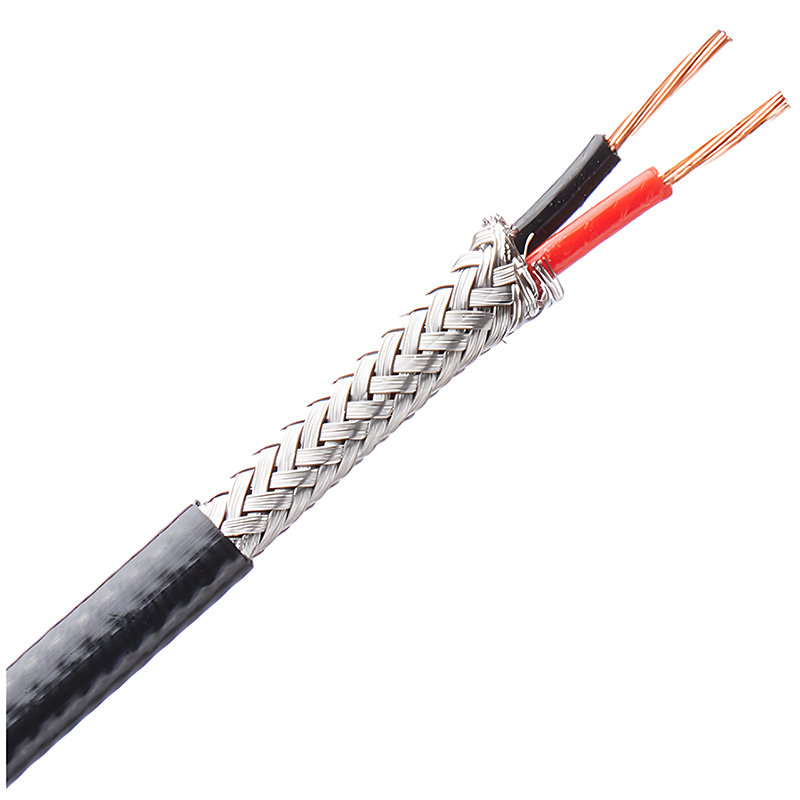
Shielded torsion cables use a braid angle and coverage rate, typically above 85 percent tinned copper, that keeps electromagnetic shielding effectiveness intact even while the cable is fully twisted, which matters for RS485, EtherCAT, and encoder signals.
Torsion Cable Product Range
A cross-section of torsion-rated and torsion-adjacent cable series built for multi-core drag chain, shielded, and robotic joint applications, each engineered around the same twist-resistant core structure described above.
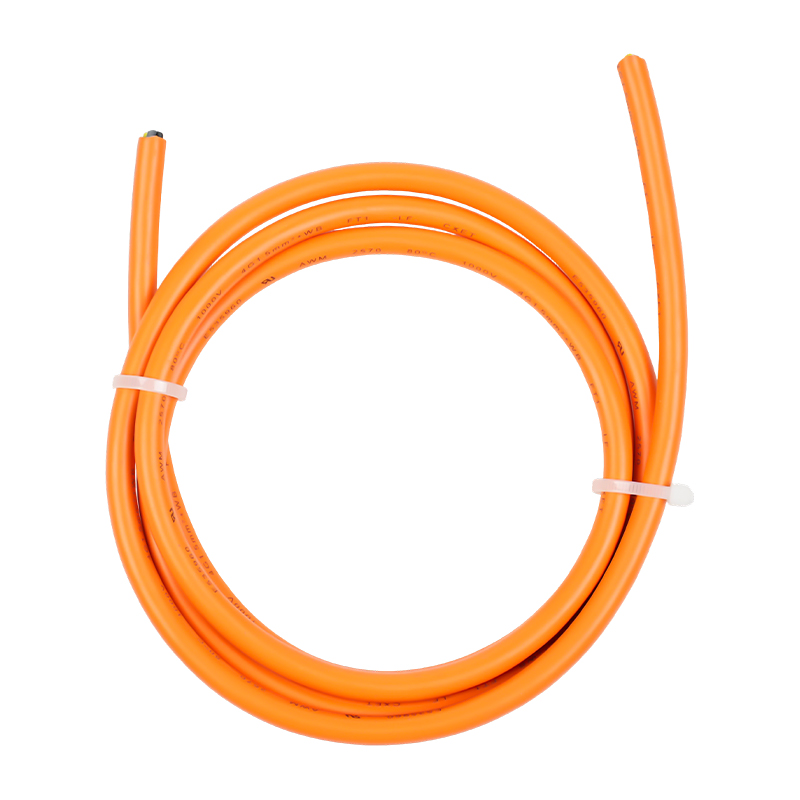
TRVV Multi-Core Drag Chain Cable
Multi-Core / Drag Chain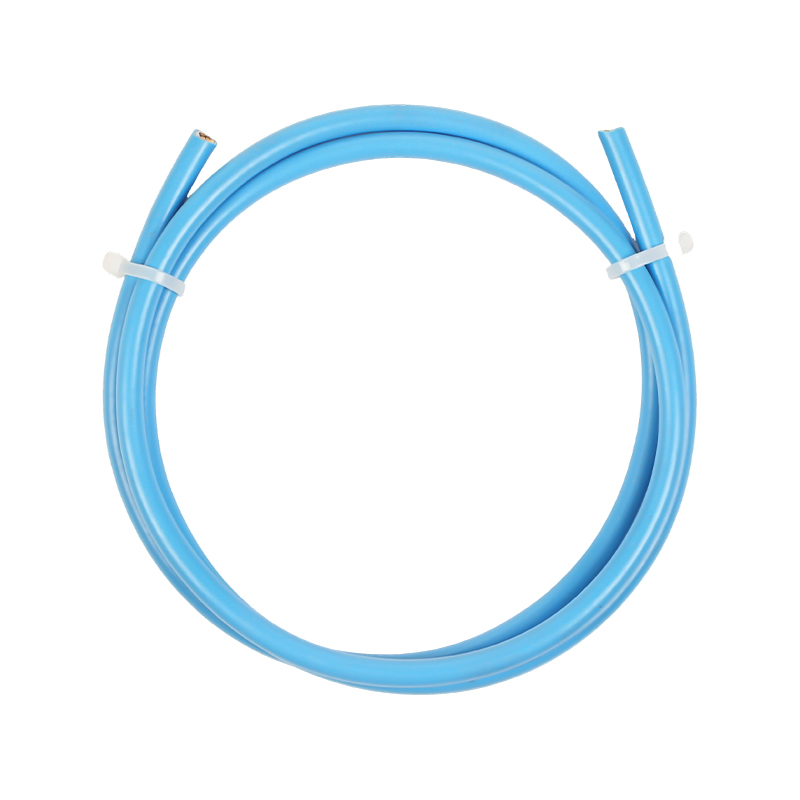
TRVVP Shielded Drag Chain Cable
Shielded / Multi-Core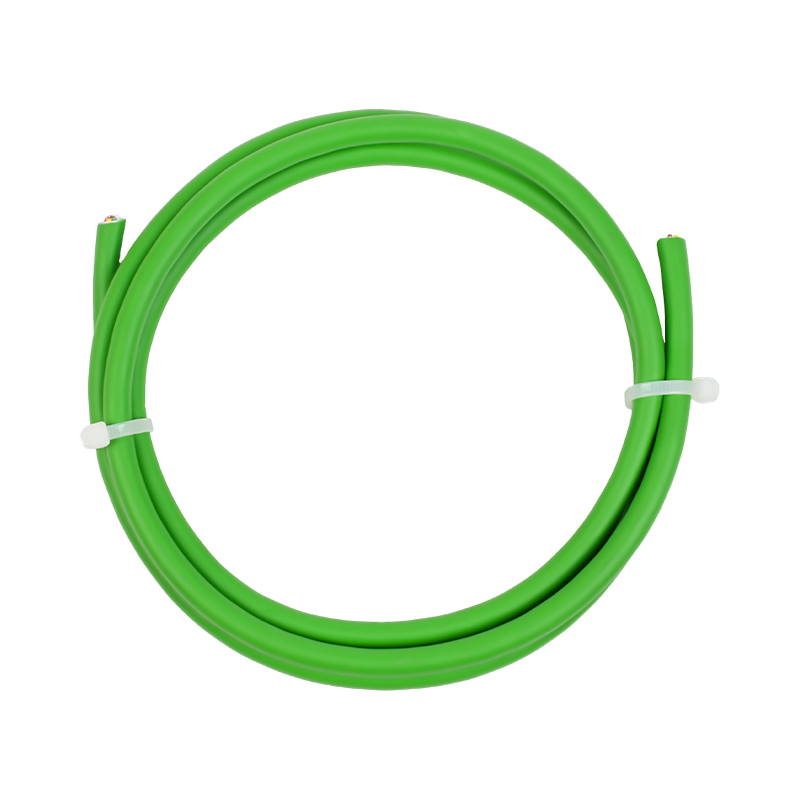
TRVVPPS Braided Shield Cable
Shielded / Braided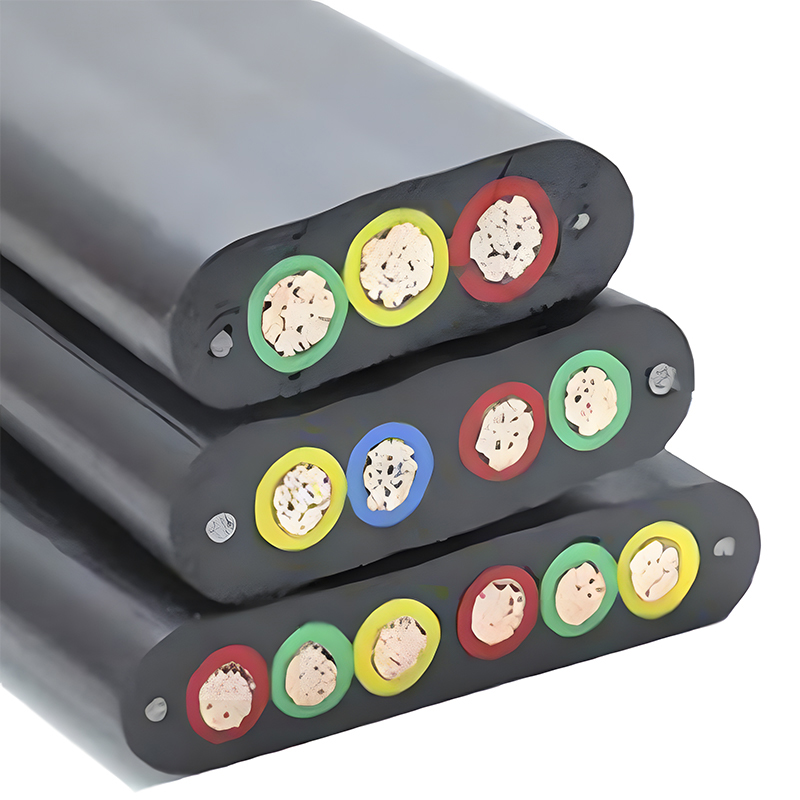
Multi-Core Dynamic Drag Chain Cable
Torsion Series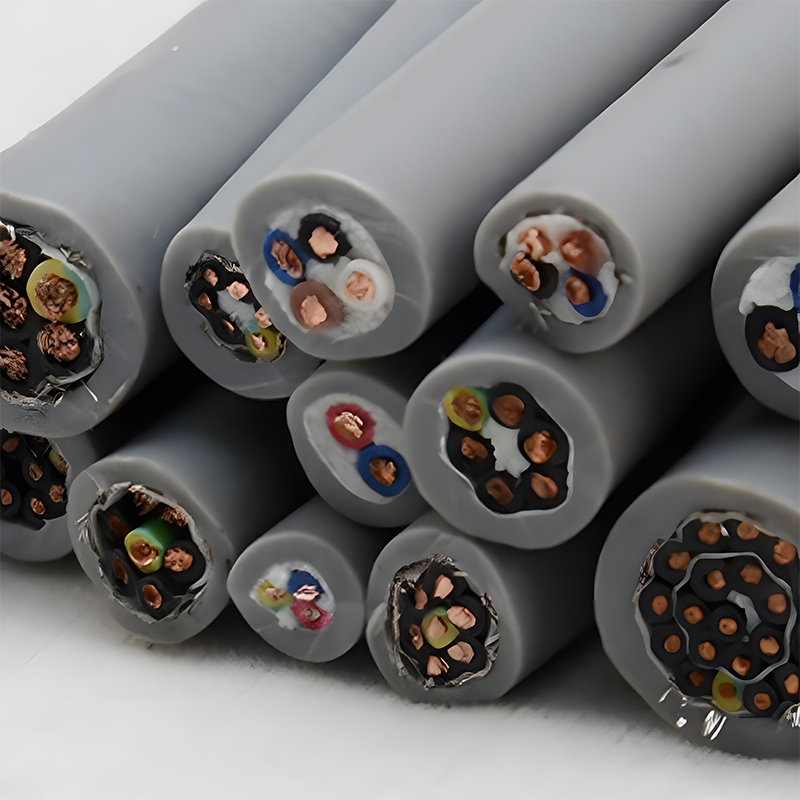
Robot Control Cable
Robotic ApplicationWhere Torsion Cables Are Actually Used
Torsion cables show up wherever a machine needs continuous rotational movement rather than the back-and-forth motion of a linear energy chain. Four sectors account for most real-world deployment.
- Wind turbine nacelles: the cable loop connecting the nacelle to the tower base has to absorb repeated full rotations as the nacelle tracks wind direction, often while remaining flexible down to minus 40°C in offshore installations.
- Six-axis industrial robots: the wrist and joint sections of welding and assembly robots twist continuously through their duty cycle, so the cable running through the arm must handle torsion and vibration at the same time without signal dropout.
- Rotating medical scanners: CT and MRI gantries spin at speed while transmitting high-fidelity imaging data, which requires a low-noise shielded torsion cable that keeps its electrical characteristics stable through every rotation.
- Drilling and mining equipment: downhole and rotary drilling gear combines mechanical torque with abrasive dust, so the cable jacket has to resist wear as much as it resists twisting.
How to Select the Right Torsion Cable
Choosing a torsion cable is less about the voltage rating and more about matching the mechanical profile of your application. Four questions narrow the decision quickly.
| Selection Question | Why It Matters |
| What is the actual rotation angle per cycle? | A cable rated for ±90° will fail early if the application demands ±180°, even if the voltage and current ratings match. |
| Is the motion continuous or occasional? | Continuous multi-axis rotation needs a fully torsion-optimized construction, while occasional adjustment may tolerate a lower-grade flexible cable. |
| What is the operating temperature range? | Silicone and Teflon-jacketed torsion cables extend the usable range down to around minus 40°C and up to 260°C, which standard PVC jackets cannot match. |
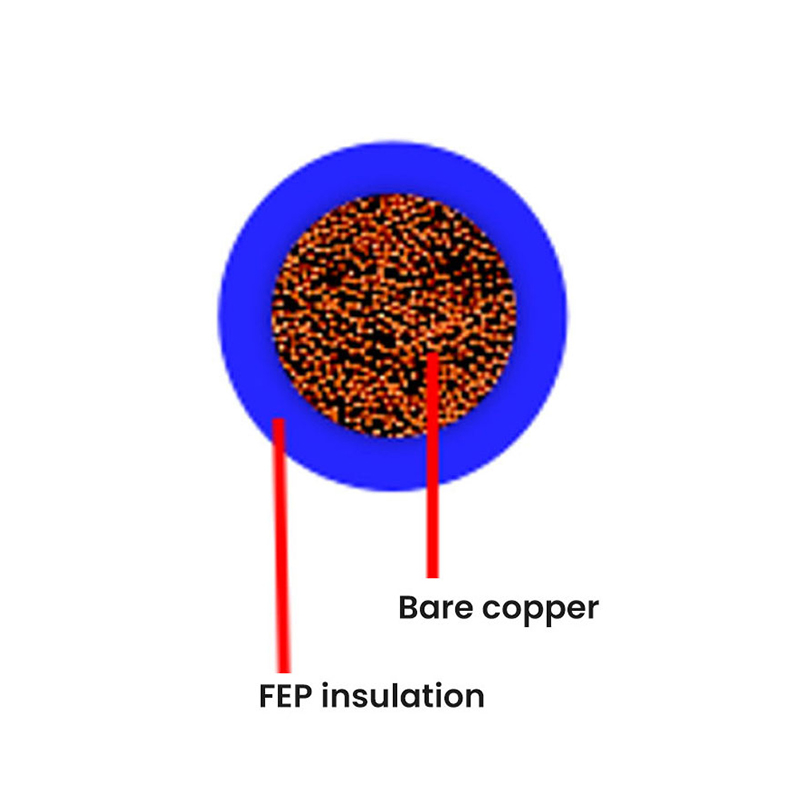
| Will the cable contact oils, coolants, or solvents? | FEP and silicone-polyurethane jackets resist swelling and embrittlement from cutting fluids and lubricants common in CNC and robotic welding cells. |
A cable rated only for linear bending will not survive rotational motion no matter how flexible it feels by hand. Torsion resistance has to be engineered into the stranding and the internal layers, not just the outer jacket.
Common Failure Modes and How to Prevent Them
Most torsion cable failures trace back to a mismatch between the cable's rated capability and the real mechanical load it experiences in service. Recognizing the failure pattern early can prevent unplanned downtime.
| Failure Symptom | Root Cause | Prevention |
| Bird-caging of conductor strands | Standard drag-chain cable installed in a rotating application | Replace with a cable explicitly rated for torsion, not just flexing |
| Jacket cracking near connectors | Bending radius smaller than the dynamic minimum, usually 7.5 to 10 times the outer diameter | Route the cable with adequate slack and support at fixed points |
| Intermittent signal loss during rotation | Shield braid angle not optimized for torsional movement | Specify a torsion-optimized shield construction for data and encoder lines |
| Permanent kinking, the corkscrew effect | Conductor lay direction and braid lay direction not synchronized | Confirm the manufacturer balances lay direction specifically for torsion service |
Frequently Asked Questions
Can a standard drag-chain cable be used in a rotating application?
No. Drag-chain cables are designed for linear bending only. When twisted, the internal cores compress against each other, causing bird-caging of the conductors and rapid insulation failure. Only cables explicitly rated for torsion should be used for rotational movement.
Does conductor plating actually affect torsion life?
Yes. Silver or tin plating creates a microscopic lubricating layer between fine copper strands, which reduces inter-strand friction during a twist. This lowers the heat generated by mechanical movement and slows oxidation across millions of cycles.
How is torsion angle measured and specified?
Torsion angle is expressed as degrees of rotation per meter of cable length, for example ±180° per meter. It is usually paired with a cycle-life figure from bench testing, so a complete specification states both how far the cable can twist and how many times it can repeat that twist before failure.
Are torsion cables compatible with industrial oils and coolants?
Cables using FEP or specialized silicone-polyurethane jackets are highly resistant to the cutting fluids and lubricants found in CNC machining and robotic welding environments, so the jacket does not swell or become brittle over time.

-
Phone
+86-(0)21-6083 5889
+86 138 1238 0261 -
Email
export03@silvertincable.com
export@silvertincable.com -
Headquarter Address:
No. 20 Jianling Road, Zhangguo Community, Dainan Town, Xinghua City. Jiangsu Province China
-
Shanghai Branch:
Room 18A, West Building, Keji Jingcheng, No. 668 East Beijing Road. Huangpu District, Shanghai, China
Copyright © 2025 Jiangsu Silver& Tin Thread Hi-temperature Wire and Cables Co., Ltd. All Rights Reserved.
China industrial cable manufacturer Custom specialized wire & cable supplier