
 English
 русский
 Español
 عربى
عربى
 Home / News / Industry News / Which UL Approved Cable Is Right for High-Voltage and High-Temperature Use?
Industry News
Which UL Approved Cable Is Right for High-Voltage and High-Temperature Use?
2026-06-05
Content
- 1 What UL Approval Actually Means for High-Voltage Cables
- 2 FEP Teflon Wire: The Workhorse of 200°C High-Voltage Applications
- 3 PTFE Teflon Wire: When 200°C Is Not Enough
- 4 How to Select the Right UL Approved Cable for Your Application
- 5 Industry Applications Where UL Approved High-Temperature Cable Is Non-Negotiable
- 6 Why UL Certification Matters Beyond Compliance
UL approved cables are the baseline requirement for any installation where safety, compliance, and performance must coexist. For high-voltage and high-temperature environments specifically, the answer is clear: fluoropolymer-insulated wires — principally FEP Teflon Wire and PTFE Teflon Wire — deliver the thermal stability, voltage endurance, and chemical resistance that standard PVC cables cannot achieve.
What UL Approval Actually Means for High-Voltage Cables
UL (Underwriters Laboratories) certification is not a marketing badge — it is a third-party verification that a cable has passed a defined battery of tests covering electrical performance, flame propagation, conductor resistance, insulation breakdown voltage, and mechanical durability. For high-voltage cables, compliance with UL standards such as UL1199, UL1213, and UL1180 is the practical proof that a wire will not fail under dielectric stress.
The UL1581 reference standard governs general electrical performance and combustion testing for wire and cable. Under this framework, cables must pass:
Conductor Resistance Test Measures ohmic resistance per unit length at 20°C to verify conductor quality.
Voltage Withstand Test Applies rated voltage continuously to detect insulation breakdown or leakage.
Insulation Resistance Test Confirms the insulation layer maintains required dielectric properties.
Vertical Flame Test Verifies the cable does not propagate flame after ignition source is removed.
Tensile and Aging Tests Evaluates mechanical strength before and after heat aging cycles.
Purchasing a UL approved cable means every production batch has traceable test records. For engineers specifying high-voltage cables in appliances, industrial equipment, or aerospace wiring harnesses, this traceability is not optional.
FEP Teflon Wire: The Workhorse of 200°C High-Voltage Applications
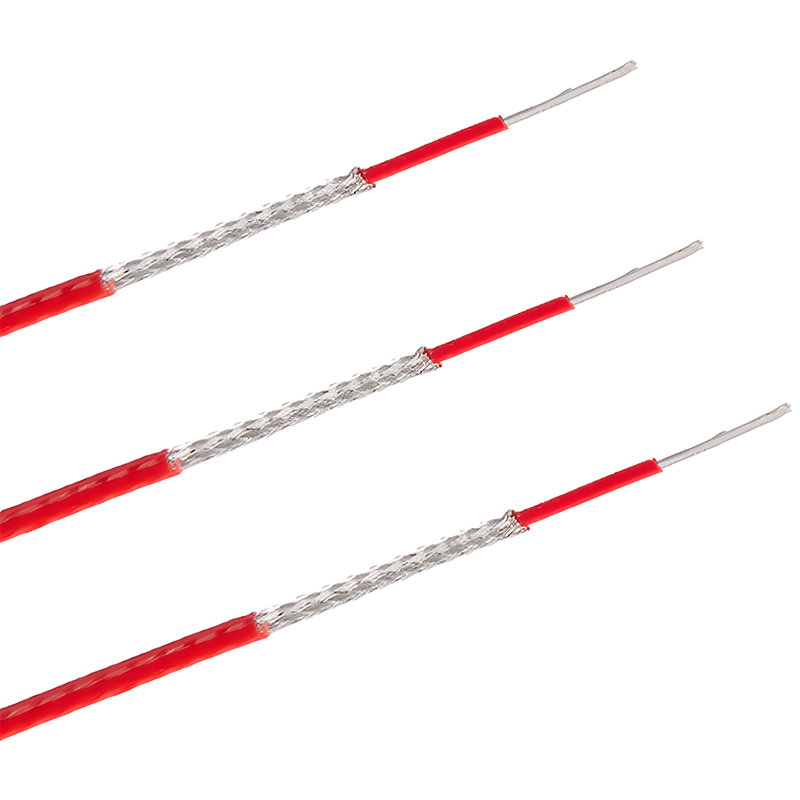
FEP (Fluorinated Ethylene Propylene) Teflon Wire, represented by the AF200X series, is one of the most widely specified UL approved cables for applications that combine elevated temperature and high-voltage demands. Its key advantage over standard PVC lies in both its thermal ceiling and its dielectric properties.
| Parameter | AF200X FEP Teflon Wire | Standard PVC Wire |
|---|---|---|
| Temperature Range | -65°C to +200°C | -20°C to +80°C |
| Rated Voltage | 600V AC | 300V – 600V AC |
| Conductor Material | Silver-plated or solid copper | Bare copper |
| Flame Resistance | Self-extinguishing | Varies by grade |
| Chemical Resistance | Excellent (acids, solvents, oils) | Limited |
| Relevant UL Styles | UL1330, UL1332, UL1333, UL1577, UL1591, UL1592, UL1723, UL1901 | UL1007, UL1015 |
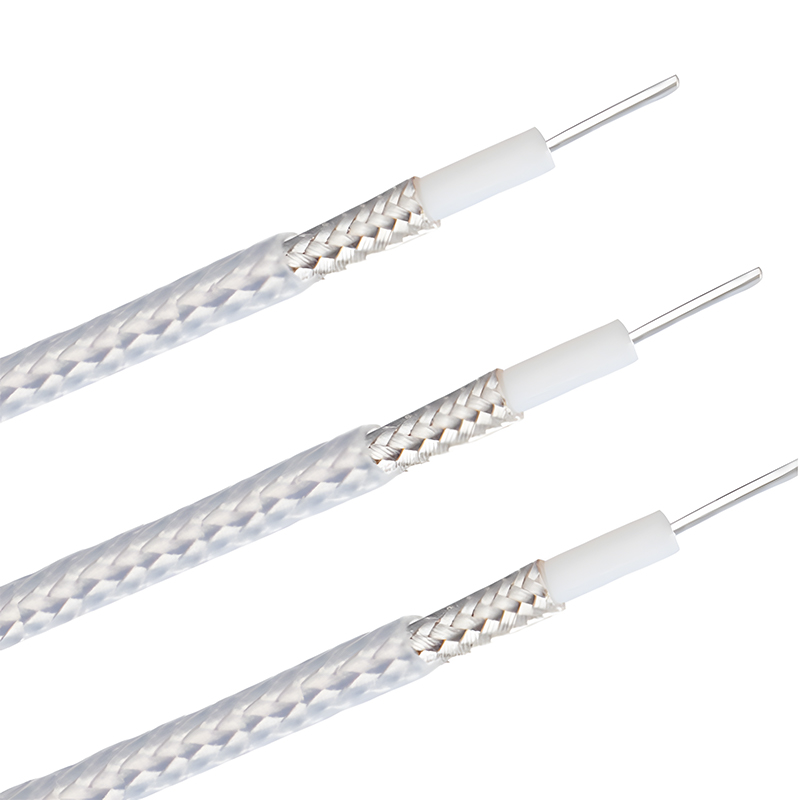
The AF200X FEP Teflon Wire is rated for 600V and a working temperature spanning -65°C to +200°C with a silver-plated or solid copper conductor and FEP insulation. This makes it the direct choice for internal wiring in heaters, motor components, lighting fixtures, and automotive electronics where 105°C-rated PVC wire would degrade or fail.
FEP is also melt-processable, meaning it can be extruded onto conductors using conventional equipment — a manufacturing advantage that keeps costs more accessible than PTFE while delivering near-equivalent thermal performance up to 200°C.
PTFE Teflon Wire: When 200°C Is Not Enough
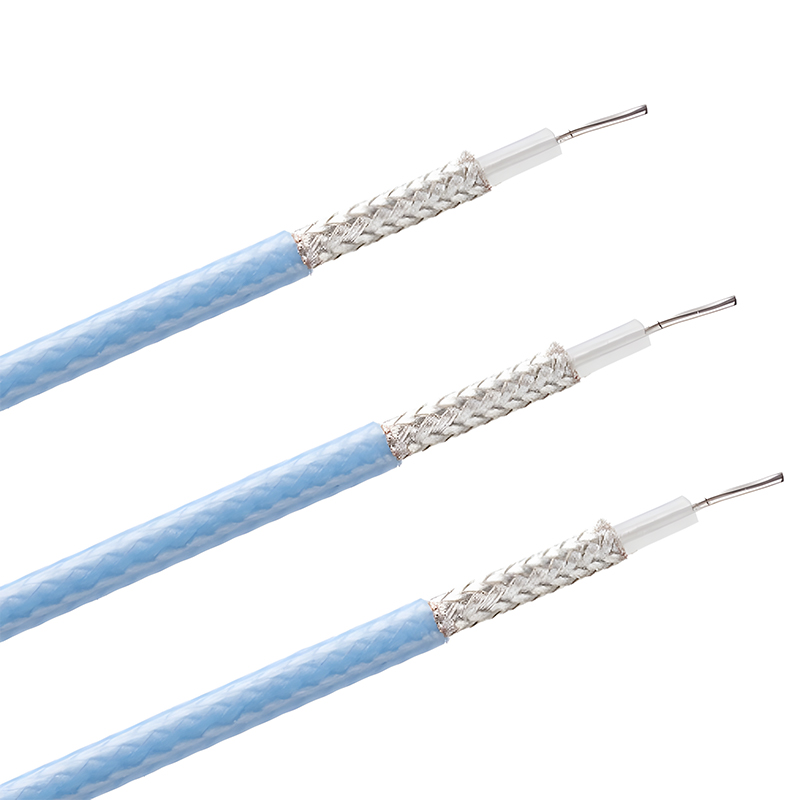
For applications that push beyond 200°C — engine compartments, industrial furnaces, aerospace avionics, and high-frequency medical equipment — PTFE (Polytetrafluoroethylene) Teflon Wire steps in where FEP reaches its limit. The AFT250 series handles continuous operation at 250°C and retains insulation integrity at 320°C without melting or dripping, a critical flame safety characteristic.
250°C
Continuous rated temperature for AFT250 PTFE Teflon Wire
600V
Voltage rating of UL1199 PTFE hook-up wire (peak 2,500V on electronic equipment)
AWG 10–32
Standard size range for PTFE Teflon wire across UL styles
PTFE is produced via a ram extrusion or tape-wrapping process rather than standard melt extrusion, because PTFE does not flow like typical thermoplastics. A minimum of three layers of PTFE tape wrapping and sintering ensures balanced, concentrically placed insulation that meets tight breakdown voltage tolerances. This manufacturing discipline explains why certified PTFE wire commands a higher price point — and why substituting an uncertified version introduces real risk.
The UL styles applicable to the AFT250 PTFE Teflon Wire include: UL1164, UL1180, UL1198, UL1199, UL1212, and UL1213. Military equivalents such as MIL-Spec M16878/4 (Type E) and M16878/5 are also covered, making PTFE Teflon wire the default choice for aerospace and defense wiring harnesses.
How to Select the Right UL Approved Cable for Your Application
Choosing between FEP Teflon Wire and PTFE Teflon Wire, or between different UL style numbers, depends on four intersecting variables: operating temperature, voltage class, mechanical environment, and regulatory context.
01
Define the temperature ceiling. If continuous duty stays below 200°C, AF200X FEP Teflon Wire covers the requirement at a lower cost. If duty cycles reach 250°C or above — furnace wiring, jet engine sensors, high-power inverters — specify AFT250 PTFE Teflon Wire.
02
Match the voltage rating. UL1199 PTFE wire is rated for 600V AC with a peak withstand of 2,500V, suitable for high-voltage power wiring inside equipment. For signal-level wiring, UL1180 at 300V AC is sufficient. Never derate a lower-voltage cable into a 600V circuit.
03
Check conductor type. Silver-plated copper conductors are standard in both FEP and PTFE Teflon wires for high-temperature use, as bare tinned copper oxidizes rapidly during the elevated-temperature sintering process and compromises long-term conductivity.
04
Confirm the UL style number on the reel. The UL style number printed or stamped on the cable jacket is the only reliable evidence of compliance. A supplier that cannot provide UL file number traceability should not supply safety-critical wiring.
Industry Applications Where UL Approved High-Temperature Cable Is Non-Negotiable
The following industries treat UL certification for high-temperature and high-voltage cables as a procurement prerequisite, not a preference:
Aerospace and Defense
PTFE Teflon Wire meeting MIL-Spec M16878/4 is the standard for avionics harnesses, where weight, temperature cycling from -65°C to +260°C, and vibration resistance must all be satisfied simultaneously.
Industrial Heating Equipment
Electric ovens, industrial furnaces, and infrared heaters routinely reach 180°C–220°C at the wiring terminations. FEP Teflon Wire (UL1332/UL1333) or PTFE Teflon Wire (UL1199) are the compliant solutions.
Automotive Electronics
Under-hood sensors, ignition systems, and exhaust-adjacent wiring see sustained temperatures of 150°C–180°C. UL approved FEP and PTFE cables replace PVC alternatives that degrade, crack, and fail within 12–24 months under these conditions.
Medical Devices
Sterilization equipment and high-frequency surgical tools require cables that survive repeated steam autoclave cycles (134°C) and chemical disinfectants. PTFE Teflon Wire's chemical inertness and temperature resilience make it the material of choice.
Food Processing and Pharmaceutical
PTFE's non-stick surface prevents contamination buildup, and its resistance to cleaning agents — including strong acids and alkalis — makes it the preferred insulation where hygiene is a regulatory requirement.
EV and High-Power Electronics
High-voltage battery systems, inverters, and onboard chargers in electric vehicles demand cables rated for 600V and above, with insulation that does not degrade under thermal cycling between ambient and 200°C+ operating temperatures.
Why UL Certification Matters Beyond Compliance
Specifying a UL approved cable is not only about passing an inspection. It is a design decision with direct consequences for product reliability, liability exposure, and total cost of ownership. Cables that fail under thermal or voltage stress generate field failures, warranty claims, and in safety-critical applications, injury or fire. The incremental cost of specifying UL approved high-temperature cable — FEP Teflon Wire or PTFE Teflon Wire — is invariably smaller than the cost of a single field failure event.
UL approval also opens market access. Products sold in the United States, Canada, and a growing number of global markets require UL listed components in their wiring. Specifying AFT250 PTFE Teflon Wire or AF200X FEP Teflon Wire from a manufacturer holding active UL recognition shortens the compliance pathway for the end product and removes a common bottleneck in certification audits.
In summary: for high-voltage cables and high-temperature cables where performance must be verifiable and failure is not acceptable, UL approved Teflon wire — whether FEP or PTFE — is the technically and commercially sound baseline from which specification should begin.

-
Phone
+86-(0)21-6083 5889
+86 138 1238 0261 -
Email
export03@silvertincable.com
export@silvertincable.com -
Headquarter Address:
No. 20 Jianling Road, Zhangguo Community, Dainan Town, Xinghua City. Jiangsu Province China
-
Shanghai Branch:
Room 18A, West Building, Keji Jingcheng, No. 668 East Beijing Road. Huangpu District, Shanghai, China
Copyright © 2025 Jiangsu Silver& Tin Thread Hi-temperature Wire and Cables Co., Ltd. All Rights Reserved.
China industrial cable manufacturer Custom specialized wire & cable supplier