
 English
 русский
 Español
 عربى
عربى
 Home / News / Industry News / What Is the Real Difference Between Fire-Resistant and Flame-Retardant Cables?
Industry News
What Is the Real Difference Between Fire-Resistant and Flame-Retardant Cables?
2026-06-19
Content
- 1 The Core Distinction: Function Under Fire
- 2 How Each Cable Works: The Science Behind the Materials
- 3 Structural Differences: What's Inside Each Cable
- 4 Standards and Testing: How Performance Is Verified
- 5 Where Each Cable Type Is Used
- 6 Low Smoke Zero Halogen (LSZH): An Additional Consideration
- 7 How to Choose: A Practical Decision Guide
- 8 Common Misconceptions Clarified
Fire-resistant and flame-retardant cables are not the same thing — and using the wrong one in a critical application can have serious safety consequences. The short answer: fire-resistant cables (especially mica fire-resistant cables) keep circuits running during a fire, while flame-retardant cables simply slow down how quickly fire spreads. Read on for a complete breakdown.
The Core Distinction: Function Under Fire
The fundamental difference lies in what each cable type is designed to do when fire occurs:
Fire-resistant cables are engineered to maintain circuit integrity and continue operating for a defined period — typically 30 minutes to 2 hours — even while directly exposed to flames. Emergency systems such as fire alarms, sprinklers, evacuation lighting, and hospital life support all depend on this continued operation.
Flame-retardant cables are designed to resist the spread of fire along the cable's length. When a flame source is removed, they self-extinguish. They do not, however, guarantee continued electrical function during an active fire.
In short: flame-retardant cables contain fire; fire-resistant cables survive it.
How Each Cable Works: The Science Behind the Materials
Fire-Resistant Cables and the Role of Mica
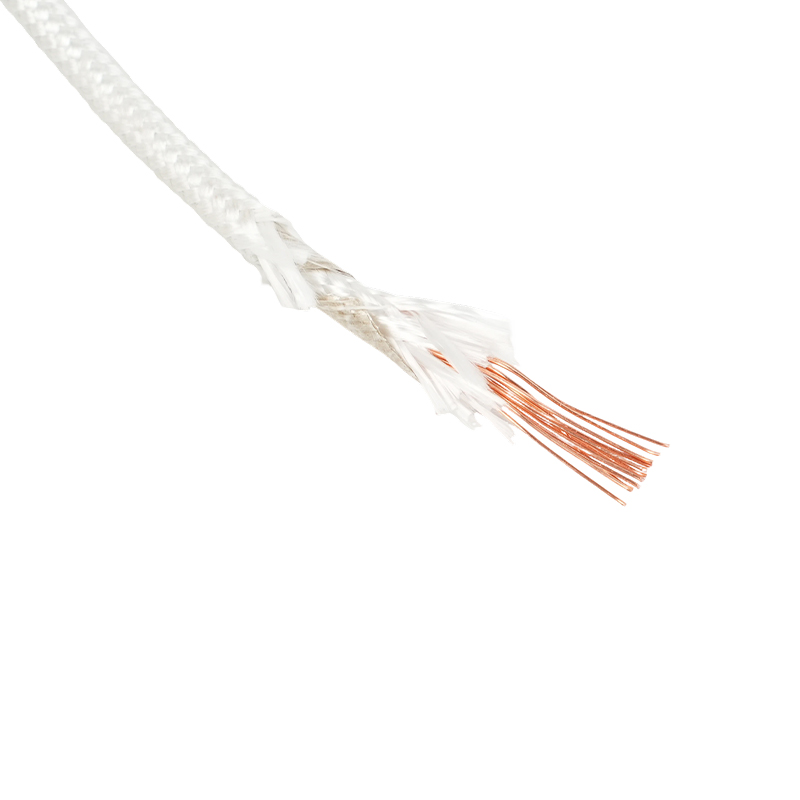
Mica fire-resistant cables achieve their performance through a dedicated fire-resistant layer — typically one or more wrappings of mica tape applied directly over the copper conductor. Mica is a naturally occurring mineral with exceptional thermal stability. Even when surrounding polymers and insulation materials burn away, the mica layer maintains electrical insulation and prevents conductor short-circuits.
Three primary types of mica tape are used in fire-resistant cable construction, each suited to different temperature ranges:
| Mica Tape Type | Operating Temperature Range | Common Standard Application |
|---|---|---|
| Phlogopite (Amber) Mica Tape | 750°C – 830°C | General fire-resistant cables, IEC 60331 |
| Calcined Muscovite Mica Tape | 900°C – 950°C | High-rise buildings, industrial plants |
| Synthetic Mica Tape | 950°C – 1000°C | Extreme-heat environments, BS 6387 C rating |
High-quality mica fire-resistant cables can maintain electrical insulation for 3 hours or more at temperatures exceeding 850°C and voltages above 1.0 kV without breakdown — a performance level no flame-retardant cable can match.
Flame-Retardant Cables: Chemical Suppression
Flame-retardant cables work through a different mechanism. Halogenated versions rely on halogen compounds released during combustion to interrupt the chemical chain reaction of burning. Halogen-free variants use fillers — typically aluminum trihydrate or magnesium hydroxide — that release water vapor when heated, absorbing heat energy and diluting flammable gases to suppress the flame.
Neither mechanism provides protection against sustained fire exposure. Once the thermal energy overwhelms the suppression chemistry, the cable will fail electrically.
Structural Differences: What's Inside Each Cable
The internal construction of these two cable types reflects their very different design goals:
| Feature | Fire-Resistant Cable | Flame-Retardant Cable |
|---|---|---|
| Fire-resistant layer | Present (mica tape, glass fiber, or ceramic) | Absent |
| Insulation material | Standard or XLPE, protected by mica layer | Flame-retardant compound (halogenated or LSZH) |
| Sheath/outer jacket | Often fire-resistant material | Flame-retardant material |
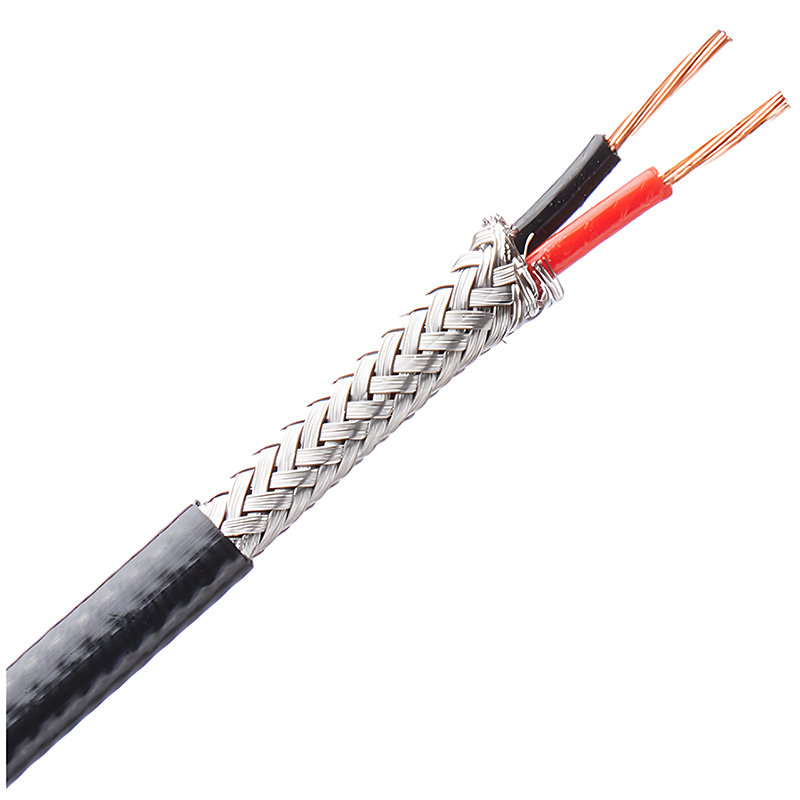
| Typical construction | Conductor + mica tape + insulation + inner sheath + armor + outer sheath | Conductor + flame-retardant insulation + flame-retardant sheath |
| Relative cost | Higher (complex multi-layer design) | Lower (simpler construction) |
A key point: fire-resistant cables generally do not use flame-retardant materials in their construction — they rely entirely on refractory materials. When both properties are required, a combined flame-retardant fire-resistant cable is manufactured by adding a mica tape fire-resistant layer to a flame-retardant cable structure.
Standards and Testing: How Performance Is Verified
Understanding the relevant standards helps engineers and procurement teams specify the correct cable for each application.
Fire-Resistant Cable Standards
Fire-resistant cables are evaluated on how long they continue to operate under fire conditions. Key international standards include:
- IEC 60331 — Requires cables to remain energized for a minimum of 30 minutes during a fire test at approximately 750°C.
- BS 6387 — A more demanding UK standard that tests cables at temperatures up to 950°C for 90 minutes, and also tests performance under simultaneous fire and water application, and fire with mechanical shock.
- UL 2196 — The leading North American standard for circuit integrity cables, used where life-safety systems must remain operational during fire emergencies.
Flame-Retardant Cable Standards
Flame-retardant cables are assessed on how effectively they prevent flame propagation. The most widely applied standard is IEC 60332, which has multiple parts covering single-wire tests and bundled cable installation tests. In bundled cable tests (IEC 60332-3), multiple cable lengths of at least 3.5 meters each are mounted on a metal ladder rack and exposed to a propane gas burner, testing the cable's ability to resist flame propagation under realistic installation conditions.
Where Each Cable Type Is Used
The application difference between these two cable categories is as significant as their technical difference.
Fire-Resistant (Mica) Cable Applications
Mica fire-resistant cables are specified wherever circuits must remain operational during a fire. Typical installations include:
- Fire detection and alarm systems
- Emergency evacuation lighting and exit signs
- Sprinkler pump power circuits
- Elevator and fire door control systems
- Hospital life support and critical care equipment
- Tunnel ventilation and public address systems in airports, subway stations, and transit hubs
- Data center and control room power circuits
- Oil and gas facility safety instrumentation
Flame-Retardant Cable Applications
Flame-retardant cables are appropriate where preventing fire spread is the primary concern, but continuous electrical operation during a fire is not required:
- General building wiring in offices and commercial spaces
- Industrial plant power distribution (non-critical circuits)
- Residential installations with fire safety requirements
- Areas with fire hazards but without life-safety system requirements
Low Smoke Zero Halogen (LSZH): An Additional Consideration
Neither fire-resistant nor flame-retardant cables automatically have low-smoke or halogen-free properties. This is an important additional specification, particularly in enclosed or high-occupancy spaces such as hospitals, schools, museums, airports, and underground stations.
Halogenated cables release toxic and corrosive gases during combustion — hydrogen chloride and other compounds — which cause damage to people, electronics, and building infrastructure. LSZH (Low Smoke Zero Halogen) sheathing minimizes these hazards.
Mica fire-resistant cables are frequently manufactured with LSZH outer sheaths precisely because they are deployed in the high-occupancy environments where toxic smoke is most dangerous. The combination of mica fire-resistance with LSZH sheathing gives these cables both operational continuity and reduced toxicity — a specification increasingly required by building codes in Europe and Asia.
How to Choose: A Practical Decision Guide
Use the following criteria to determine which cable type is appropriate for a given application:
| Requirement | Recommended Cable Type |
|---|---|
| Circuit must remain operational during a fire (alarm, emergency lighting, life safety) | Mica Fire-Resistant Cable |
| Prevent fire from spreading along cable runs in a building | Flame-Retardant Cable |
| Both circuit integrity and flame spread prevention required | Combined Flame-Retardant + Fire-Resistant Cable |
| Enclosed space where toxic smoke is a risk (hospital, tunnel, airport) | LSZH-sheathed Mica Fire-Resistant or LSZH Flame-Retardant Cable |
| Standard commercial or industrial wiring, no life-safety circuit requirement | Flame-Retardant Cable |
| Extreme-temperature environments (950°C+), industrial or petrochemical | Synthetic Mica Fire-Resistant Cable (BS 6387 rated) |
Common Misconceptions Clarified
Misconception 1: "Fire-resistant" and "fireproof" mean the same thing. They do not. Fire-resistant cables are tested to maintain function for a specified period — typically 30 to 90 minutes — not indefinitely. No cable is truly fireproof.
Misconception 2: A flame-retardant cable will keep systems running during a fire. It will not. Flame-retardant cables are designed to slow flame spread, not to maintain circuit integrity under sustained fire exposure. Specifying a flame-retardant cable for a fire alarm circuit is a serious safety error.
Misconception 3: All fire-resistant cables contain mica. While mica is the most widely used fire-resistant insulation material, some fire-resistant cables use glass fiber or ceramic-based insulation. Mica remains the industry standard due to its superior dielectric properties and flexibility for high-speed cable manufacturing.
Misconception 4: More expensive always means better. Fire-resistant cables are significantly more expensive than flame-retardant cables due to their complex multi-layer construction and specialized mica materials. However, for general-purpose wiring where circuit continuity during a fire is not required, flame-retardant cables are the technically correct and cost-appropriate choice.

-
Phone
+86-(0)21-6083 5889
+86 138 1238 0261 -
Email
export03@silvertincable.com
export@silvertincable.com -
Headquarter Address:
No. 20 Jianling Road, Zhangguo Community, Dainan Town, Xinghua City. Jiangsu Province China
-
Shanghai Branch:
Room 18A, West Building, Keji Jingcheng, No. 668 East Beijing Road. Huangpu District, Shanghai, China
Copyright © 2025 Jiangsu Silver& Tin Thread Hi-temperature Wire and Cables Co., Ltd. All Rights Reserved.
China industrial cable manufacturer Custom specialized wire & cable supplier