
 English
 русский
 Español
 عربى
عربى
 Home / News / Industry News / Renewable Energy Cable Selection Guide: Solar, Wind, Energy Storage, and Differences from Traditional Cables
Industry News
Renewable Energy Cable Selection Guide: Solar, Wind, Energy Storage, and Differences from Traditional Cables
2026-04-14
Content
- 1 How to Choose Renewable Energy Cables Best Suited for Solar and Wind Projects
- 1.1 Key Differences Between Solar and Wind Projects Determine Selection Direction
- 1.2 Key Electrical Parameters: Determining Efficiency and Safety
- 1.3 Environmental Adaptability: The Key to Cable Lifespan
- 1.4 Mechanical Performance: The Key Differentiator
- 1.5 Materials and Structure: Impacting Long-Term Reliability
- 1.6 Selection Recommendations for Different Scenarios
- 1.7 Common Mistakes and How to Avoid Them
- 1.8 Overall Selection Logic
- 2 Which Is Better: Renewable Energy Cables vs Traditional Power Cables and What Are the Differences
- 2.1 Application Scenarios: Serving Different Energy Systems
- 2.2 Environmental Adaptability: Significant Differences in Durability
- 2.3 Mechanical Performance: Dynamic vs Static Applications
- 2.4 Electrical Performance and Efficiency
- 2.5 Material and Structural Design Differences
- 2.6 Service Life and Maintenance Differences
- 2.7 Comparison Overview
- 2.8 How to Choose Based on Project Needs
- 3 Are Renewable Energy Cables Suitable for Offshore Wind Environments and What Are the Requirements
- 3.1 Unique Challenges of Offshore Wind Environments
- 3.2 Corrosion Resistance Requirements
- 3.3 Waterproofing and Sealing Requirements
- 3.4 Mechanical Performance: Torsion and Vibration Resistance
- 3.5 Environmental Adaptability: Temperature and Climate
- 3.6 Electrical Performance Requirements
- 3.7 Service Life and Reliability Requirements
- 3.8 Key Performance Requirements Overview
- 3.9 Selection and Application Recommendations
- 4 Key Parameters to Consider When Using Renewable Energy Cables in Energy Storage Systems
- 4.1 Current Carrying Capacity: Supporting High Charge/Discharge Rates
- 4.2 Voltage Rating Compatibility
- 4.3 Thermal Performance and Temperature Rise Control
- 4.4 Cycling Stability for Frequent Operation
- 4.5 Insulation and Safety Requirements
- 4.6 Environmental Adaptability
- 4.7 Service Life and Reliability
- 4.8 Key Parameter Comparison
- 4.9 Selection Recommendations
How to Choose Renewable Energy Cables Best Suited for Solar and Wind Projects
In solar and wind projects, selecting renewable energy cables depends on matching application scenarios, environmental conditions, mechanical stress, and electrical parameters, ensuring stable operation over a lifecycle of more than 25 years.
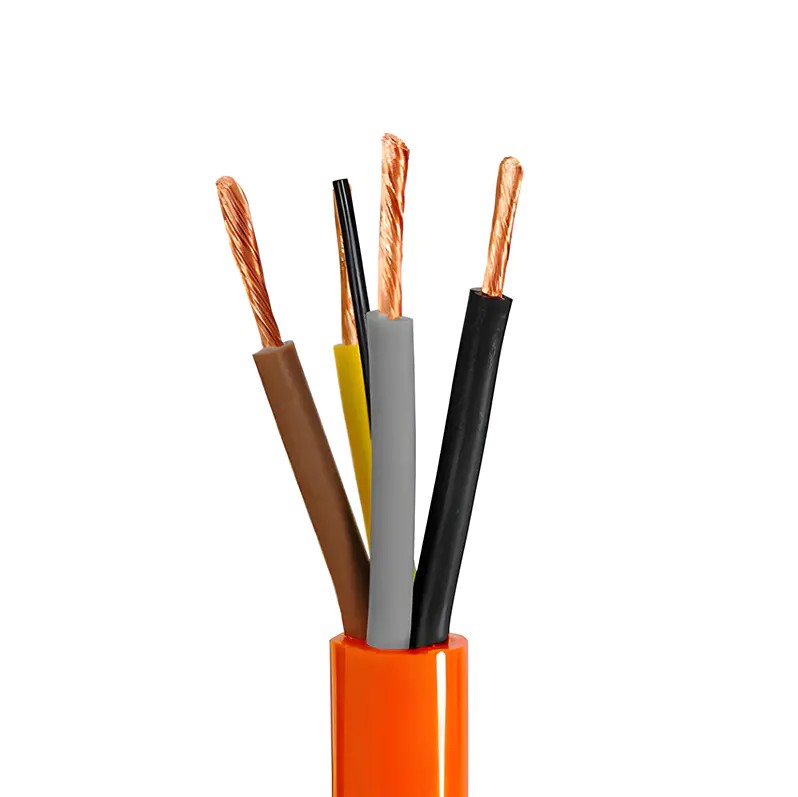
Key Differences Between Solar and Wind Projects Determine Selection Direction
| Project Type | Main Connection Points | Typical Environment | Key Requirements |
|---|---|---|---|
| Solar Power | Modules → Combiner Box → Inverter | Long-term exposure, large temperature variation | UV resistance, heat resistance, flexibility |
| Wind Power | Nacelle, tower interior | Frequent vibration and torsion | High flexibility, torsion resistance, fatigue resistance |
Solar cables typically operate in environments ranging from -40°C to 90°C, while wind power cables must withstand millions of torsion cycles.
Key Electrical Parameters: Determining Efficiency and Safety
Voltage rating must align with system design, with solar systems commonly using 1000V or 1500V DC.
Current carrying capacity affects safety, as undersized conductors can lead to 3%–8% energy loss.
Optimized insulation enables low-loss transmission, improving overall energy efficiency.
Environmental Adaptability: The Key to Cable Lifespan
- UV resistance: prevents cracking and aging from long-term exposure
- High and low temperature resistance: adapts to -40°C to above 70°C
- Corrosion resistance: suitable for salt spray and chemical environments
Environmental performance directly determines whether the cable can achieve a service life of over 25 years.
Mechanical Performance: The Key Differentiator
Solar applications emphasize flexibility and bending resistance for easier installation.
Wind power applications require torsion resistance, with high-quality cables supporting ±180° continuous twisting.
Vibration resistance ensures structural stability under continuous mechanical stress.
Materials and Structure: Impacting Long-Term Reliability
- Insulation materials provide heat and aging resistance
- Sheath materials resist chemical corrosion
- Flame-retardant properties enhance system safety
High-quality cables are typically designed for a lifespan of ≥25 years, matching renewable energy systems.
Selection Recommendations for Different Scenarios
- Solar plants: prioritize UV-resistant, heat-resistant, low-loss cables
- Onshore wind: prioritize flexible, torsion-resistant cables
- Offshore wind: focus on salt spray, corrosion, and moisture resistance
- Energy storage: emphasize high current stability and low temperature rise
Common Mistakes and How to Avoid Them
- Focusing only on upfront cost while ignoring long-term reliability
- Overlooking environmental differences leading to premature aging
- Not reserving capacity for future system expansion
Overall Selection Logic
- Define application scenario (solar / wind / storage)
- Match electrical parameters (voltage, current)
- Evaluate environmental conditions (temperature, UV, corrosion)
- Verify mechanical performance (bending or torsion)
A multi-dimensional approach ensures long-term stability and high efficiency of renewable energy systems.
Which Is Better: Renewable Energy Cables vs Traditional Power Cables and What Are the Differences
From a practical application perspective, renewable energy cables offer stronger environmental adaptability, dynamic performance, and long-term reliability, while traditional power cables are better suited for stable environments with consistent loads. The two differ fundamentally in design purpose.
Application Scenarios: Serving Different Energy Systems
Renewable energy cables are widely used in wind farms, solar power plants, and energy storage systems. They handle power collection, transmission, and distribution in decentralized and outdoor environments.
Traditional power cables mainly support urban grids and industrial power supply systems, where conditions are more centralized and stable.
Environmental Adaptability: Significant Differences in Durability
- Renewable energy cables can withstand -40°C to 90°C temperature ranges
- Resistant to UV radiation and ozone aging
- Suitable for salt spray, humidity, and chemical environments
In contrast, traditional cables are typically used underground or indoors and have more limited exposure resistance.
Mechanical Performance: Dynamic vs Static Applications
In renewable systems, cables often operate under dynamic conditions. For example, wind power cables must endure millions of torsion and vibration cycles, while solar cables require flexibility for complex routing.
Traditional power cables are mostly installed in fixed positions, with lower requirements for dynamic mechanical performance.
Electrical Performance and Efficiency
Renewable energy cables are optimized to reduce transmission losses by about 1%–5%, which can significantly improve overall energy output in large-scale systems.
They are also better suited for handling fluctuating currents in energy storage systems, whereas traditional cables are designed for steady loads.
Material and Structural Design Differences
- Renewable cables use high-performance insulation and sheath materials
- Enhanced resistance to chemical corrosion for outdoor environments
- Designed for flexibility and fatigue resistance
Traditional cables rely on standardized structures focused on basic power transmission needs.
Service Life and Maintenance Differences
Renewable energy cables are typically designed for a lifespan of ≥25 years, aligning with the lifecycle of renewable systems and reducing replacement frequency.
In complex environments, traditional cables may require additional protection to avoid accelerated aging.
Comparison Overview
| Comparison Dimension | Renewable Energy Cables | Traditional Power Cables |
|---|---|---|
| Environment | Complex outdoor conditions | Stable indoor/underground |
| Mechanical Performance | High flexibility, torsion resistance | Mostly fixed installation |
| Durability | Strong | Moderate |
| Efficiency | Low loss | Standard |
| Service Life | ≥25 years | Depends on environment |
How to Choose Based on Project Needs
- For renewable projects, prioritize high-durability and flexible cables
- For fixed power distribution, traditional cables remain suitable
- Evaluate based on environment, lifespan, and maintenance needs
Selecting cables that match the application scenario helps improve system stability and long-term efficiency.
Are Renewable Energy Cables Suitable for Offshore Wind Environments and What Are the Requirements
In offshore wind environments, renewable energy cables can be used, but they must meet stringent requirements such as corrosion resistance, waterproof sealing, and mechanical fatigue resistance to ensure long-term stable operation.
Unique Challenges of Offshore Wind Environments
Offshore wind environments are complex and demanding, imposing higher standards on cables:
- High salt spray leading to strong corrosion
- Long-term high humidity or direct seawater exposure
- Continuous vibration and movement from turbines
- Climate variations accelerating material aging
These combined factors can increase failure risk by over 30% compared to standard environments.
Corrosion Resistance Requirements
- Sheath materials must provide salt spray resistance
- Resist chloride ion penetration
- Maintain insulation integrity over time
High-performance materials can significantly slow down corrosion and extend service life.
Waterproofing and Sealing Requirements
- Incorporate longitudinal water-blocking structures
- Outer sheath must ensure high-level sealing performance
- Prevent moisture ingress affecting insulation
Poor sealing can lead to insulation failure and system breakdown.
Mechanical Performance: Torsion and Vibration Resistance
Offshore turbines generate continuous dynamic loads:
- Must withstand high-frequency vibration and cyclic torsion
- Require fatigue resistance to avoid conductor failure
- Maintain structural integrity under movement
Environmental Adaptability: Temperature and Climate
- Operate within -40°C to 80°C temperature range
- Resistant to UV radiation and ozone aging
- Adaptable to high humidity and wet conditions
Electrical Performance Requirements
- Low-loss design for efficient transmission
- Stable insulation under voltage fluctuations
- Suitable for high-power output systems
Even a 1% reduction in losses can significantly improve overall system efficiency.
Service Life and Reliability Requirements
- Typical design lifespan of ≥25 years
- Reduced maintenance and replacement frequency
- Ensure long-term operational stability
Key Performance Requirements Overview
| Performance Category | Offshore Wind Requirements |
|---|---|
| Corrosion Resistance | Salt spray and seawater resistance |
| Waterproofing | Longitudinal water blocking, high sealing |
| Mechanical Performance | Torsion, vibration, fatigue resistance |
| Environmental Adaptability | Temperature and UV resistance |
| Electrical Performance | Low loss, stable transmission |
Selection and Application Recommendations
- Prioritize corrosion resistance and waterproofing
- Evaluate mechanical dynamic performance
- Match electrical parameters to project scale
Tailored selection for offshore conditions helps improve system stability and long-term reliability.
Key Parameters to Consider When Using Renewable Energy Cables in Energy Storage Systems
In energy storage systems, the key to selecting renewable energy cables lies in current carrying capacity, voltage compatibility, thermal control, and cycling stability, as these factors directly impact system safety and efficiency.
Current Carrying Capacity: Supporting High Charge/Discharge Rates
Energy storage systems often involve frequent and high-rate charge/discharge cycles:
- Support continuous high current without overheating
- Allow margin for peak current loads
- Undersized conductors may cause over 5% energy loss
Voltage Rating Compatibility
Storage systems operate across DC and AC sides:
- Typical DC voltage range: 600V–1500V
- Must match inverter and battery system ratings
- Avoid insulation breakdown and electrical faults
Thermal Performance and Temperature Rise Control
High load operation generates significant heat:
- Require efficient heat dissipation
- Maintain safe operating temperature
- Every 10°C increase may halve insulation lifespan
Cycling Stability for Frequent Operation
- Adapt to high-frequency charge/discharge cycles
- Maintain stable electrical performance over time
- Prevent material fatigue degradation
Insulation and Safety Requirements
- High dielectric strength insulation
- Flame-retardant properties
- Protection against short circuits and arcs
Environmental Adaptability
- Operate within -20°C to 60°C
- Resistant to humidity and corrosion
- UV resistance for outdoor deployment
Service Life and Reliability
- Typical lifespan of ≥20 years
- Reduced replacement frequency
- Stable long-term performance
Key Parameter Comparison
| Parameter | Requirement |
|---|---|
| Current Capacity | Supports high-rate operation |
| Voltage Rating | Matches system voltage |
| Thermal Control | Low temperature rise |
| Cycle Stability | High-frequency durability |
| Safety | High insulation, flame-retardant |
| Environmental Resistance | Temperature and corrosion resistance |
Selection Recommendations
- Prioritize current capacity and thermal performance
- Ensure voltage compatibility
- Evaluate long-term cycling stability
- Match materials to operating environment
Proper parameter selection helps improve system efficiency and operational safety.

-
Phone
+86-(0)21-6083 5889
+86 138 1238 0261 -
Email
export03@silvertincable.com
export@silvertincable.com -
Headquarter Address:
No. 20 Jianling Road, Zhangguo Community, Dainan Town, Xinghua City. Jiangsu Province China
-
Shanghai Branch:
Room 18A, West Building, Keji Jingcheng, No. 668 East Beijing Road. Huangpu District, Shanghai, China
Copyright © 2025 Jiangsu Silver& Tin Thread Hi-temperature Wire and Cables Co., Ltd. All Rights Reserved.
China industrial cable manufacturer Custom specialized wire & cable supplier